


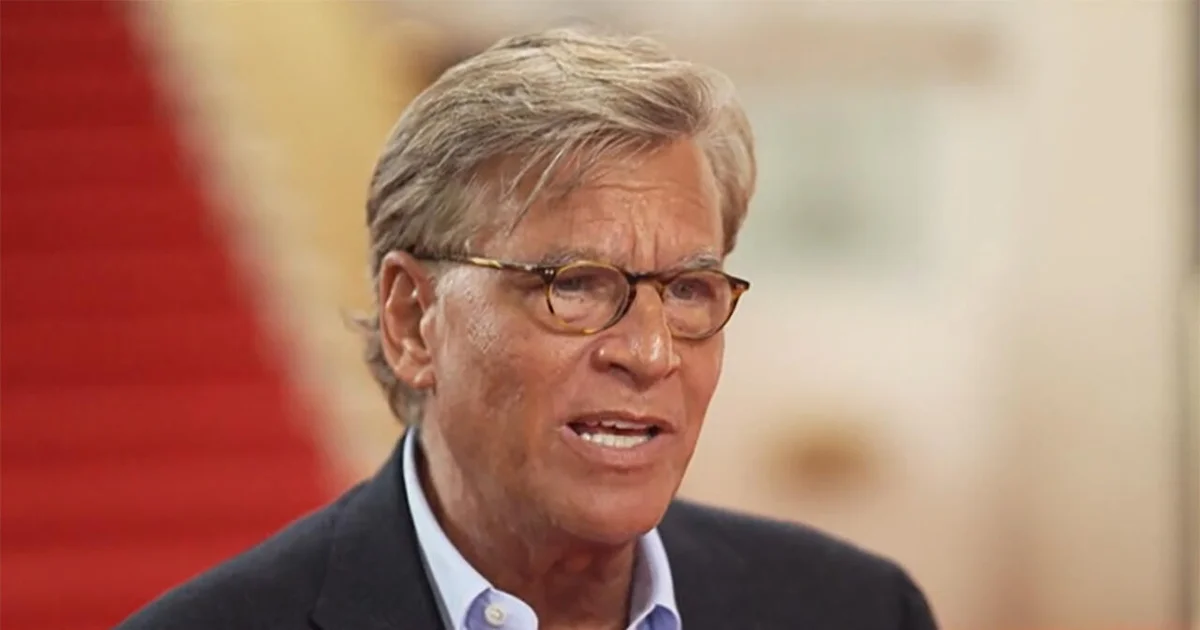
Aaron Sorkin is revisiting Facebook’s rise and its wider consequences in The Social Reckoning, a new film inspired by whistleblower Frances Haugen’s disclosures about the company.
The writer and director, who won an Oscar for The Social Network, said he had come to question the impact of his earlier portrayal of Mark Zuckerberg. The 2010 film helped shape the public image of the Facebook co-founder and the technology industry around him.
Sorkin recalled that actor Jesse Eisenberg, who played Zuckerberg, was unsettled when teenage boys asked him to sign business cards bearing the phrase “I’m CEO, bitch” – a line associated with Zuckerberg in the film.
“These people think Mark is a hero in this story and not a tragic hero,” Eisenberg told him, according to Sorkin.
“Of course, I’m responsible,” Sorkin said. “It wasn’t my intention.”
The Social Reckoning stars Jeremy Strong as an older and considerably more powerful Zuckerberg, while Mikey Madison plays Haugen. Jeremy Allen White portrays Wall Street Journal reporter Jeff Horwitz, to whom Haugen leaked thousands of internal Facebook documents in 2021.
Frances Haugen’s concerns about Facebook and AI
Haugen said she viewed Zuckerberg’s position as tragic, arguing that he had risen to power at 19 and spent his adult life surrounded by people who agreed with him.
“He’s been able to immediately isolate himself from consequences for 20 years,” she said.
The film depicts the effects of disinformation, extremism and political division. Sorkin said Facebook had researched why material was shared and, when engagement declined in 2018, changed its algorithm.
He said the company knew that content most likely to be reshared was material that provoked anger, describing it as “rage bait”. Meta, Facebook’s parent company, declined to comment on the film but has repeatedly said it is working to prevent the spread of dangerous or harmful content.
The film arrives as Meta faces billions of dollars in settlements and verdicts over claims that its platforms harmed young users’ mental health, with further cases due to go to trial.
Haugen also expressed concern about Meta’s expansion into artificial intelligence, saying whistleblowers from its AI teams had raised questions about safety.
“I would pause before rushing into giving Mark the level of power that he’s trying to seize when it comes to AI,” she said.
Aaron Sorkin on truth and responsibility
Sorkin’s first screenplay, A Few Good Men, is returning to Broadway as The Social Reckoning opens. The earlier work’s famous line, “You can’t handle the truth”, has a particular resonance for a film about the spread of false information.
Sorkin initially said the issue was that people were not receiving the truth, before reconsidering.
“Maybe we can’t handle the truth, and that the reason why so many people believe things that are flat-out untrue is that the lie is easier to believe,” he said.
He argued that people could reject evidence about crime rates among undocumented immigrants while accepting the claim that immigrants were responsible for their problems.
Asked what he would say to Zuckerberg directly, Sorkin replied: “You want to make the world a better place? Don’t make the truth up for grabs. Don’t be indifferent to the truth. And he can do that.”
Sorkin said his distinctive rapid-fire dialogue was rooted in a fascination with the sound of speech, developed through visits to the theatre as a child.
“What a line of dialogue sounds like is as important to me as what it means,” he said.
