


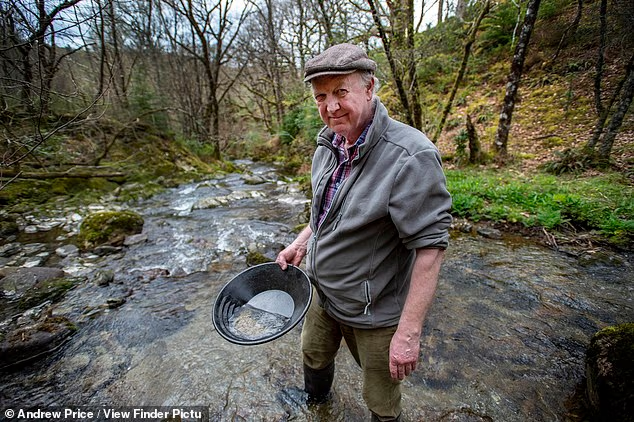
A hobbyist gold panner has been fined £1,900 and ordered to pay £2,800 in costs after being convicted of damaging a river in Snowdonia, despite having previously been prosecuted over the same activity.
Brian Wright, 69, from Henley-on-Thames, Oxfordshire, was found guilty of two environmental offences relating to the Afon Wen in Gwynedd. Natural Resources Wales brought the case after alleging that he had returned to the river to continue panning for gold.
Llandudno Magistrates’ Court heard that Wright had dug up or removed soil, turf, leaf-mould, moss, peat, gravel, slag, sand or minerals from the river in October 2024.
He was also accused of wilfully disturbing the river bed, bank or shallow areas where spawn or spawning fish may be found on December 16 that year.
Wright denied both charges. District Judge Gwyn Jones convicted him after hearing that the river contained brown and sea trout, salmon and eels, and that Natural Resources Wales had not given permission for gold panning.
Dafydd Roberts, prosecuting, said Wright had been told “on many, many occasions” that panning was not permitted in the Afon Wen or in rivers controlled by Natural Resources Wales.
He said: “The real issue is the damage this type of activity does cause to the river. It can be very substantial in terms of the fragile ecosystem.”
Wright’s solicitor, Chris Dawson, argued that the relevant bylaws did not apply to the riverbed, where his client had found “specks” of gold. He also said there was no evidence that spawn or spawning fish had been disturbed.
Wright, one of two trustees of the Gold Rivers Trust charity, had maintained that limited gold panning was part of the area’s cultural heritage. He also disputed whether Forestry Commission bylaws applied to the section of the Afon Wen involved in the case.
After the hearing, Wright said: “We are considering an appeal. The judgement is puzzling. I am waiting for advice.”
He warned other potential prospectors against searching for Welsh gold in the river, saying: “There’s not a fortune to be made in the Afon Wen. There will be great disappointment. Don’t do it.”
The case follows an earlier prosecution in May 2022, when Wright was convicted of three offences involving the removal of gravel, sand or minerals and the use of a metal detector on forestry authority land. He was fined £600 and ordered to pay £2,400 in costs.
Prosecutors in that case said Wright had been filmed at the same river while gold panning, despite a sign indicating the activity was prohibited. He said he had been demonstrating the process to an enforcement officer and that he believed the sign was incorrect.
The area is known as the “Welsh Klondike”, after the remote Canadian region associated with the 19th-century gold rush. The Dolgellau gold belt is said to extend from Cardigan Bay to near Trawsfynydd, and Welsh gold has been used in royal wedding rings.
