


Anthropic is creating a presidential engagement programme to work with US candidates from both parties ahead of the 2028 election, as the artificial intelligence company seeks a more direct role in political debate over the industry’s future.
The in-house team will advise Anthropic’s leadership on political strategy, educate candidates and their advisers on AI policy and oversee the company’s political funding operation.
The initiative is being developed before November’s midterm elections and an expected initial public offering that could value Anthropic at as much as $2 trillion. It highlights the growing importance of government policy and White House support to the AI sector.
Anthropic is recruiting a Political Programmes lead to establish and run the operation. The successful candidate will be responsible for “building and running Anthropic’s presidential engagement program for the 2028 cycle”, according to the job description.
The role includes mapping potential presidential contenders in both parties, providing policy education “on equal terms”, preparing executives for discussions with candidates and planning for the party platform, convention and transition stages of the election cycle.
“Decisions made over the next two years will shape the future enormously,” the job description says. “We want every serious candidate and elected official, in both parties, to understand the technology and the case for governing it well.”
Bruce F Freed, president of the non-partisan Center for Political Accountability, said companies commonly maintain relationships with presidential campaigns through government affairs teams, including on policy and fundraising.
But he said he had not seen such a formalised election engagement committee before. “My reading is this is an AI company effort aimed at shaping or staving off government regulation or oversight,” he said.
Anthropic did not immediately respond to a request for comment.
Anthropic’s political operation
The company has already taken steps to expand its political activity. Its job description presents Anthropic as “equal parts research lab, policy think tank, and technology company” and stresses its bipartisan approach.
The new senior role will also oversee the day-to-day running of Anthropic’s political giving and support employees who choose to take part in politics. In April, the company established AnthroPAC, an employee-funded political action committee that allows staff to contribute up to $5,000 a year.
Katie Harbath, chief executive of the technology policy advisory firm Anchor Change and a former public policy director at Facebook, said the political programmes post was broadly similar to roles held by major companies. She described the inclusion of PAC funding as the unusual element, as it was typically handled separately.
Anthropic chief executive and co-founder Dario Amodei donated $1 million to the pro-AI regulation super PAC Public First in July, while other employees have also donated hundreds of thousands of dollars to Public First and other advocacy groups.
The company’s relationship with the Trump administration has been strained. In March, the Department of Defense designated Anthropic a “supply chain risk” after a dispute over how its technology could be used by the military.
Mr Amodei has argued for slowing AI development to strengthen safeguards and has supported government regulation. President Trump has rejected regulation that he believes could leave the US behind China in the AI race.
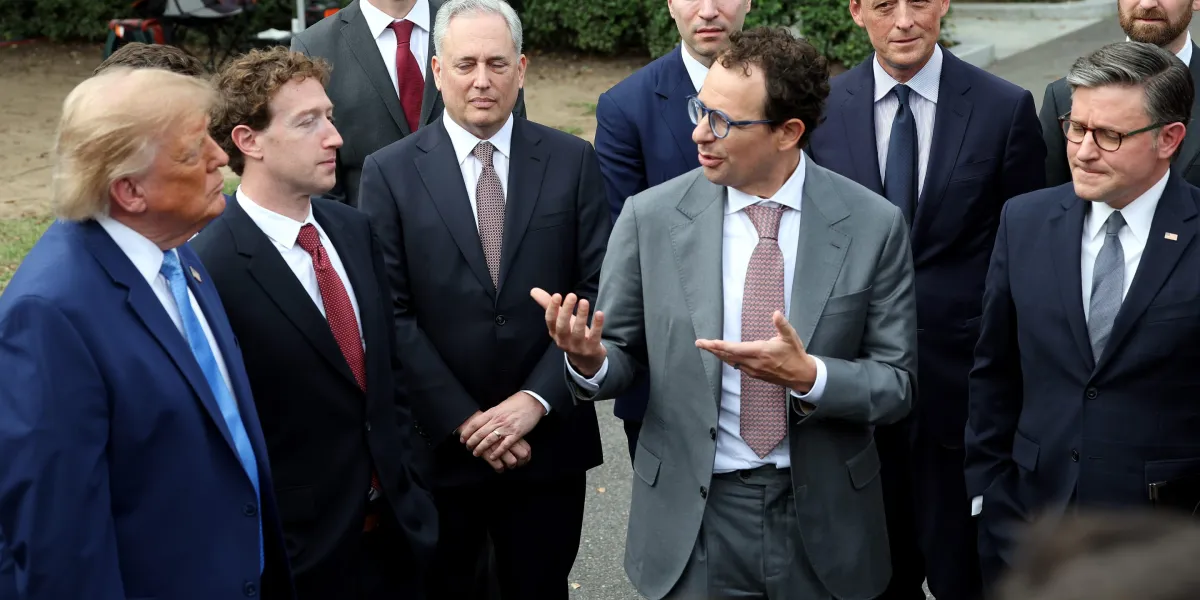
Mr Amodei attended a White House event with other technology executives last week, where he signed an accord committing the industry to self-regulation.
AI becomes a political issue
Senator Alex Padilla, a Democrat from California, said Anthropic’s recruitment showed that companies developing frontier AI models were building political operations alongside their products.
“Education and influence are not the same thing, and the public deserves to know where one ends and the other begins,” Mr Padilla said, calling on Anthropic to provide more details about the programme.
He added: “It’s important that the rules for AI be set by elected representatives accountable to voters, informed by industry and by independent experts, researchers, and affected communities, and not by whichever company has the best-resourced political program.”
Sarah E Kreps, director of Cornell University’s Tech Policy Institute, said AI was already a major issue in 2026 and was likely to become more prominent by 2028, with debate moving towards jobs, data centres and privacy.
Harbath said Anthropic could find it difficult to build trust with both parties, noting that companies often appoint people with Democratic and Republican backgrounds because campaigns value individuals who understand their own party.
The role requires at least 12 years’ experience in campaigns, party committees or political organisations, senior-level experience in national politics and a record of working credibly with both parties. It carries a salary of between $295,000 and $345,000.
