


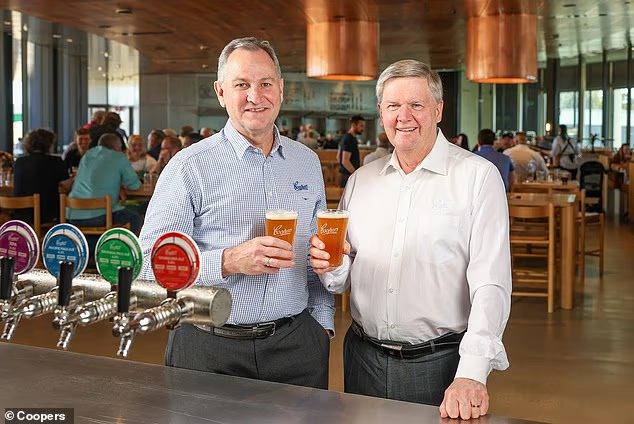
Rising alcohol taxes are threatening to push more Australian consumers towards illegal products, the managing director of Coopers Brewery has warned, as the standard price of a slab of beer reaches 65 Australian dollars.
Michael Shearer described the country’s twice-yearly excise increases as “unsustainable”, saying even cheaper alcohol would soon face the same inflationary pressure affecting the wider industry.
The tax is increased every February and August, with the rate linked to the strength of the drink. Stronger beverages attract higher excise.
Alcohol black market costs more than $1 billion
The Australian Taxation Office estimates that 1.23 billion Australian dollars in alcohol tax was lost to illegal sales during the 2024-25 financial year. That was more than double the amount recorded in 2015-16.
The Spirits Council of Australia said illegal, tax-free alcohol now accounted for 14 per cent of all sales. Its executive director, Steven Fanner, said the figures confirmed the growth of the illicit market.
“Sadly, the fact that Australia now has a billion-dollar alcohol black market does not come as a surprise to anyone working in the industry, particularly legitimate producers whose products are being undercut by rivers of cheap, low-quality, tax-free alcohol,” Mr Fanner said.
He added: “The government is losing more than $1billion a year in revenue, responsible producers are struggling and consumers are being put at risk by products they can’t trust.”
Mr Fanner said there was “an urgent window to act” to prevent Australia from repeating the problems associated with illicit tobacco.
A packet of 20 cigarettes costs an average of 40 Australian dollars, including about 28 dollars in tax, while a packet bought on the black market costs about 12 dollars.
Legal tobacco sales fell by 29 per cent in the year to September 2025. However, the Australian Bureau of Statistics said the figures did not capture overall consumption because illegal purchases were difficult to measure.
It is believed that organised crime is linked to up to 50 per cent of all tobacco sales. The demand for cheaper tobacco has also been associated with an underworld struggle in Melbourne, where a number of vendors have been targeted in firebombings.
The ABS said the growth of illicit tobacco had contributed to declining estimates for cigarette and tobacco consumption, adding that it was developing methods to measure illegal nicotine-related products.
Mr Shearer said beer had traditionally been viewed as resistant to economic downturns, but warned that rising prices were making it unaffordable for some consumers. Without intervention, he said, the illegal alcohol market could eventually reach a similar scale to the illicit tobacco trade.
Coopers Brewery, which is family-owned, has increased its share of the national beer market to 6 per cent. “It’s creeping up but it’s a tough grind,” Mr Shearer said.
