


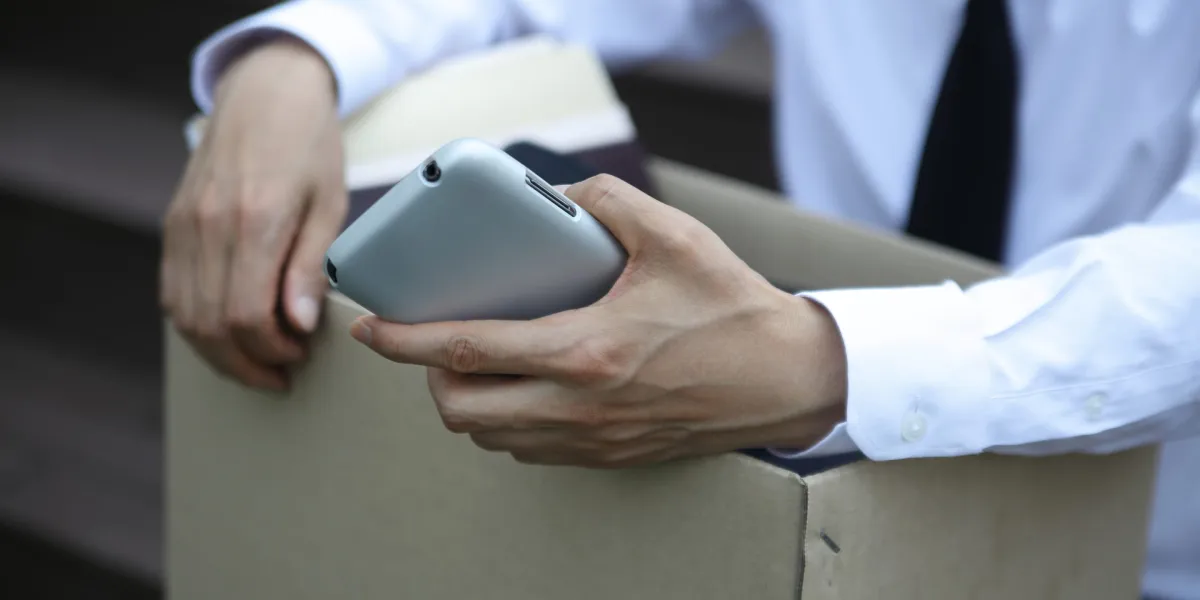
Nearly one in five US workers say they were replaced by AI and later asked to return to their jobs, a reversal that talent assessment firm SHL has termed “AI rebounding”.
Research conducted in June and July found that 19.1% of American respondents had personally experienced the sequence. Across the US and UK, the figure was 16%.
Many of those asked to come back were unwilling to do so on their previous terms. SHL found that 51% wanted a substantial pay rise, while 42% required written guarantees about future job security.
A further 40% said they wanted transparency over how AI would be used in their roles before agreeing to return.
Lucy Beaumont, SHL’s global senior vice-president of product and design, said some organisations were making decisions about their workforce without fully understanding what employees could do with or without AI.
“AI rebounding is what happens when a company automates a role before it has genuinely assessed the human capability inside it. The AI doesn’t deliver, the gap becomes obvious, and the business ends up rehiring the same experts they just let go of, at a far greater cost,” she said.
Businesses reassess AI-led job cuts
Other research suggests that some employers have encountered similar problems after removing roles because of automation. A Robert Half survey in July found that 32% of US hiring managers at organisations that had eliminated positions because of AI later had to reinstate the same or similar jobs.
Among those employers, 40% said the roles depended on institutional knowledge or context that AI could not replace. Relationship management and greater business demand were each cited by 39%, while 38% said the work required more human oversight and quality control than expected.
Swedish buy-now, pay-later company Klarna began recruiting human customer service representatives after relying heavily on AI chatbots. Its chief executive, Sebastian Siemiatkowski, acknowledged that the company had gone too far in its use of automation.
A Klarna spokesperson said human agents were needed “for complex, sensitive cases”. The company began directly hiring a “small number” of highly skilled staff to identify where a human role could provide the greatest value to customers.
Ford also hired and promoted 350 experienced engineers in June after AI-powered quality-control tools failed to perform as expected. The carmaker said AI had contributed to improvements in quality, but stressed that the technology needed to be combined with experienced engineering teams.
At the same time, AI continues to be cited in a growing number of workforce reductions. Outplacement firm Challenger, Gray & Christmas said employers had referred to AI in 121,401 announced job cuts through October, more than double the 54,836 lay-offs announced during the whole of 2025.
Younger workers appear particularly exposed. A Stanford Digital Economy Lab study found that employment among workers aged 22 to 25 in occupations highly exposed to AI was 19% below the level it would have reached if it had grown at the same pace as employment among less-exposed peers.
However, SHL found that younger workers were also more likely to report being brought back after an AI replacement. Among respondents aged 18 to 24, 24% said they had experienced this, compared with 19.1% of US respondents overall.
