


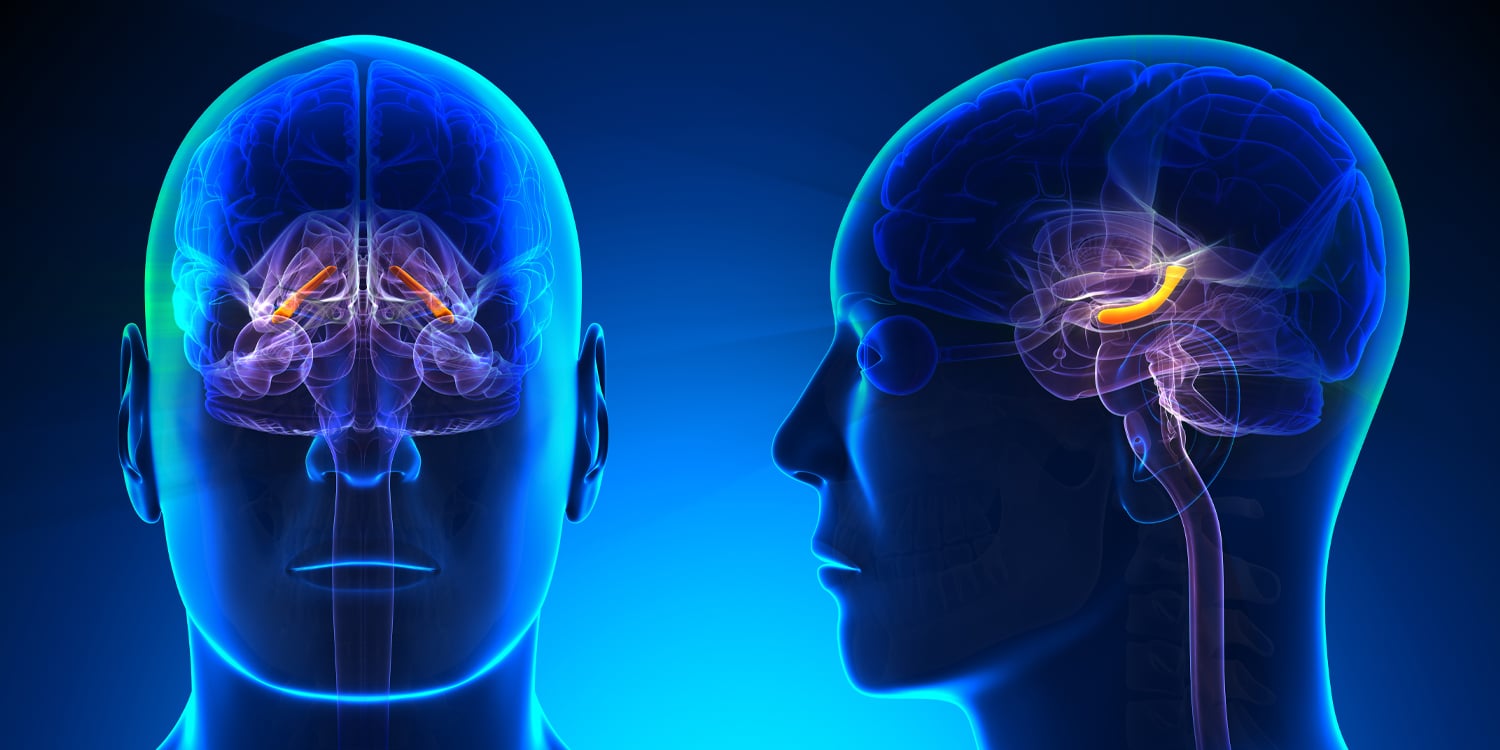
A landmark study from University College London has shown that the brain network governing motor skills can generate sleep replays entirely on its own, without the hippocampus at the helm. The finding, published in Nature Neuroscience, marks a significant shift in how scientists understand the separate memory systems that consolidate during rest.
Memory is not a single phenomenon. The brain handles declarative memory—facts and events—differently from procedural memory, which underpins motor skills and habitual actions. For decades, researchers have debated how these distinct forms of memory are solidified during sleep.
A prevailing idea held that the hippocampus acts as a central conductor, replaying the day’s experiences and triggering the rest of the brain to lock in memories of all kinds. Yet previous hints suggested that motor skills might sometimes cement themselves without hippocampal input.
The UCL team, led by Emmett Thompson and Lars Rollik with supervision from Marcus Stephenson-Jones, sought to test whether the brain circuits storing motor skills could autonomously replay memories during offline periods. Their target was procedural memory, the kind that underpins habits and coordinated movements.
The researchers devised a physical task for a small mouse cohort: the animals learned to nose poke in a five-port sequence to obtain a water reward, with practice producing highly stereotyped, habit-like movements.
To identify the driving brain area, the scientists temporarily disabled the dorsolateral striatum, a component of the dorsal striatum deeply involved in movement and reward processing. Mice with this region blocked failed to learn the sequence from memory and demonstrated highly variable, uncoordinated movements during the task.
In a subsequent step, the team blocked receptors required for neural plasticity in the dorsal striatum while the mice slept. After a day of training, the following day’s performance dropped back toward early training levels, indicating the need for ongoing striatal plasticity to consolidate the skill.
High-density electrodes were implanted to monitor single cells in the dorsal striatum as mice performed the task and then slept. The researchers analysed the data with a machine-learning tool designed to uncover hidden neural patterns without human bias.
During wakefulness, the algorithm detected distinct sequences of neural activity aligned with different phases of the task: movement between ports, reward consumption, and other behaviours such as grooming.
Remarkably, the same neural sequences reappeared during sleep, a phenomenon known as replay. The replay occurred at normal speeds but often compressed the sequence into a fraction of a second, effectively speeding up the neural replay.
The sleep replay content was highly structured, with a clear preference for task-related sequences and those tied to rewards. Forward replay using daytime-firing neurons correlated with better performance on the task the next day.
To test whether the hippocampus orchestrated this striatal replay, researchers performed large bilateral lesions to disable the hippocampus in a group of mice. The animals learned the five-step sequence just as well as controls, completing the task with identical speed and accuracy, suggesting the hippocampus was not required for this motor skill learning.
Further analysis showed that, even without a hippocampus, the dorsal striatum continued to generate neural replay. All hallmarks persisted: forward and reverse sequences, various speeds, and replay across sleep stages, with the content still prioritising task-related sequences.
The researchers caution that the findings do not universally rule out hippocampal involvement in all motor learning. In tasks that place heavy emphasis on spatial navigation or environmental learning, the hippocampus might still shape memory formation.
Because the experiments were conducted in mice, the exact mechanisms of memory replay await confirmation in humans. The team also notes that future work should identify the precise trigger for autonomous striatal replay and explore how neuromodulators such as dopamine may coordinate with replay to cement habits during rest.
The study, titled “Replay of procedural memory is independent of the hippocampus,” was authored by Emmett J. Thompson, Lars B. Rollik, Benjamin Waked, Georgina Mills, Sthitapranjya Pati, Jasvin Kaur, Ben Geva, Haoyu Li, Rodrigo Carrasco-Davis, Tom George, Clementine Domine, William Dorrell, and Marcus Stephenson-Jones.
