


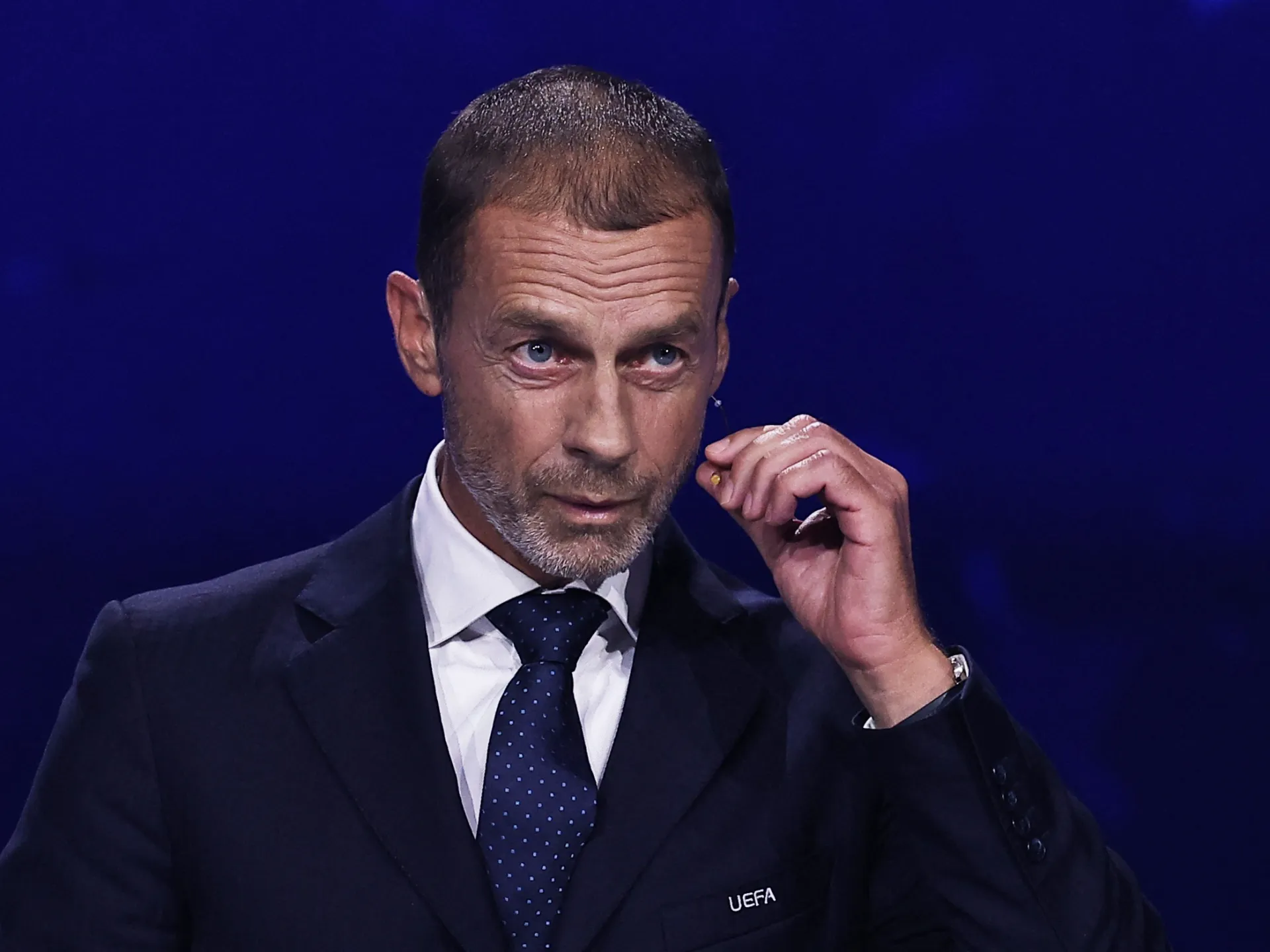
UEFA president Aleksander Ceferin has launched a sharp attack on FIFA president Gianni Infantino over an abandoned plan to sell private investors a stake in the governing body’s commercial rights.
Speaking at the European Football Clubs General Assembly in Copenhagen, Ceferin accused FIFA of using words such as “development”, “democratisation” and “consultation” to describe a proposal that, he argued, represented the opposite.
Infantino’s FIFA Forward Enterprise plan would have established a FIFA-controlled commercial subsidiary holding rights to competitions including the men’s and women’s World Cups and the Club World Cup. Private investors could have acquired up to 20 per cent of the entity.
The proposal was presented as a way to generate more money for football development and was said to be subject to consultation with FIFA’s 211 member associations. It was later abandoned after widespread opposition.
Ceferin invoked Hans Christian Andersen’s The Emperor’s New Clothes as he challenged the language used to defend the project.
“Almost 200 years ago, he [Andersen] wrote The Emperor’s New Clothes,” Ceferin said. “We all know the story. An emperor is persuaded that he is wearing magnificent clothes, clothes which he is told only the foolish or unfit cannot see.
“His court goes along with it until a child simply says aloud what everybody can see. The emperor is naked.”
Ceferin said the proposal could not be transformed into development simply by being given that name, and rejected the suggestion that presenting national associations with a decision already made amounted to democratisation.
“Selling part of football’s future does not become development because you say it’s ‘development’,” he said. “Putting a fait accompli in front of national associations does not mean democratisation, even if you call it ‘democratisation’. However big the cheque is.
“And secrecy does not become consultation because you call it ‘consultation’.”
He asked club executives to consider how they would respond if a senior official secretly negotiated away control of their “crown jewels” without informing the board, players or supporters until the deal was almost complete.
“What would your board do?” Ceferin asked, before adding: “How many times would this have to happen at your clubs before the world says ‘enough’?
“Well, my friends, I think it’s time to say enough.”
Ceferin ended by accusing unnamed decision-makers of bending rules when they became inconvenient, excluding people who were supposed to have a say and treating football’s future as “just another bargaining chip”.
