


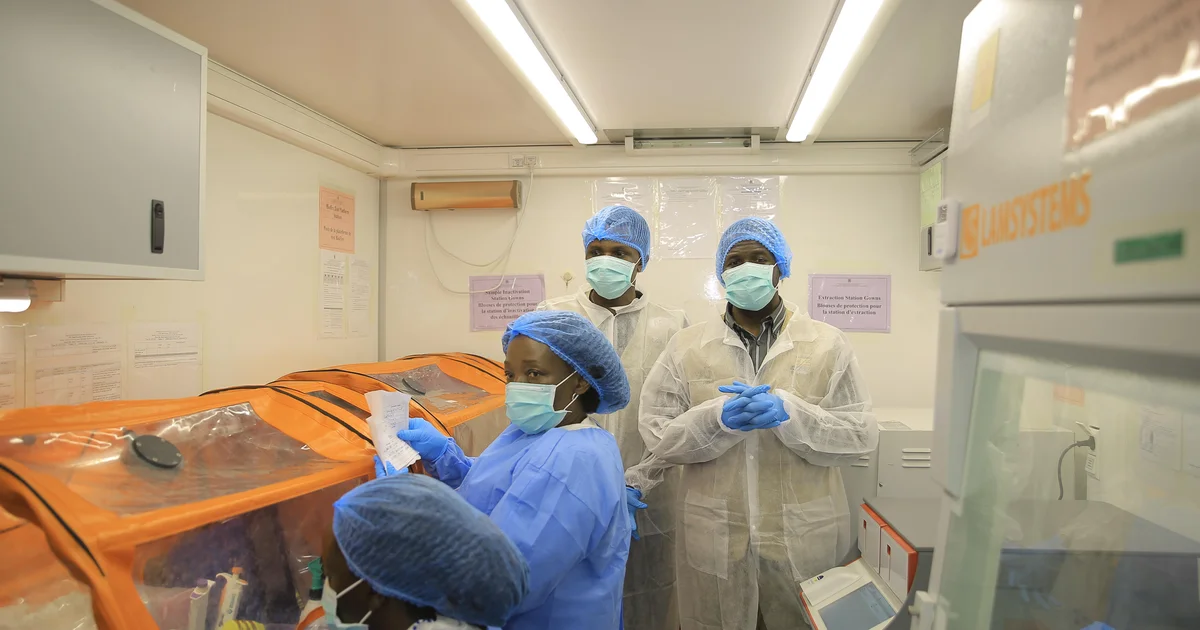
The Congo Ebola outbreak has claimed more than 4,000 lives as health authorities struggle to contain the fastest-growing outbreak of the virus ever recorded.
Figures released by the health ministry show that 4,018 people have died among 8,300 confirmed cases. More than 2,000 patients have recovered.
The outbreak was declared on 15 May and was caused by the rare Bundibugyo virus, for which there is no known treatment or vaccine.
It is centred on Ituri province in the north-east, where health workers have gathered in the provincial capital, Bunia, to demand payment of outstanding wages.
The protesters included surveillance workers responsible for identifying people who have been exposed to infected patients. They were dispersed by officials after displaying placards reading: “No money, no data!” and “No payment for months.”
Front-line workers have staged several strikes since the outbreak began, disrupting efforts to trace infections and slow the spread of the disease.
An aid worker with Médecins Sans Frontières, also known as Doctors Without Borders, was infected while working in Congo. The worker was flown to the Netherlands on a special medical flight and transferred to a high-level isolation unit at Leiden University Medical Center.
More than 50 health workers have died after contracting Ebola. Médecins Sans Frontières said: “The human cost of this crisis is unprecedented in the DRC, with communities facing the largest Ebola disease outbreak ever recorded in the country.”
The World Health Organization has warned that the virus is spreading rapidly into new health zones, putting further pressure on limited resources. The Africa Centres for Disease Control and Prevention said the number of confirmed cases was falling, but cautioned that the decline could reflect insecurity and difficulties securing co-operation from communities in some hotspots.
Tensions have also risen over the response. Marie-Célestin Karondwa, a local official with Congo’s ruling Union for Democracy and Social Progress party, was attacked at his home in Butembo, in neighbouring North Kivu province, on Sunday after defending government measures. His house was set on fire and he later died in hospital from his injuries.
Mistrust of health workers and the authorities has hampered efforts to control Congo’s 17th Ebola outbreak. A village-centred approach launched last month has faced resistance from residents who dismiss Ebola as a hoax, alongside wider distrust in the government linked to its handling of previous outbreaks and chronic corruption.
