


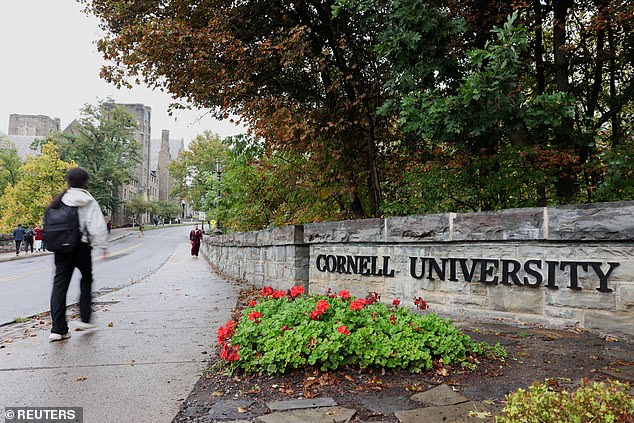
Cornell University instructors say they are struggling to teach classes attended by two former fraternity members accused of sexually assaulting a student, as protests continue over the Ivy League institution’s handling of the case.
The two men are among seven members of the Chi Phi fraternity named in a lawsuit filed in September by a woman identified in court documents as Jane Doe. All seven have denied wrongdoing.
Cornell officials confirmed that two of the men remain enrolled, although the university declined to identify them, citing federal law. Winston Lee and Gillio Lopes, who were suspended following a university Title IX investigation, are believed to have since returned to campus.
During a virtual meeting with university officials on Tuesday, faculty members said the presence of the students in their classes had created serious difficulties, according to reports.
The case has prompted protests at Cornell’s New York campus. The university’s faculty senate has also said it intends to vote on a no-confidence resolution concerning the institution’s administrators.
Cornell response to sexual assault allegations under review
Cornell has appointed Sally Yates, a former Obama administration justice official, to conduct an independent investigation into its response to the allegations.
The review will examine how the university prevents and responds to sexual harassment, sexual assault and related misconduct. It will also consider the handling of reports, investigations, hearings and disciplinary decisions.
Ms Yates is expected to assess the role of campus police, their co-operation with other law enforcement agencies and prosecutors, and the university’s oversight of fraternities and sororities.
A Cornell spokesperson said: “We recognise that this case has affected members of our community in different ways, and we are committed to supporting students, faculty and staff.”
“University leaders recently provided guidance to instructors on supporting students academically and emphasised the importance of faculty discretion and flexibility in responding to individual circumstances.
“Our goal is to ensure that members of our community know they are not navigating these challenges alone and have access to the resources and support they need.”
The university launched its Title IX investigation in 2025 after prosecutors declined to bring criminal charges, citing insufficient evidence. Cornell subsequently shut down the Chi Phi fraternity.
Matthew Ingalls and Jonathan Newell were found responsible for sexual assault by the university panel and expelled. Lee received a two-year suspension and Lopes a three-semester suspension; both were also required to complete sexual harassment training and write reflection papers.
Lee has reportedly returned to classes under disciplinary probation. Cornell’s officials have not publicly confirmed the identities of the two students who remain enrolled.
The lawsuit alleges that the incident took place on October 19, 2024, after Jane Doe had been drinking with sorority friends and was invited to an after-party at the fraternity’s off-campus house.
She alleged that she agreed to have sex with Ingalls and another man before being pressured to take ketamine and smoke marijuana. The lawsuit claims she became disoriented as other men joined in, and alleges that messages were sent to a Chi Phi Snapchat group inviting others into the room.
Jane Doe said she lost consciousness before returning to her sorority house at about 5.45am. She reported the incident to police three weeks later.
The other men named in the lawsuit are Diego Sarabia, Scott Norris and Scott Kretzschmar. Sarabia had already graduated and was barred from campus for three years, while Norris and Kretzschmar were found not responsible for sexual activity and were not suspended or expelled.
New York Attorney General Letitia James has launched an active criminal investigation into the case. The men named in the lawsuit have denied any wrongdoing.
