


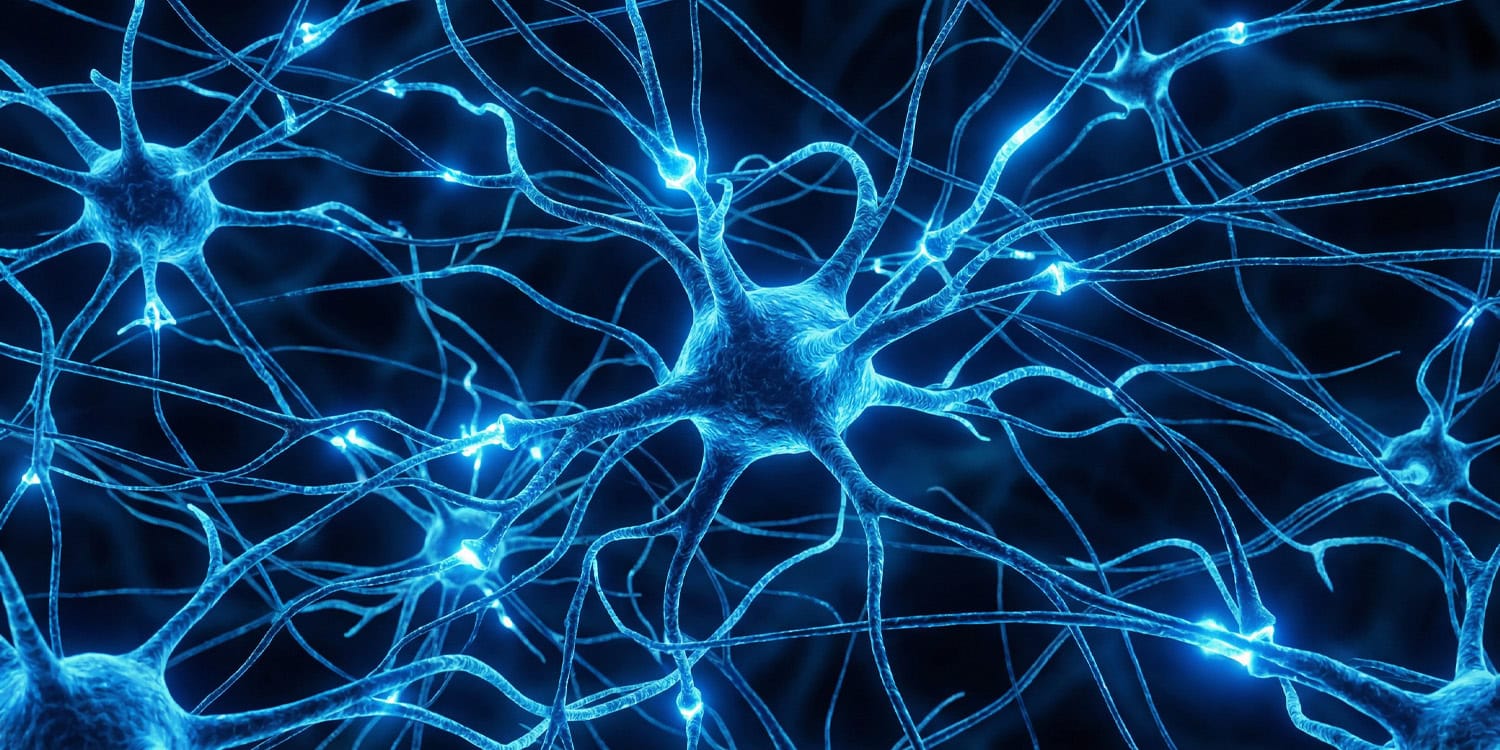
Researchers at the University of Pittsburgh have mapped how brain cell networks expand and contract as mice form a cocaine habit, revealing a constant turnover of the neural cast behind an outwardly stable behaviour. The study centres on the nucleus accumbens, a deep-brain region key to motivation, reward and movement, and tracks the activity of medium spiny neurons in real time as animals learn to self-administer cocaine.
Over 11 days, male mice were trained to press a lever inside a specialised chamber to receive a small cocaine dose, paired with a flashing light and an auditory tone. The daily sessions lasted two hours within a fixed four-hour window to minimise differences caused by natural sleep and wake cycles. An inactive lever offered no effect.
To monitor brain activity, researchers used calcium imaging. They injected a virus into the nucleus accumbens so that the medium spiny neurons would emit a fluorescent glow when they fired. A tiny glass cylinder was surgically implanted into brain tissue, and miniature microscopes were attached to the mice’s heads, allowing real-time recording of visible neurons as the animals moved and pressed the drug-dispensing lever.
behavioural shifts accompanied a distinct pattern in the brain. Early in training, the mice wandered irregularly before locating the active lever. By the end of the period, their movements became highly stereotyped—they took direct paths to the lever, pressed it at regular intervals, and performed repetitive circular movements around the chamber between doses. The intervals between lever presses shortened and became more consistent over time.
A control group trained to seek sugar water showed lever pressing but did not develop the hyperactive, repetitive movement patterns seen in the cocaine group.
The team analysed brain data with a statistical tool called mutual information to filter out random activity and isolate neurons that fired within five seconds after a lever press. They applied a rigorous randomisation check, shuffling timing data thousands of times to confirm the firing was linked to the action, not a random event.
In the early days, the number of neurons firing in response to the lever press rose rapidly, indicating the neural network associated with drug-taking was expanding as the task was learned. As the behaviour became a stable habit around day seven, the researchers observed a reversal: the total number of active cells gradually returned to the level seen on day one.
Notably, the intensity of individual glowing cells remained steady throughout, while the network’s composition changed. The expanding network gradually shed some cells and recruited new ones, rather than intensifying the firing of existing neurons. This dynamic process mirrors how artificial neural networks learn—initial broad engagement followed by pruning to streamline performance.
The daily imaging also challenged the idea that memories or habits are stored in fixed neuronal engrams. About half of the brain cells involved in the lever-press response on one day dropped out by the next imaging session, replaced by a completely fresh cohort. The outward, repetitive cocaine-seeking behaviour thus persisted even as the underlying neural hardware continually changed.
The researchers recognised several limitations. The study used only male mice, as the team found males tolerated the implanted equipment better. They also noted the relatively small number of neurons that could be tracked across days, which constrained how broadly the findings could be extrapolated across the entire 11-day period.
Looking ahead, the team plans to investigate whether similar network expansion and retraction occur with other addictive substances, such as opioids or alcohol, and to explore how other connected brain regions interact with the nucleus accumbens during habit formation. The authors of the study, “Refinement of Nucleus Accumbens Neuronal Dynamics during Cocaine Self-Administration Training,” are Linjie Jin, Xiguang Qi, Jianwei Liu, William J. Wright, Terra A. Schall, King-Lun Li, Bo Zeng, Charles Wang, Lirong Wang and Yan Dong.
