


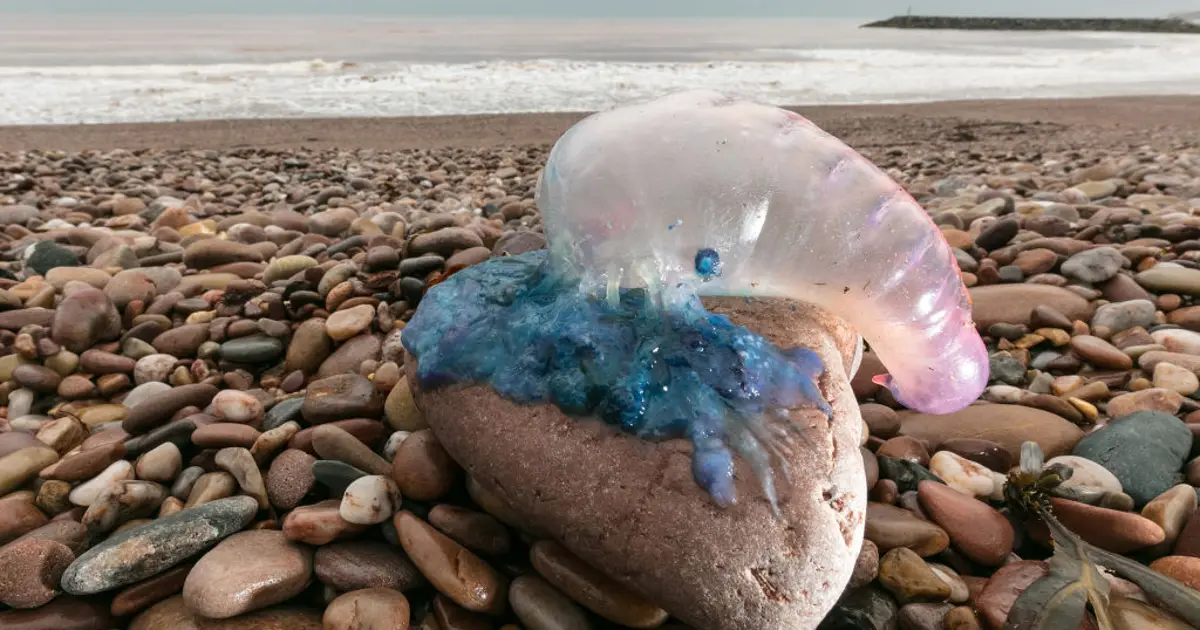
Several venomous Portuguese man o’ war have washed ashore along the Southern California coast, with sightings reported near tidepools at Cabrillo National Monument, Del Mar and La Jolla beaches.
The unusual marine visitors have been linked to warming Pacific waters associated with Super El Niño, which may be creating conditions for the creatures to drift towards the West Coast.
Portuguese man o’ war are closely related to jellyfish and float on the ocean’s surface beneath a blue, violet or pink balloon-like structure. Their danger lies below the waterline, where specialised stinging cells known as nematocysts can inflict a painful sting.
Experts have urged beachgoers not to touch the animals, despite their striking appearance and seemingly harmless shape.
Linsey Sala, manager of the Pelagic Invertebrate Collection at the Scripps Institution of Oceanography, said the sightings were unusual for the region.
“This is an exciting occurrence for this region and we are grateful to the curious and careful naturalists who reported them,” she said.
The presence of the Portuguese man o’ war does not mean people need to avoid Southern California beaches or stay out of the water. However, visitors have been advised to remain alert and keep their distance if they encounter one along the shoreline.
“Knowledge is power, and knowing that these gorgeous animals may periodically be here allows us to keep an eye out and aim to avoid touching them while on beach walks or swims,” Sala said.
