


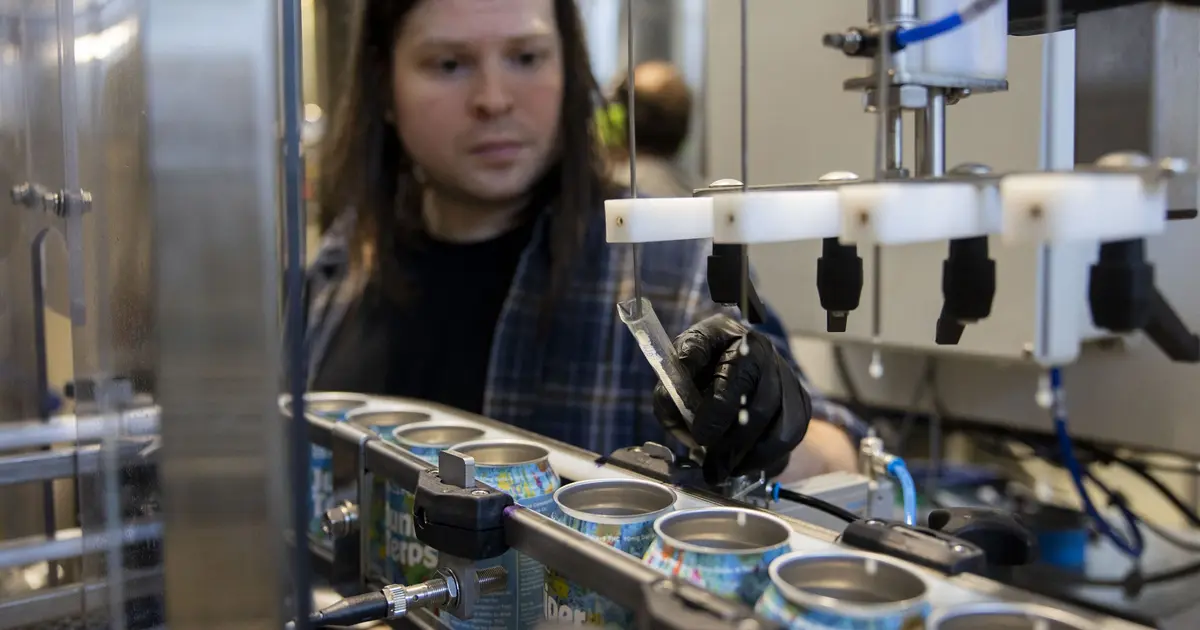
Hemp-derived THC businesses across the United States face a major threat from a federal ban due to take effect on 11 December, with breweries and other small firms warning that the measure could wipe out a growing market.
The new law would prohibit the sale of hemp-based products containing more than 0.4 milligrams of THC per container, effectively removing many drinks, sweets and other products from shop shelves.
For businesses that have invested heavily in the sector, the deadline has prompted warnings of job losses, falling revenues and the collapse of an industry that developed after the 2018 Farm Bill legalised industrial hemp.
Breweries count the cost of the proposed hemp ban
Marz Community Brewing Co in Chicago began producing THC-infused drinks after customers and retailers asked for alternatives to alcohol. Ed Marszewski, who co-founded the brewery, said the products had become a significant source of income.
“A large segment of adults wanted a beverage alternative to alcohol and Marz only started making them because our retailers and customers asked us to,” Mr Marszewski said. “We had no idea it was going to grow our business like it did.”
Illinois laws introduced in November have already prevented the brewery from selling THC products. Mr Marszewski said Marz had lost more than half of its wholesale revenue, forcing it to reduce staff hours and lay off several workers.
“It has greatly impacted our wholesale business and impacted our on-premise sales significantly,” he said.
In Minnesota, THC beverages have become a regular part of the offer at several breweries. At Duluth-based Bent Paddle Brewing Co, they account for about 40 per cent of the business, according to Pepin Young, the company’s director of new business development.
Mr Young said the proposed federal limit would make the brewery’s current products impossible to sell.
“A 0.4 mg per-container limit effectively eliminates the products we’re currently making and selling,” he said. “This isn’t a minor adjustment for us. It would fundamentally change our business overnight.”
He said the company had invested in staff, equipment, production, distribution and commercial partnerships while building the market.
Wisconsin-based Sprecher, which produces craft soda as well as beer, has also entered the sector with four hemp-derived THC soft drinks. Each contains 10 milligrams of THC, far above the proposed federal limit.
Chief executive Sharad Chadha said the company had invested in developing, manufacturing and distributing the drinks under the existing legal framework.
“The proposed 0.4 mg per-container limit would effectively eliminate our ability to sell these products through our existing channels,” he said.
Lawmakers divided over hemp regulation
The 2018 Farm Bill removed hemp and cannabis derivatives containing low concentrations of THC from the definition of marijuana under the Controlled Substance Act. The change enabled a wide range of products, including seltzers, sodas and gummies, to enter the market.
Opponents argue that the policy created an unregulated market and allowed products resembling ordinary sweets and snack foods to reach children. The Federal Trade Commission’s Bureau of Consumer Protection warned in 2024 that such marketing could put young children’s health at risk.
Some states introduced their own rules, but the federal legislation left the broader national framework unchanged. Senator Mitch McConnell, who helped push through the 2018 Farm Bill, later backed efforts to close what critics called the “hemp loophole”.
In 2025, he added a hemp ban to an appropriations package that brought an end to a 43-day government shutdown.
Senators Amy Klobuchar of Minnesota and Tim Sheehy of Montana have introduced the Hemp Guardrails Act, which would keep hemp products on sale while imposing age restrictions, prohibiting copycat marketing and banning synthetic products described as “gas station weed”.
Ms Klobuchar said the ban could have far-reaching consequences for farmers, brewers and small businesses if Congress and the White House failed to agree on the proposed safety measures or a similar plan.
Mr Young described the bill as encouraging and called on lawmakers to listen to businesses operating in the sector.
But Senator Ted Budd of North Carolina has rejected the proposal, arguing that Congress had already acted to end an industry that should not have existed. He said he would not support measures that delayed or created a regulatory framework for products he believes fuel addiction and endanger children.
Narrow window before the 11 December deadline
Congress has limited time to pass the Hemp Guardrails Act before the ban takes effect. The approaching Thanksgiving recess leaves few working days for lawmakers to reach an agreement.
The ban is also due to begin on the same day that the current government funding package expires, raising the prospect of a further shutdown if the parties cannot agree a budget.
That timing could allow a hemp measure to be attached to a wider spending bill, although no agreement has been reached.
For businesses such as Sprecher, the issue is not simply about one product line but the wider network that has grown around hemp-derived goods, including laboratories, processors, ingredient suppliers, packaging firms, distributors and retailers.
“Regulate responsibly. Don’t eliminate an entire industry,” Mr Chadha said. “We support sensible regulations, including age restrictions, responsible marketing, product testing, clear labeling, and appropriate THC limits.”
