


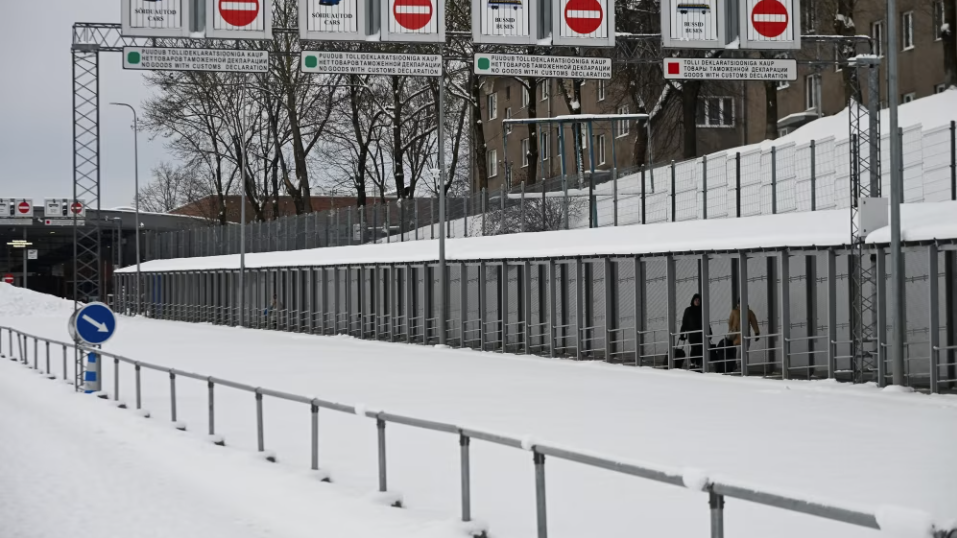
Estonia will close its road border crossings with Russia for at least six months from December 1, citing security concerns and accusing Russian security services of trying to organise attacks and recruit Estonian citizens.
Moscow has warned that it will respond with political and diplomatic measures, saying the move would amount to creating a “new Iron Curtain”.
Estonian Interior Minister Igor Taro said the closure was intended to improve the wider security situation and restrict Russia’s ability to carry out further attacks.
“Russian security services are intimidating and trying to recruit our citizens who are travelling through our border checkpoints. This is something we cannot tolerate anymore,” Mr Taro told a press conference.
Estonia border closure follows arson allegation
The Estonian government’s decision came after it accused Russian security services on Sunday of staging an attempted arson attack against an Estonian defence company. Tallinn said it was the second such incident this year.
The Kremlin has denied involvement in the weekend arson attack. Russia’s Foreign Ministry spokeswoman, Maria Zakharova, said on Friday that Moscow would take political and diplomatic measures if Estonia proceeded with the closure.
“Such moves are tantamount to attempts to erect a new Iron Curtain under the false pretence of some sort of threat from the East,” Ms Zakharova said.
Estonia, a member of Nato and the European Union and a strong supporter of Ukraine, currently has five crossing points for people travelling between the country and Russia.
The closure will affect road travel but not rail freight, although trains will continue to face strict customs checks. Estonia’s northern neighbour Finland shut its border crossings with Russia in 2023 and has kept them closed, while Latvia and Lithuania have maintained open crossings.
Thousands of people in Estonia have family connections in Russia, reflecting the countries’ shared Soviet-era history. The crossing at Narva, a majority Russian-speaking city on the Estonian side, is also used by travellers from elsewhere in Europe heading to St Petersburg.
Estonian police data showed that 760,000 people crossed the Estonia-Russia border this year. Of those, 307,000 were Russian nationals, 175,000 were Estonian citizens and 54,000 held Finnish passports.
