


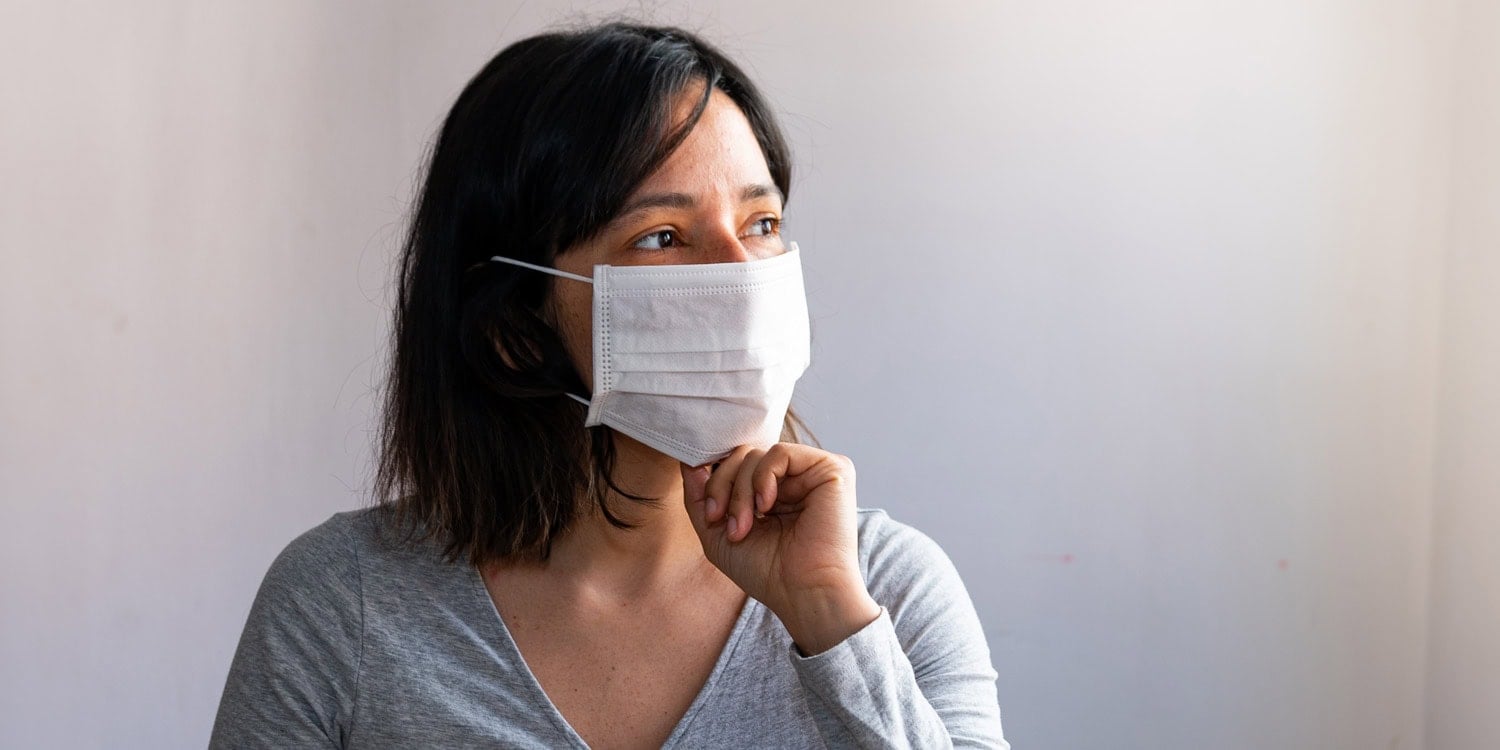
A new Canadian study suggests that people progressively adapt to reading emotions from masked faces, with measurable improvements observed across several months. The research tracked 128 adults in two testing sessions spaced three to four months apart, led by Marie Huc and Katie Bush of the University of Ottawa and Carleton University, with senior author Natalia Jaworska from the University of Ottawa Institute of Mental Health Research.
Conducted during the COVID-19 era, the study examined whether prolonged exposure to masked faces enhances emotion-reading skills and how individual mental-health symptoms might influence this ability. It notes that people rely heavily on the lower half of the face to decode emotional states, so coverings pose a meaningful barrier to everyday communication.
In the experiment, participants completed questionnaires on loneliness, perceived stress, depression and anxiety, and at the second session reported how many hours a day they wore a mask and how much time they spent interacting with others wearing masks. They then undertook a computerised emotional processing task: photographs of actors displaying happiness, sadness, fear, surprise and a neutral expression were shown, with half the images fully visible and the other half digitally overlaid with a surgical mask on the lower half.
Adaptation to reading masked facial expressions
The results indicated that time and practice altered how participants processed masked faces. Over the three to four month period, accuracy improved for identifying masked fear, happiness and sadness, while accuracy for masked surprise decreased slightly. Reaction times shifted accordingly: participants became faster at identifying masked fear, but slower at identifying masked surprise, which is particularly challenging when the mouth region is concealed.
The researchers noted that improvements with masked faces were not mirrored when faces were unmasked; this suggests the changes reflect a specific adaptation to processing partially occluded faces rather than general practice effects on the computer task.
Daily exposure to masked faces also played a role. Greater exposure was associated with slower reaction times when identifying masked happiness and sadness, a pattern the team suggest may reflect a habit of scanning for more subtle cues around the eyes to preserve accuracy.
Mental health symptoms appeared linked to performance as well. Participants reporting increased depressive symptoms showed greater accuracy for masked happy faces, while those with higher anxiety symptoms demonstrated better accuracy for masked happy and neutral faces. In contrast, broader measures of perceived stress, depression, anxiety and loneliness declined over the study period across the group, though these improvements did not directly correlate with changes in facial-recognition performance.
The researchers emphasise that the sample largely comprised community members without formal psychiatric diagnoses, which may explain the generally low symptom scores observed.
Limitations of the study include the pandemic context, which meant there was no control group with zero mask exposure. The researchers acknowledge that this constrains their ability to isolate the effect of daily mask exposure from the passage of time.
Additionally, the experimental design relied on static photographs rather than dynamic interactions; in real life, people deploy head movements, vocal tone and body language to gauge emotion, all of which were outside the task. The authors suggest future work could incorporate video stimuli to better reflect everyday communication.
The study, Changes in facial expression recognition and well-being over time, was authored by Marie Huc, Katie Bush, Lindsay Berrigan, Sylvia Cox and Natalia Jaworska.
