


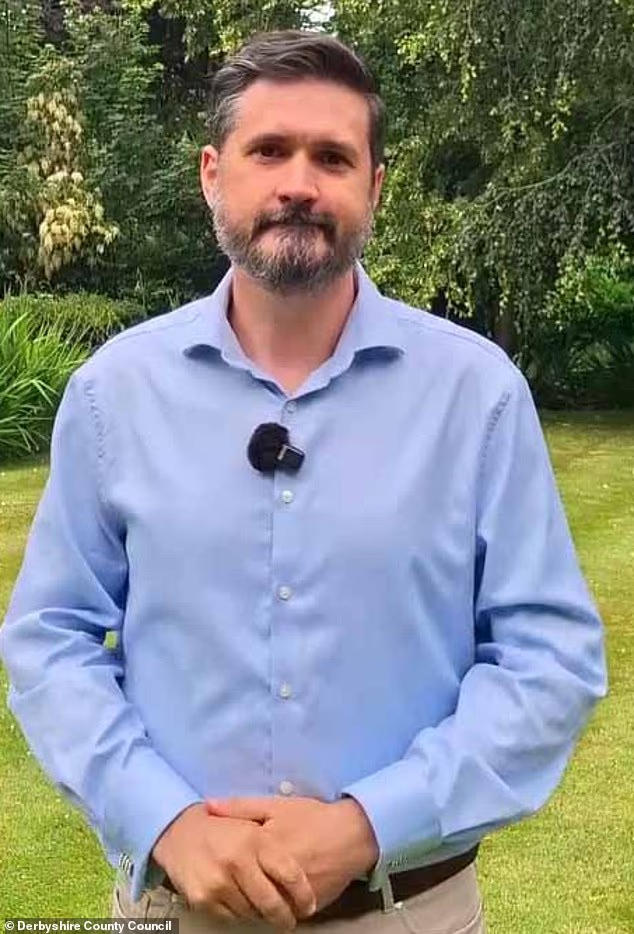
Derbyshire County Council has been accused of attacking press freedom after ending its engagement with a local democracy reporter who exposed an elderly woman’s legal battle over access to her home.
The Reform-led authority said it had “lost confidence” in Eddie Bisknell’s reporting and raised concerns about its accuracy, balance and professional conduct. It said requests for comment or information from Mr Bisknell specifically would not receive a response.
Mr Bisknell, one of 165 local reporters funded by the BBC to cover local politics, works for the Derby Telegraph and Derbyshire Times. His report about 81-year-old retired teacher Helene Ball was later picked up by national newspapers.
The case centred on Mrs Ball’s long-standing route through a gap in the rear wall of her Matlock home into a council-owned car park. She had lived at the property since 1967 and said her family had used the access for almost 60 years before a metal fence was erected in April 2023.
After a three-year legal dispute, a judge ruled in Mrs Ball’s favour, recognising her right to use the route and ordering the council to pay costs of about £50,000. The authority was also told to ensure the access was not obstructed again.
The council was criticised by the judge over what was described as a “pugnacious” case. After the ruling, 54 large concrete blocks were placed outside Mrs Ball’s home, lining the narrow road behind the property and the grass verge beside her garden wall.
Mrs Ball is preparing for another legal challenge to have the blocks removed. She said the council had made it impossible to drive up the road and turn around, despite the ruling granting access by foot and car.
Dispute over reporting standards
Deputy council leader Stephen Reed said the decision followed a “prolonged period of concerns regarding reporting standards, accuracy, balance and professional conduct”.
Speaking to BBC Radio Derby, Councillor Reed was particularly critical of the article about Mrs Ball. He said it should not have been published because it concerned “ongoing legal proceedings” and claimed the council had been given only four hours to respond to allegations that it had bullied her.
He described the resulting report as “at worst irresponsible and at best an editorial opinion without all the facts”.
Derby Telegraph editor in chief Natalie Fahy rejected the allegations. She said the council had been given 24 hours to respond and that the article was based on a court judgment rather than an ongoing case.
Ms Fahy said Mr Bisknell had “been a bit of a thorn in the council’s side (as any good journalist should be)” but had not previously received complaints about his reporting.
“We utterly reject this attack on our journalism, stand fully opposed to the false claims made about Eddie’s and our editorial practices and urge Cllr Reed to retract his press releases,” she said.
Reform UK in Derbyshire said the move was not an attack on freedom of the press, local journalism or scrutiny. The party said it believed journalists should be held to high standards of fairness, accuracy, balance and professionalism.
The decision has drawn criticism from Conservative group leader Alex Dale, who said freedom of the press was “an absolute cornerstone of our democracy” and that any attack on it was an attack on democracy itself.
The dispute follows a similar row in neighbouring Nottinghamshire, where the Reform-led county council stopped sending press releases to the Nottingham Post and inviting its reporters to council events. That action was later lifted after a legal challenge by the newspaper.
A BBC spokesman said independent journalism was vital to local democracy and that reporters must be able to question those in power without fear of reprisals. The BBC urged both sides to seek a resolution.
