


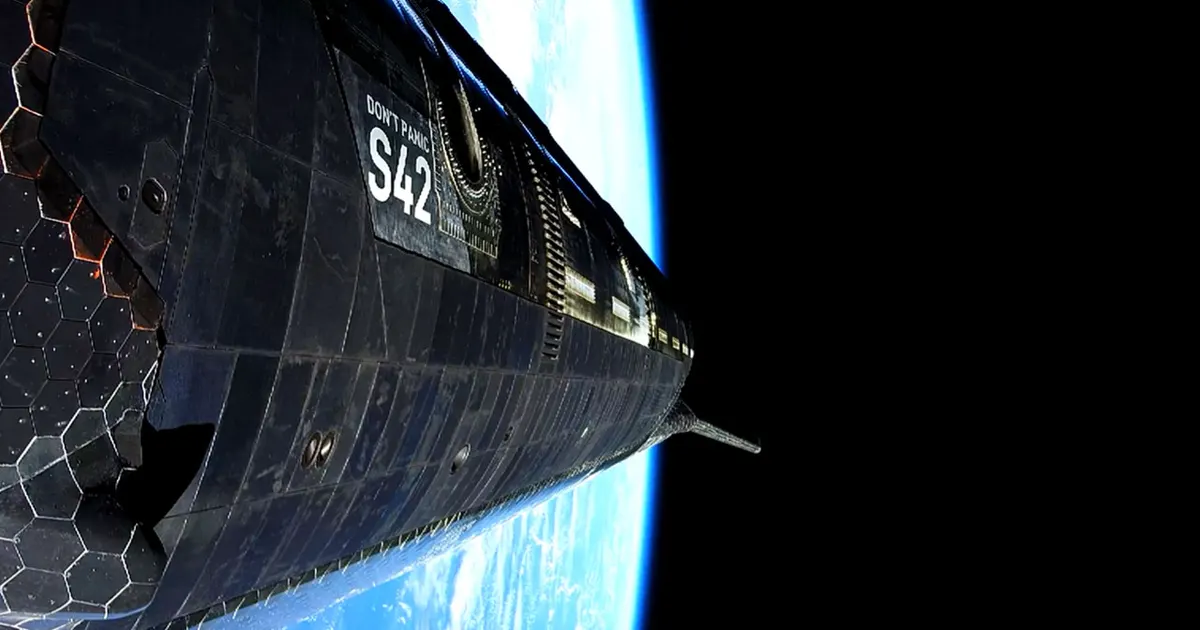
SpaceX’s Starship has been caught by the launch tower at its South Texas base after completing a 22-hour orbital test flight, marking the first time the spacecraft’s upper stage has returned safely to land.
The successful recovery at Starbase on Saturday, November 14, 2026, came after Starship launched the previous evening and circled Earth 14 times while deploying 26 next-generation Starlink satellites.
The spacecraft was guided back towards the launch site and secured by the tower’s giant mechanical arms, known as “chopsticks”. The manoeuvre is a major step towards SpaceX’s goal of making Starship fully reusable.
Booster recovery ends in Gulf splashdown
SpaceX had hoped to recover both parts of the 124-metre rocket during Flight 15. However, the Super Heavy booster was diverted to the Gulf of Mexico shortly after separating from Starship and was destroyed in a fiery splashdown.
The company said the booster’s automated guidance system detected that it was not in the correct position to attempt a tower catch. Early indications were that its boostback burn ended sooner than expected after a low-fuel warning, although engineers were continuing to investigate the cause.
Recovery teams located the spent booster and monitored the Texas coastline for debris. The planned offshore landing option meant the failed catch did not prevent the Starship spacecraft from continuing its mission.
SpaceX had also prepared alternative splashdown locations in the Pacific Ocean in case the upper stage developed problems during its journey. Those options were not needed after the spacecraft’s heat shield and other systems were judged to be in suitable condition for the return to Starbase.
Flight 15 was the company’s second Starship mission to reach orbit. The previous flight, in September, deployed Starlink satellites but ended after the spacecraft splashed down in the Pacific Ocean several hours after launch.
The latest test is intended to support SpaceX’s longer-term plans for rapid rocket re-use, including missions to the Moon and eventually Mars. NASA has selected Starship for future Artemis missions, which aim to use the spacecraft as a lunar lander later this decade.
