


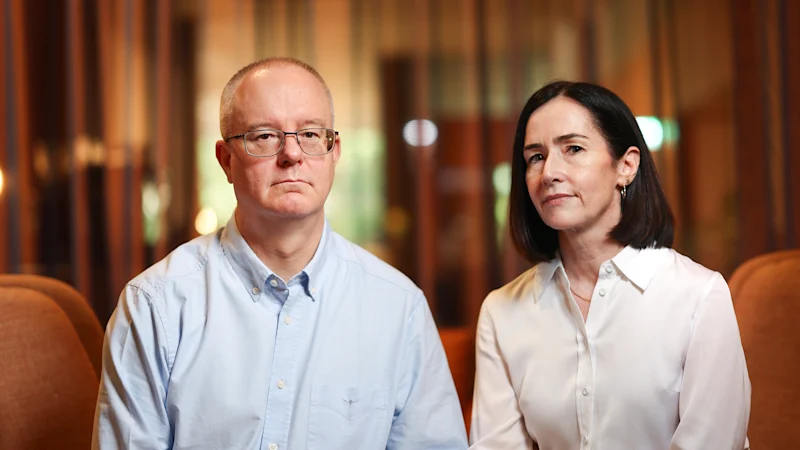
A grieving father who challenged the Victorian government over his detention in hotel quarantine has secured a confidential settlement, with every cent of the payment to be donated to youth mental health causes.
Hayden Flinn claimed he was unlawfully detained for two weeks after arriving in Melbourne in May 2021, shortly after his 13-year-old daughter died following a battle with mental health problems.
The Hong Kong-based corporate lawyer had sought an exemption on compassionate grounds so he could be with his family, but was instead taken with his teenage son to a hotel room in Richmond.
Flinn brought proceedings against the Victorian government and its health department in 2024. The case was due to run for 10 days in the Supreme Court before the settlement was reached.
Hotel quarantine case centred on alleged unlawful detention
He argued that his detention was unnecessary and that officials had failed to properly consider his personal circumstances, vaccination status and the relatively low risk posed by travellers from Hong Kong.
At the time, there were no locally transmitted cases in Melbourne and Hong Kong was not on the government’s list of virus danger zones, according to the claim.
Flinn said his detention meant he could not view his daughter’s body or help his wife arrange the funeral. His lawyers alleged he had suffered a loss of liberty, indignity and mental distress.
The state has denied wrongdoing. In a statement signed by Health Secretary Jenny Atta, it said it regretted the impact mandatory hotel quarantine had on the family and acknowledged that Flinn’s detention caused “significant personal distress”.
“At Mr Flinn’s request, the state has agreed to make a monetary contribution to be used by Mr Flinn for charitable purposes focussing on Victorian youth mental health,” Ms Atta said.
Alex King, the lawyer representing Flinn, said his client had not sought compensation for himself and had instead wanted accountability. He estimated that defending the case through a full trial could have cost the state more than two million Australian dollars in public funds.
Mr King said the decision to place Flinn in quarantine had not been recorded in writing by the then chief health officer, Brett Sutton. He also described repeated difficulties obtaining information from government agencies through freedom of information requests.
“There seemed to be this unquenchable, inexhaustible fire behind all of this,” Mr King said, adding that Flinn had felt a responsibility to the large expatriate community in Hong Kong.
Flinn’s wife, Dr Sarah Whorlow, said dealing with coroners, police, funeral homes and cemeteries while her husband remained in hotel quarantine had been “very challenging”.
The couple now plan to identify a charity they can support over the long term, sharing their experience of youth mental health when they feel ready. They also hope to encourage alternatives to busy and overstimulating emergency departments for children experiencing mental health crises.
Hugh de Kretser, president of the Australian Human Rights Commission, thanked Flinn for bringing the case, saying his actions could help promote a more compassionate response to future public health emergencies.
Flinn said he remained concerned about the impact of the pandemic on young people who lost social networks and have struggled to rebuild them. He said the number of suicides in the community was “disturbing” and that those affected appeared to be getting younger.
