


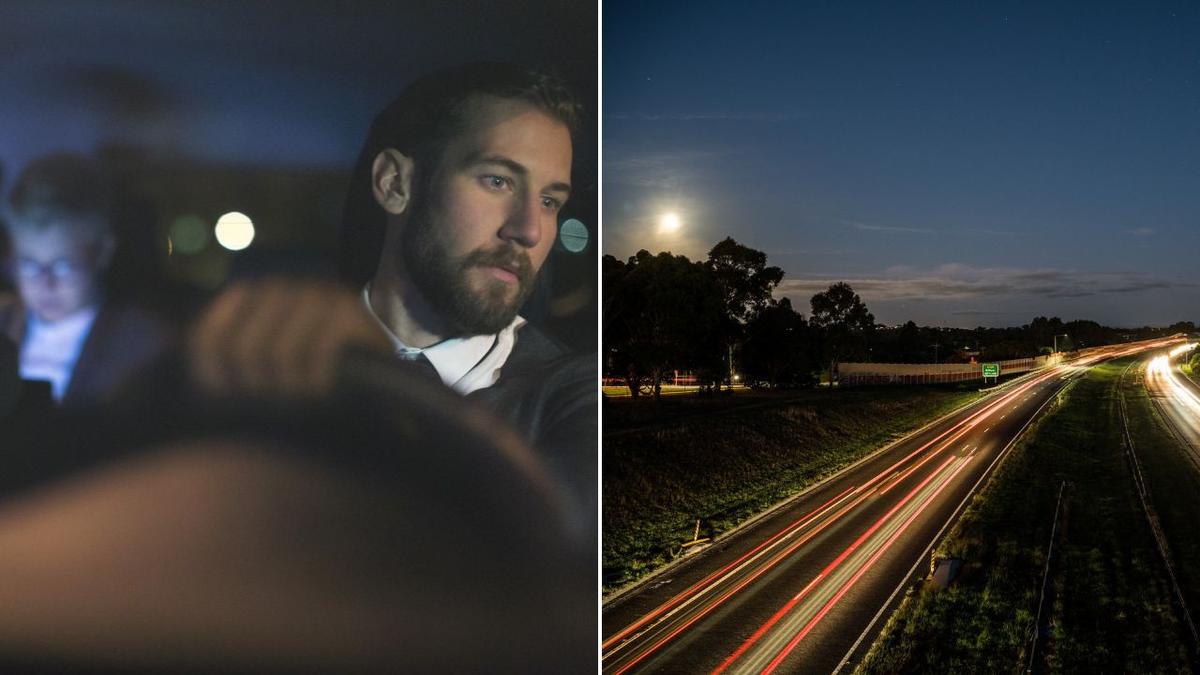
A full moon distracts half of Australian drivers, with many motorists also believing roads become more dangerous when the lunar display is at its brightest, new research by insurer Youi has found.
The findings were released ahead of the Beaver Moon, due to light up the night sky on Wednesday November 25. The name refers to the time of year when beavers prepare for winter in the Northern Hemisphere.
Youi’s survey of 1,520 Australian drivers found that 50 per cent had been distracted by a full moon while driving. A further 22 per cent said they believed roads were more dangerous when the moon was full.
More than one in four respondents, or 28 per cent, said they changed their driving when they knew a full moon was expected. They reported paying closer attention to wildlife, watching other motorists and attempting to limit distractions.
Full moon driving concerns mirror wider night-time risks
Among the hazards motorists associated with driving during a full moon were poor visibility, cited by 47 per cent, drunk drivers by 33 per cent and weather conditions by 32 per cent.
Hitting an animal was identified by 28 per cent, while 26 per cent pointed to distracted drivers. The concerns broadly reflect the risks motorists already face when driving after dark.
Dr Sara Webb, an astrophysicist at Swinburne University, said the moon naturally drew attention because it was one of the most visible and recognisable sights in the night sky.
“A full moon is one of the most universally loved astronomical sights, partly because it can be enjoyed from almost anywhere on Earth,” she said.
“It’s no wonder the moon has captured human attention and imagination across cultures and generations. When something captures our attention and gets everyone talking, it’s only natural that we become a little more aware of the world around us, including what’s happening on our roads.”
The survey also found that 44 per cent of Australians believed full moons affected people’s behaviour. Among those associations, 65 per cent cited unusual behaviour, 44 per cent mentioned strange or unexplained events and 37 per cent referred to increased aggression.
Chris Jarrett, Youi’s executive general manager of claims, said the results highlighted the danger of anything that diverted a driver’s focus from the road.
“Regardless of whether people believe in a full moon effect, it’s a reminder that anything drawing our attention away from the road can increase risk, particularly when driving at night,” he said.
“Reduced visibility, fatigue and wildlife remain very real hazards after dark, so the best approach is always to stay alert, minimise distractions and drive to the conditions.”
Youi said its internal claims data, compiled through its Lunar Incident Index, had identified increases in certain types of incidents during full moon periods.
A separate 2017 study by Princeton University found fatal motorcycle crashes were 5 per cent more common on nights with a full moon. However, there is no scientific evidence that a full moon directly changes human behaviour, and the survey does not establish that it causes crashes.
The survey results have not been independently verified by Youi and may not be representative of the wider population.
