


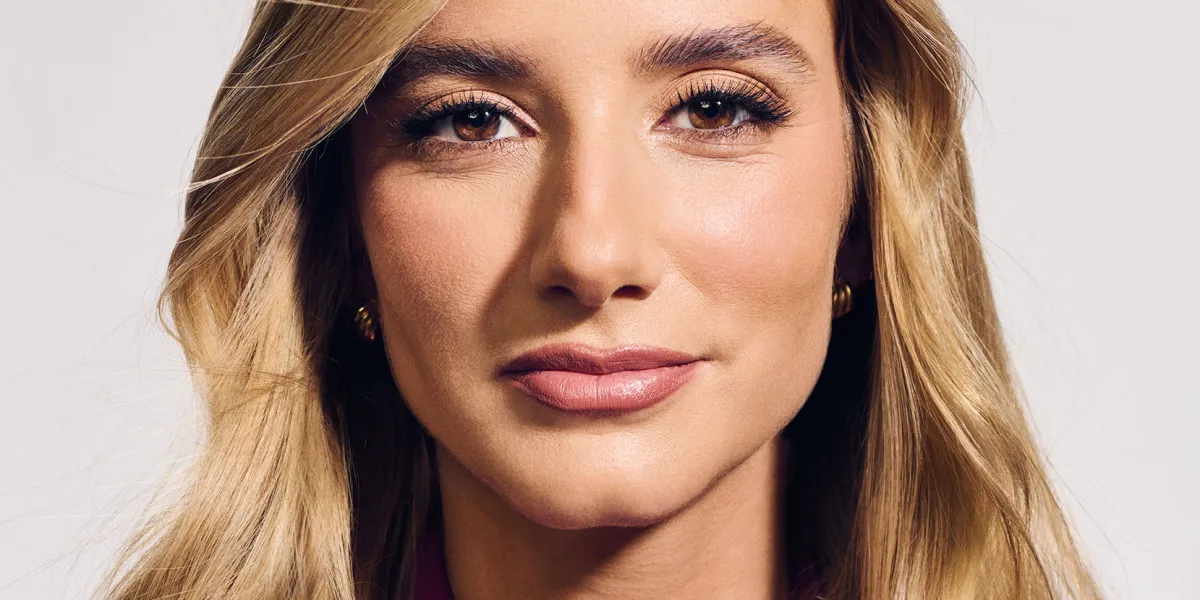
Kalshi, the prediction market company valued at $40 billion, is facing a regulatory test that could determine whether its rapid expansion into sports trading continues or is curtailed by state gambling laws.
The New York-based business, co-founded by Luana Lopes Lara and Tarek Mansour, has become the dominant US prediction market, claiming more than 70% of trading volume. It expects 30 million users to trade about $1 trillion on its platform during 2026.
Kalshi allows users to buy and sell contracts on questions ranging from election results and sporting fixtures to celebrity appearances and short-term movements in the price of Bitcoin. The company describes the products as financial “event contracts”, regulated by the federal Commodity Futures Trading Commission (CFTC), rather than conventional bets.
That distinction is at the heart of lawsuits in at least 23 states. Kalshi is accused of operating a gambling platform without complying with state rules, while the company argues that federal approval of its commodities market takes precedence over state gambling enforcement.
The dispute could ultimately reach the Supreme Court. A ruling that sports contracts are subject to state gambling laws would represent a major setback for a company whose business is increasingly dependent on games played every day.
Kalshi’s sports betting battle
Sports is Kalshi’s largest category, ahead of culture and politics. On the night of the 2026 midterm elections, the company said the amount traded on sports was 23 times higher than the volume placed on the elections, despite a relatively quiet schedule of NHL and college football matches.
Kalshi says it now generates more than $1 billion in annual revenue outside sports, representing at least a fifth of its estimated total. But elections take place only every two years, while sporting events provide a daily source of trading activity.
Dustin Gouker, a writer and consultant specialising in prediction markets and gambling, said the companies had originally been founded to create markets that could provide information about politics, finance and world affairs.
“A loophole has gotten us to sports, too,” he said. “And it’s where they make most of their money.”
Lopes Lara rejects the comparison with traditional bookmakers, pointing out that Kalshi has no “house” taking the opposite side of a customer’s trade. The platform makes money through transaction fees rather than from users losing money.
However, the service has adopted features familiar from betting applications. It displays probabilities, offers a programme for its most active users and previously allowed customers to view contracts using American-style betting odds. Kalshi has defended its premium programme to lawmakers, saying it has “no incentive to be predatory”.
The company is also facing criticism over the fact that users can join at 18, the legal age for retail trading, rather than 21, the usual age for gambling in the US. Athletes have said prediction markets have contributed to harassment by traders unhappy with results.
Lopes Lara has responded that those concerns raise wider questions about financial markets, sports betting and age restrictions across retail trading, including stocks and crypto. She has also said that some critics confuse Kalshi with sportsbooks.
From election markets to a $40 billion valuation
Kalshi’s profile rose sharply after it won a legal battle to offer election contracts in 2024. The CFTC had rejected its proposal for markets on the presidential contest, prompting Lopes Lara to push for a lawsuit against the Biden administration’s regulator.
She was prepared to leave the company if Mansour refused to proceed, according to an investor involved in its early funding. Employees began quitting because they believed the business would fail, while Mansour remained concerned about what Kalshi could lose.
The company filed the case and won the right to offer election contracts in September 2024. For the 2026 midterms, traders placed more than $2.5 billion on races. By the following Wednesday, Kalshi’s markets had correctly predicted 98% of the races that had been called, although they missed Democrat Gina Hinojosa’s unexpected victory in the Texas governor’s contest.
One Kalshi trader made $1.1 million from the election markets. The company’s Senate market had placed the probability of a Democratic victory at 76%, with more than $338 million traded on the outcome.
The platform’s prices have increasingly been presented as real-time measures of public expectations. Lopes Lara has argued that markets can produce a relatively unbiased view of the future because participants are financially rewarded for being right.
“Having an unbiased source of information and data about what’s going to happen in the future is more needed now than ever before,” she said.
Kalshi’s valuation has risen from $2 billion to $40 billion in 18 months. Lopes Lara and Mansour each hold stakes of about 12%, valued at roughly $2.6 billion, making them among the world’s youngest self-made billionaires on paper.
Expansion beyond prediction markets
The company is seeking to reduce its reliance on retail traders and attract more institutional business. It has bought a broker, FB Securities, and plans to offer stock trading, as well as perpetual futures and a futures market for computing capacity.
A proposed fundraising round could value Kalshi at $65 billion, according to people familiar with the plans. Lopes Lara expects institutional trading to account for most of the company’s volume within five years.
Kalshi’s longer-term ambition reflects the ideas of economist Friedrich Hayek, whose work on how markets collect scattered information influenced Mansour. The founders say they wanted to build a financial market based on simple questions about the future.
They met as students at the Massachusetts Institute of Technology and founded the company in 2018 after working together in quantitative finance. Kalshi secured backing from the start-up accelerator Y Combinator the following year and spent two years pursuing federal approval.
Lopes Lara, who studied mathematics at MIT after training at the Bolshoi ballet academy in Brazil and dancing professionally in Austria, now oversees product, markets, engineering and marketing. More than 200 employees report to her across much of the business.
Mansour, who serves as chief executive, concentrates on external affairs, including the company’s legal and regulatory battles. He and Lopes Lara were once a couple, but later separated while continuing to run Kalshi together.
The company has also invested heavily in changing its public image, using advertising, celebrity partnerships and events to promote prediction markets as a mainstream financial product. It has targeted media executives, parents and women, while warning users that “bureaucrats are taking Kalshi” in messages seeking support.
Its expansion has placed it in competition not only with Polymarket, the rival that helped trigger the prediction market boom, but also with established financial platforms including CME, ICE, Robinhood and Coinbase.
For now, the state lawsuits remain the biggest threat to the company’s growth. Mansour has said a defeat would push prediction markets offshore, while Lopes Lara has indicated that Kalshi would work with states willing to permit its products.
“I don’t think it changes the world,” Lopes Lara said of Kalshi’s ambitions. “I think it just adds more clarity to the world.”
