


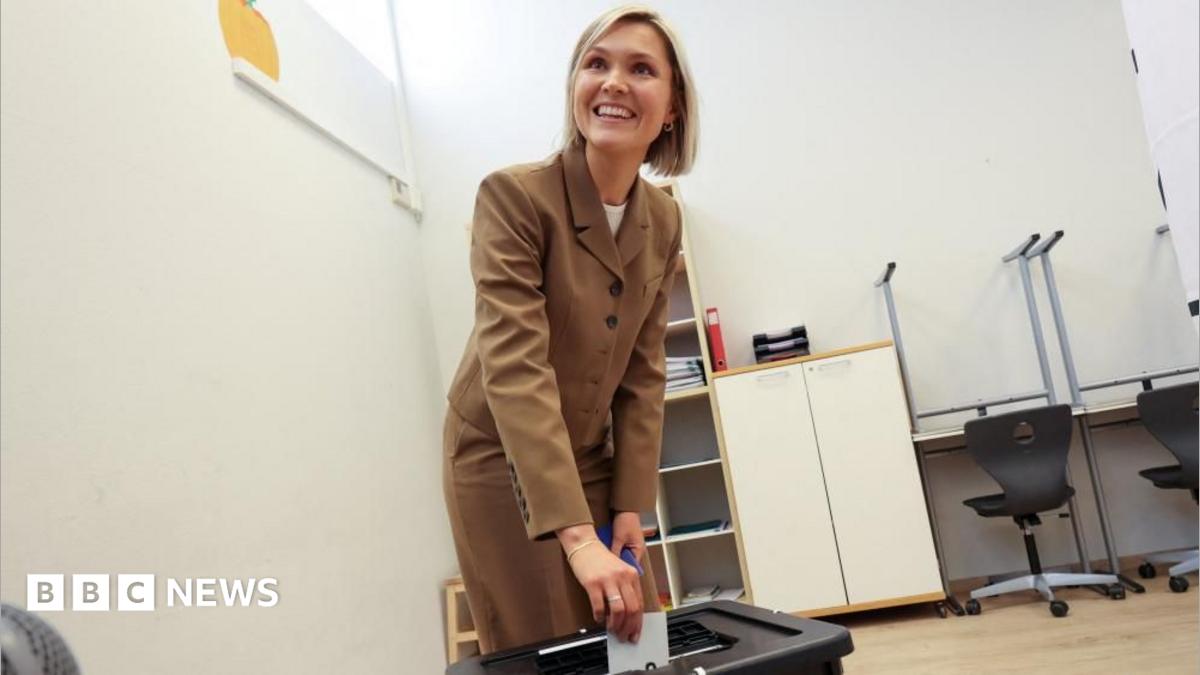
Iceland has rejected a proposal to resume membership negotiations with the European Union, in a closely fought referendum that had been billed as a possible turning point in the country’s relationship with Europe.
With almost all votes counted, 52.5% were opposed to reopening talks and 47.5% supported the move, according to Iceland’s public broadcaster RÚV. About 188,500 ballots had been counted, with a margin of roughly 9,500 votes separating the two sides.
The result is a setback for Prime Minister Kristrún Frostadóttir’s centre-left coalition, which had pledged to put the question to voters by 2027 before bringing the referendum forward amid growing international tensions.
The ballot asked: “Should Iceland resume accession negotiations with the European Union?” It was not a vote on joining the bloc. A majority for negotiations would have started a process that could ultimately have led to a second referendum on any membership agreement.
The Icelandic Government had emphasised that the country’s application, submitted in 2009, remained legally valid despite negotiations being suspended. The European Commission has said that 27 negotiating chapters were opened before the talks were halted, with 11 provisionally closed.
Iceland’s government has not formally withdrawn the application. However, the country’s electoral decision is expected to remove the issue from the political agenda for the remainder of Ms Frostadóttir’s term, which runs until 2028.
The vote followed a campaign in which practical economic concerns outweighed arguments about security and international uncertainty. Fishing was at the centre of opposition to EU membership, with critics warning that Iceland could lose control over its waters under the bloc’s common fisheries policy.
Fish and marine products account for a substantial share of Iceland’s exports, and the industry has long been regarded as the principal obstacle to membership. The country is already part of the European Economic Area and therefore has access to the EU single market, while remaining outside the customs union and the common fisheries policy.
EU membership would also eventually put Iceland on course to adopt the euro, subject to the terms of any accession agreement and the country meeting the necessary conditions.
Supporters argued that closer integration would strengthen Iceland’s economic and political position at a time of heightened geopolitical uncertainty. Ms Frostadóttir’s government had cited US President Donald Trump’s threats concerning Greenland, as well as broader concerns about European security, when explaining why the timetable for the referendum had been accelerated.
Iceland is a founding member of Nato but has no standing military, relying on allied countries for its defence. It has supported Ukraine since Russia’s full-scale invasion and has expressed concern about increased Russian maritime activity near its waters.
Those arguments did not overcome long-standing public resistance to surrendering further authority over fisheries and other national interests. Polls before polling day had suggested an extremely narrow contest, with one final survey putting support for reopening talks at 50.4%, against 49.6% opposed.
Turnout was expected to be strong. RÚV reported that 23% of registered voters had cast ballots in advance, higher than the equivalent figure at Iceland’s 2024 parliamentary election.
