


An internal US maritime alert warned that Washington’s blockade of Iran was driving up insurance premiums and reducing available cargo capacity, after American forces disabled a commercial vessel accused of trying to breach the restrictions.
The warning was circulated by the US Maritime Administration (MARAD) following the attack on the Panama-flagged bulk carrier Ocean Molica and three other unattributed attacks on tankers in and around the Strait of Hormuz.
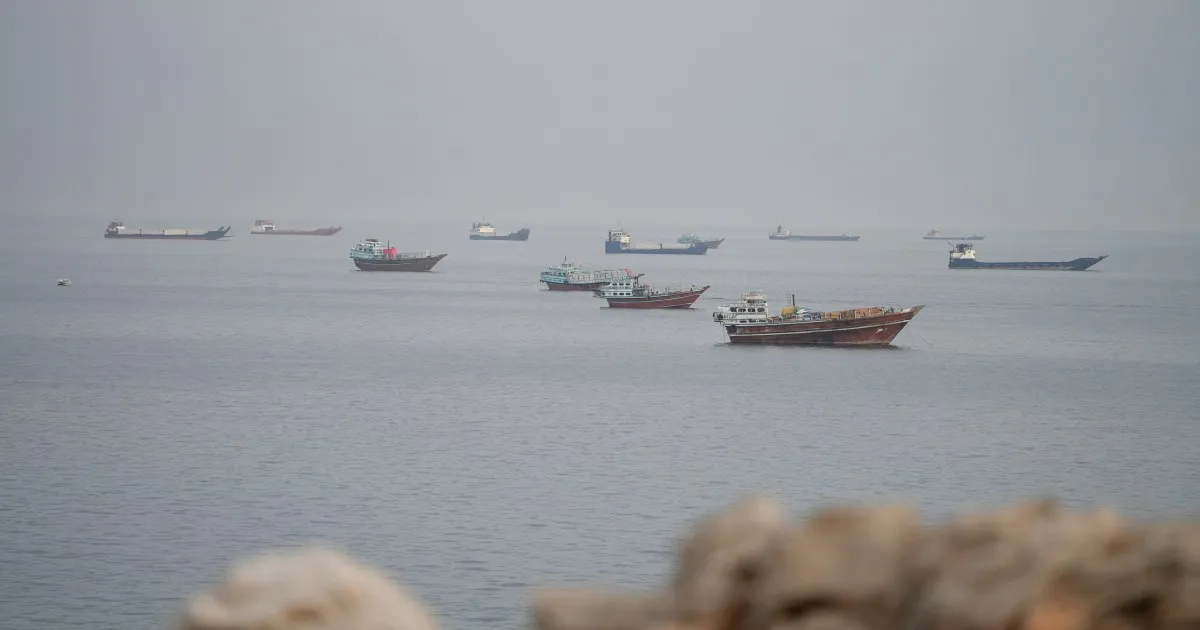
The memo, titled “Alert – Hormuz risk expands beyond the strait”, said merchant ships now faced “kinetic action from both sides” and that the threat had spread to Gulf anchorages and the Gulf of Oman.
“That increases the likelihood of further war-risk premium spikes, crew refusals and effective tanker capacity contraction,” it added.
Stephen M Carmel, MARAD’s administrator, sent the alert to Michael Yarrington, an official in the agency’s Office of Marine Insurance, asking how the attacks were affecting the insurance market and seeking an update on efforts to “rebuild” war-risk cover.
Mr Yarrington replied that a colleague had contacted industry sources in London and forwarded a summary of rising premiums compiled from news reports. Details of other “core deliverables” considered essential to MARAD’s insurance work were redacted before the emails were released.
It is unclear whether the alert was produced by MARAD or another US government agency. MARAD, which is part of the Department of Transportation, did not respond to requests for comment.
Insurance costs surge as Hormuz risks widen
The disruption has sharply increased the cost of shipping through the region. The cost of insuring an oil tanker carrying crude from the Middle East to East Asia rose about 200-fold between January and the end of October, reaching $12.29 (£9.60) per barrel, according to Opec.
By July, war-risk cover was costing between 3.5 per cent and 7.5 per cent of a vessel’s market value, compared with 0.10 per cent to 0.25 per cent before the conflict, according to industry estimates cited in Singapore’s Parliament.
Crude oil prices rose by as much as 60 per cent at points during the war, while fertiliser prices increased by up to 112 per cent.
Todd Huntley, a retired US Navy captain who leads the National Security Law Programme at Georgetown University Law Centre, said MARAD’s monitoring was likely intended to inform advice to other parts of the US government.
“As far as I know, MARAD will issue general alerts on incidents or threats, but will not then discuss the consequences, eg, increases in insurance rates,” he said.
Mr Huntley said some US officials may not have considered the risk, or may have ignored it, when ordering and implementing the blockade. Ian Ralby, chief executive and founder of maritime security consultancy I.R. Consilium, said the administration appeared more focused on stopping ships from supporting Iran’s economy than on the blockade’s wider strategic consequences.
Boon Chuan Lim, an independent researcher in Singapore, said the danger extended beyond vessels passing through the strait. Ships at anchor, taking on fuel or approaching ports could also be exposed, he said, with insurance costs depending on the vessel, route, area and length of exposure.
About 130 attacks on vessels have been recorded in the region since the US and Israel launched strikes on Iran on February 28, according to the International Maritime Organization. At least 25 seafarers have died, while October was the conflict’s worst month for shipping, with 35 vessels targeted.
Most attacks have been attributed to Iran or Iranian-aligned forces, while US Central Command has claimed responsibility for destroying or disabling at least two dozen vessels, including some it identified as belonging to Iran’s Islamic Revolutionary Guard Corps shadow fleet.
