


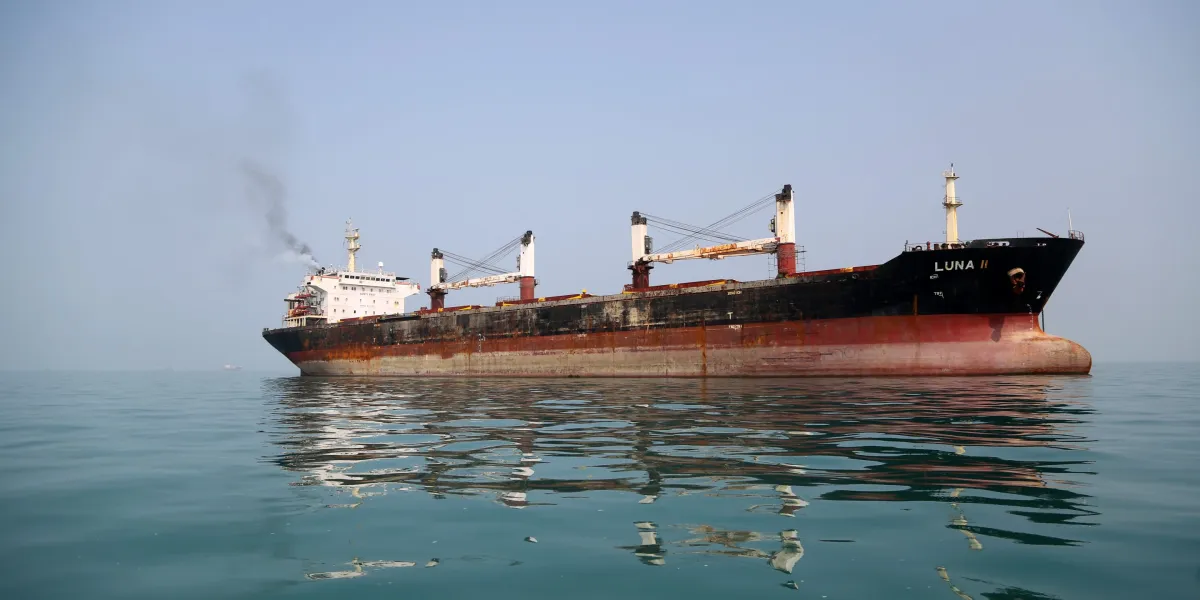
Oil has risen above $100 a barrel as the escalating war between the United States and Iran further disrupts shipments through the Strait of Hormuz, raising the prospect of fuel shortages, higher inflation and renewed pressure on central banks to increase interest rates.
Brent crude, the global benchmark, settled at $101.21 a barrel on Wednesday, its first close above the threshold since July. US diesel futures also climbed above $200 a barrel, a level reached only once before, briefly, after Russia’s invasion of Ukraine in 2022.
The latest surge followed attacks on Iranian oil tankers, strikes on US naval vessels and an escalation by Yemen’s Houthi movement against Saudi energy facilities and shipping in the Red Sea.
Traffic through Hormuz, the narrow waterway linking the Gulf with the Arabian Sea, had shown signs of recovery in recent weeks but has since slowed sharply. The US Energy Information Administration estimated that flows averaged 4.9 million barrels a day in the second quarter of 2026, down from 21.6 million barrels a day before the conflict began.
Susan Bell, senior vice-president at Rystad Energy, said fuel inventories had fallen to critically low levels after months of disruption.
“The conflict has entered a new stage,” she said. “Global stocks of diesel, gasoline, and jet fuel have drawn down an awful lot; they are now at critical low levels.”
Bell warned that diesel shortages could become increasingly common during the autumn and winter, particularly in Britain and elsewhere in Europe, as well as across parts of South Asia.
She said higher prices could be needed to force consumers and businesses to cut usage, a process known in the energy industry as demand destruction. “I hate to say it, but we need prices at the pump to go up higher to encourage consumers to make choices on their energy consumption,” she said.
Dan Pickering, founder of Pickering Energy Partners, said diesel was a more immediate concern than the headline crude price because it powers freight fleets, farm machinery and much of the global supply chain.
“The market is competing for a limited supply of diesel. So, at what point do we worry? We worry now,” he said. “Prices are quite high and there’s no easy relief valve. Nobody is building new oil refineries.”
Refining capacity has also been hit by outages in the Middle East and Russia, while inventories have continued to fall. Unlike crude oil, there are no equivalent strategic reserves of finished fuels that governments can readily release to ease a shortage.
Diesel prices add to inflation fears
Rising fuel costs are already feeding through to households and companies. The average price of regular petrol in the US reached $4.22 a gallon on Wednesday, a record high for September, while diesel rose to $5.94 a gallon — its highest level on record.
Casey’s General Stores, one of the largest US convenience-store chains, said customers were buying less fuel on each visit, switching from premium and mid-grade petrol to regular, while also cutting back on branded snacks.
Darren Rebelez, the company’s chief executive, said the changes were most pronounced among lower-income customers, who were feeling the effects of higher prices across the economy.
Pickering said the danger was that rising diesel and transport costs would begin to influence inflation readings around the world. “The risk that this shows up in inflation is growing — not just US inflation, but global inflation,” he said.
That could complicate decisions by central banks, which may face pressure to raise interest rates even as higher borrowing costs weigh on economic growth.
Analysts at Bank of America have warned that a prolonged chokehold on shipping through Hormuz could push oil towards $120 a barrel, while damage to major energy infrastructure could trigger spikes as high as $150.
The US EIA has said it could take until early 2027 for production and trade patterns to return broadly to their pre-conflict position, although that outlook depends on shipping through Hormuz gradually recovering.
Claudio Galimberti, Rystad Energy’s chief economist, said falling inventories and weaker demand caused by high prices could keep the global economy functioning through November and early December.
But he warned that a truce between Washington and Tehran might be needed by the end of the year to prevent more serious economic damage in 2027, adding that the Trump administration would want to demonstrate that inflation was under control.
