


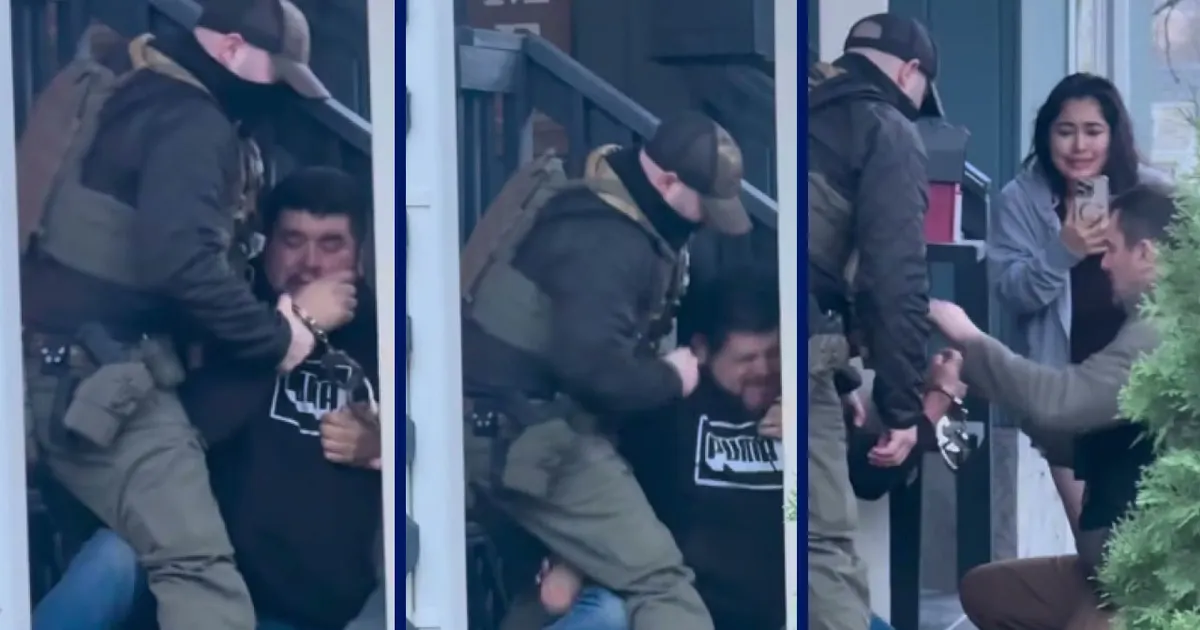
Immigration enforcement operations escalated from Chicago and Los Angeles to Minneapolis, with thousands of federal agents deployed in Minnesota and tactics that drew legal challenges and allegations of unlawful conduct.
The expansion of Immigration and Customs Enforcement activity is examined in a three-part documentary series, which charts the operations carried out during Donald Trump’s second term and their impact on communities in the Twin Cities.
By the time Operation Metro Surge brought a large federal presence to Minneapolis and St Paul last January, immigration attorneys and community groups said they had already seen warning signs in other major American cities.
“And in each state, it just got worse and worse and worse,” said Jose Alvillar of Unidos Minnesota.
From Chicago to Minneapolis
The administration has repeatedly said its operations are aimed at the “worst of the worst”. However, the Chicago operation known as Operation Midway Blitz resulted in wrongful detentions, accusations against observers and at least two people being shot, according to the report.
Legal challenges that followed alleged that federal agents provided misinformation, tampered with evidence and boasted about the use of deadly force.
Theresa Kleinhaus, a civil rights attorney in Chicago, said she warned contacts in Minneapolis after seeing the tactics used there.
“They’re really coming in hot, they’re really coming in aggressive,” she said.
Those warnings did not fully prepare Minnesota for the scale of Operation Metro Surge, which brought substantially more federal agents into the metropolitan area than had been deployed during the Chicago operation.
“Midway Blitz at its height had 500,” Minnesota Governor Tim Walz said. “And we had, by most accounts, I mean, it’s hard to get true numbers… above 3,000.”
At one point, there were more federal immigration agents in Minneapolis and St Paul than local police officers. Kleinhaus said the numbers allowed federal authorities to “fully saturate and occupy” the cities.
Luis Argueta Jr, of Unidos Minnesota, said the size of the deployment meant residents were likely to encounter an agent. “You put 3,000 agents in a very tiny Twin Cities, you’re going to bump into an agent,” he said.
Unidos Minnesota began preparing for a possible surge in June 2025 after observing enforcement tactics in Los Angeles. The organisation eventually trained thousands of legal observers.
Renewed activity in Minnesota
Operation Metro Surge wound down after the fatal shootings of Renee Good and Alex Pretti prompted widespread criticism of ICE tactics.
Immigration attorneys have since reported a renewed increase in activity in Minnesota. In one recent case, a 45-year-old Mexican man who had lived in the United States illegally since the late 1990s was allegedly followed home from a grocery shop, punched and detained in front of his crying daughter.
An attorney for Jose Ruelas Viorato said the detention was unlawful, arguing that he held a Minnesota driving licence, had filed the required immigration paperwork and had no violent criminal record.
The Department of Homeland Security defended the arrest and said Viorato threw a bird feeder at agents while attempting to flee.
The report also noted that Stephen Miller, described as the architect of the administration’s immigration tactics, was promoted to chief of staff days after the mid-term elections.
The documentary series examines the operations in Chicago and Minneapolis through interviews, court records and body-worn video footage. Its final instalment, titled “Chaos”, is due to premiere on Wednesday 18 November at 10.35pm Central Time.
