


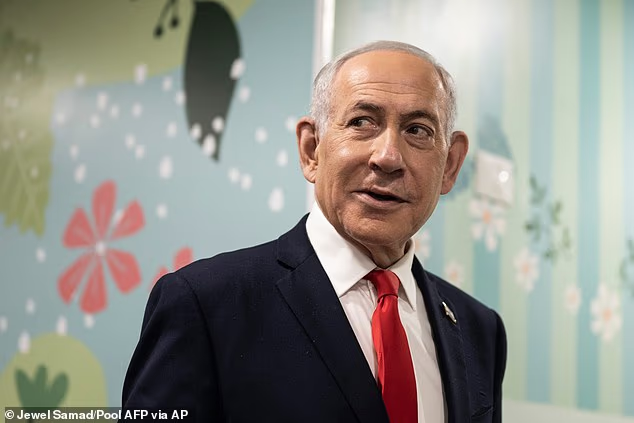
Israel’s election has left Benjamin Netanyahu facing an uncertain political future, with exit polls indicating that his Likud party is likely to remain the largest force in the Knesset but that neither major bloc has secured the seats needed to form a government.
Projections from Kan 11 and Channel 13 put the two rival blocs on 52 seats each, while Channel 12 placed the bloc led by former military chief Gadi Eisenkot slightly behind on 50. All three projections leave the competing groupings well short of the 61 seats required for a majority in the 120-member parliament.
The figures raise the prospect of difficult coalition negotiations and a prolonged deadlock. Israel held five elections between 2019 and 2022, and the early results have revived fears of another period of political instability.
The final result will depend on the official count, which is expected in the coming days. Arab-led parties Ra’am and the Joint List were earlier projected to win a combined 18 seats, potentially giving them a decisive role in determining who can form the next government.
Israeli election becomes referendum on Netanyahu’s leadership
The vote was widely seen as a referendum on Netanyahu’s leadership since the Hamas-led attacks of October 7, 2023, and on the wars that have since shaken the Middle East.
Netanyahu, 77, urged supporters throughout election day to turn out, describing the vote as an “emergency” and a “matter of life and death”. At a rally later, he said: “Likud is the largest party. We must establish a strong, right-wing government.”
Likud had asked for polling to continue beyond the 10pm closing time, but an election committee rejected the request, saying that “the current circumstances do not justify an extension”.
Turnout reached 74 per cent, the highest recorded since 1974, when Israelis voted following the Yom Kippur war against Egypt and Syria. More than 7.3 million people were eligible to vote, including about 330,000 young Israelis casting a ballot for the first time.
Netanyahu has dominated Israeli politics for almost two decades. A victory would reinforce his reputation as a political survivor, while a poor showing could bring his long career to an end and open the way to a new era.
His campaign has relied on alliances with religious and nationalist parties. US President Donald Trump backed his re-election earlier this month, although the endorsement came late in the campaign.
Opposition bloc faces coalition challenge
Eisenkot’s Yashar party has been seen as the main opposition to Netanyahu. The informal bloc seeking to remove the prime minister stretches from the Right to the centre-Left and includes former prime ministers Naftali Bennett and Yair Lapid, veteran politician Avigdor Lieberman and Left-leaning Yair Golan.
Eisenkot has pledged to establish an independent state commission of inquiry into the security failures surrounding the October 7 attack, an investigation Netanyahu’s government has resisted. He lost his son and two nephews during combat in Gaza.
He began election day meeting voters in Ofakim, one of the southern communities attacked by Hamas-led militants. The visit highlighted the security failures that preceded Israel’s deadliest militant attack.
Neither Eisenkot nor Netanyahu has publicly said they would work with the predominantly Arab parties. Those parties represent about 21 per cent of Israel’s population and could become kingmakers if the final result remains as close as the exit polls suggest.
The October 7 attack dominated the campaign, while debate over Israel’s wartime conduct in Gaza was limited. Netanyahu faces an international arrest warrant over the conflict, although the source material does not state the details of the warrant.
Other issues included Israel’s occupation of parts of southern Lebanon and Syria, its two wars launched against Iran, proposed exemptions from military service for ultra-Orthodox Jews and a 2023 judicial overhaul criticised by opponents as an assault on democratic institutions.
Voters divided over security and change
Emotions ran high at polling stations across the country. In Jerusalem, one voter who had travelled from Kibbutz Nirim, which was attacked on October 7, said: “This is critical, and it’s never been as critical.”
In Kiryat Shmona, a Netanyahu stronghold near the Lebanese border, a man kicked and tore down a poster of Eisenkot. In Tel Aviv, relatives of people killed in the 2023 attack and families of former hostages observed a moment of silence.
“Remember all those whose voices are no more,” said Yona Adam, whose daughter Mapal was killed.
At a polling station in a Jerusalem school, some voters said they wanted change, while others said they trusted only Netanyahu to protect the country.
“He’s not responsible for October 7,” said Nisim Cohen, a reservist, who wanted Netanyahu to remain in office and continue the wars in Gaza, Lebanon and with Iran until Israelis could sleep peacefully.
Zipporah Bennett, an 85-year-old retiree, said she voted for Netanyahu because “he has had the experience of navigating the country through a lot of difficult seasons”. Praising his support from the US, she added: “He’s a man who’s not afraid to take action.”
Alexandra, a 65-year-old voter in Jerusalem, said: “I want change in our country. I want a good democratic centrist government.”
Tens of thousands of Israelis were estimated to have travelled from abroad to vote in an election regarded by many as crucial to the country’s future. Uriel Brandler, a 58-year-old estate agent, said beforehand: “I think this is one of the most important election days in the history of the state of Israel.”
With no party ever having won the 61 seats needed for an outright majority, the next stage will depend on negotiations between parties and the alliances they can assemble. The exit polls suggest that forming a government could prove as difficult as winning the election itself.
