


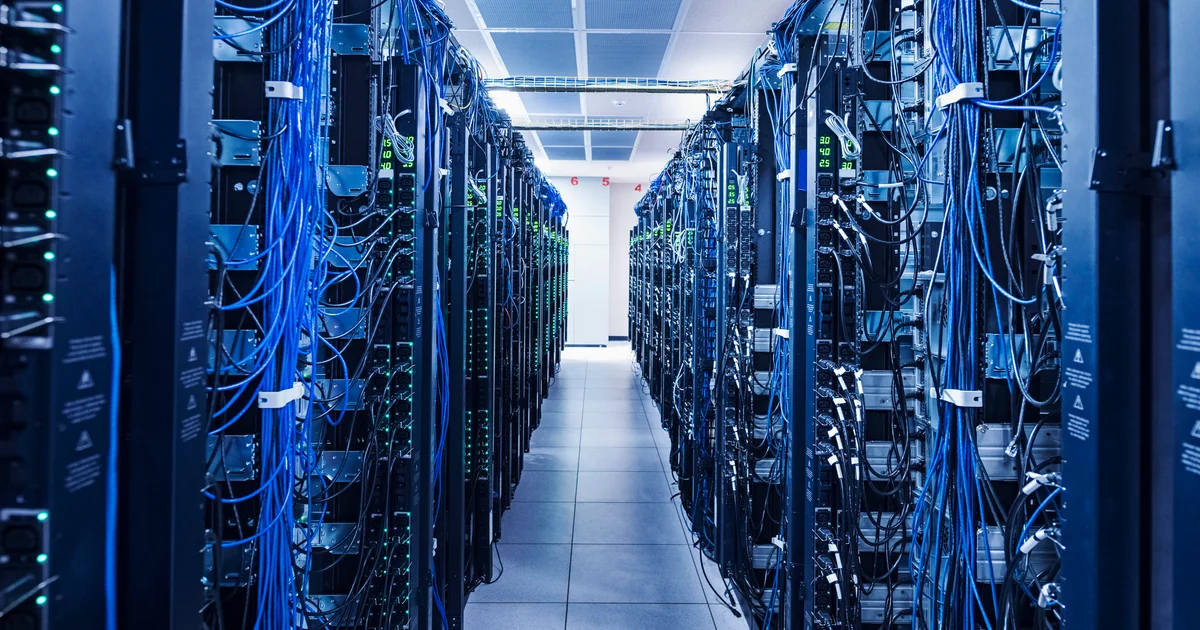
America’s biggest hyperscale data centres consumed 82 terawatt-hours of electricity between May 2024 and April 2025, accounting for 1.8% of total US electricity use, new Harvard research has found.
The energy used by the facilities — which can occupy the space of several football pitches — was broadly equivalent to the annual consumption of Missouri or Denmark. Together, they also produced 26 metric tons of carbon dioxide, according to the study.
Researchers analysed 403 hyperscale data centres during the 12-month period. Gianluca Guidi, the Harvard scientist who led the research, said the figures were likely to underestimate current consumption as construction linked to artificial intelligence continues at speed.
“The data stops in April 2025, which in AI time is basically ancient history,” Mr Guidi said. He added that more than twice as many large-scale facilities are now operating in the US, with a further 2,000 planned or under development.
“The industry is growing faster than anyone can track it,” he said.
Data centres operating around the clock
The facilities house tens of thousands of computers and run continuously, processing everything from emails, photographs and streamed programmes to requests made through generative AI software.
Their machines produce substantial heat and require constant cooling. “So it’s basically a factory that never sleeps,” Mr Guidi said.
While describing himself as a supporter of AI, he called for greater transparency before data centres are built, including assessments of their electricity use, carbon emissions and wider impact.
“The evidence shouldn’t show up after the buildings do, and neither should the public’s voice,” he said. “There are better ways to build this, maybe that cost more, maybe they take longer. So we have to ask ourselves: Are we confusing what’s possible or what’s profitable with what’s actually good for society?”
Mr Guidi challenged major technology companies including Amazon, Meta and Microsoft to apply greater care to the expansion of AI infrastructure.
“We’ve proven we can build AI really fast. Now, let’s prove that we can build it right,” he said.
The findings come as negotiators at the United Nations COP31 climate talks in Turkey launched a voluntary pledge urging governments and companies to power AI with cleaner energy.
UN climate chief Simon Stiell said: “We cannot ask people to accept higher bills, more planet-heating pollution and deeper inequality today in exchange for promises of a better tomorrow.”
None of the US technology companies driving the AI expansion had signed the pledge so far.
