


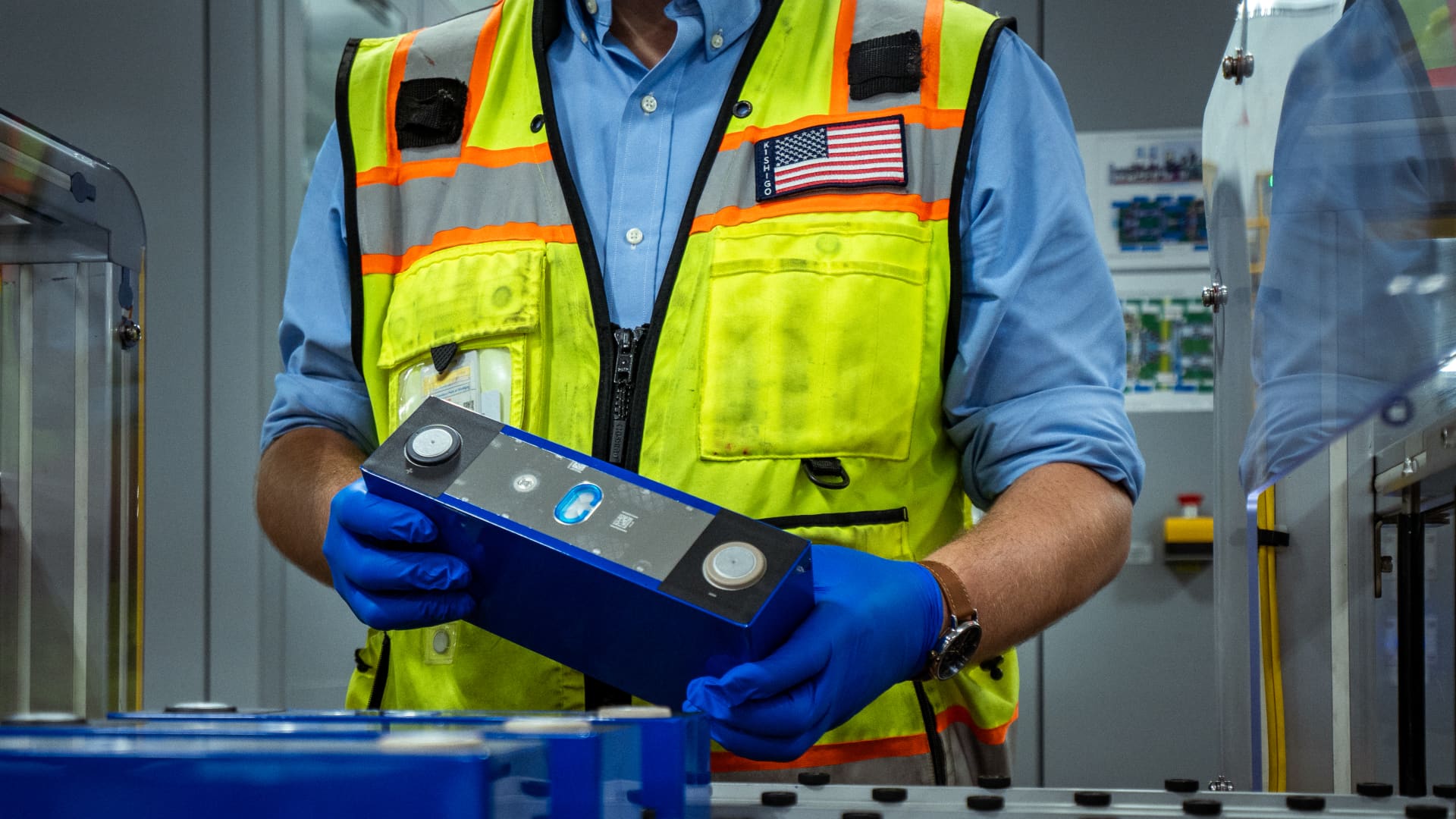
Ford has begun producing battery cells in the United States using technology licensed from Chinese battery manufacturer CATL, marking a significant step towards lower-cost electric vehicles made with lithium iron phosphate (LFP) batteries.
Production started last month at Ford’s $3 billion facility in Marshall, Michigan, with the first cells now being shipped for prototypes of the Fathom small electric pickup. The vehicle is expected to launch in the fourth quarter of 2027.
The cells will initially be used in development vehicles as Ford works to certify its manufacturing processes. The company plans to increase production next year at the highly automated plant.
Ford battery cell production begins in Michigan
The facility, which covers about two million square feet, is expected to produce 40 cells a minute once operating at its planned rate. That would equate to annual capacity of about 20 gigawatt-hours for electric vehicles and Ford’s energy storage business.
The figure is below earlier plans for capacity of up to 40 gigawatt-hours, following a slowdown in demand for electric vehicles at Ford and across the wider industry.
Ford said the production rate should help lower battery costs. The plant also has space for additional capacity if demand requires it.
LFP technology was developed in the US but has been commercialised largely in China. Ford says licensing the technology from CATL has allowed it to bring the chemistry into US production more quickly.
Alan Clarke, Ford’s vice-president of advanced development projects, said: “If we want to get to being able to produce affordable EVs in the United States, we need to also do it the fastest way possible. CATL being the biggest in the world means that they’re the best supplier to get us that technology and help us learn ourselves how to produce LFP cells.”
The arrangement has drawn criticism from some US lawmakers and Transportation Secretary Sean Duffy, amid increased scrutiny of links between Chinese companies and US manufacturers.
In September, Mr Duffy wrote to Ford chief executive Jim Farley expressing “profound concern” about the carmaker’s ties to Chinese companies, saying they could harm Ford and the US automotive industry. The White House subsequently praised Ford’s domestic jobs and manufacturing.
Ford has repeatedly highlighted its US manufacturing base and workforce as successive administrations have encouraged production to be brought back onshore. The Marshall plant represents the company’s next step towards supplying its future electric vehicles with batteries produced domestically.
