


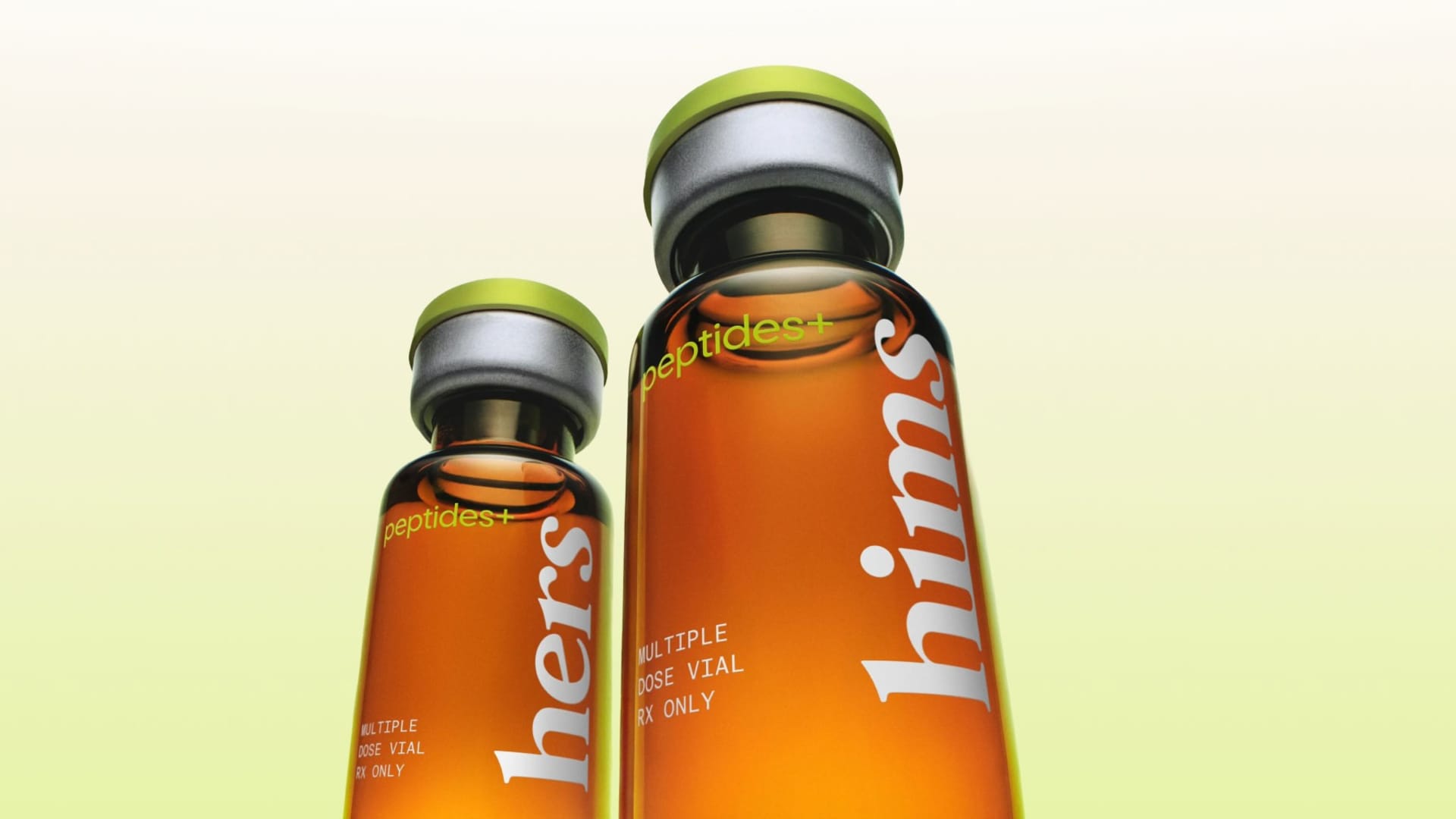
Hims & Hers is to offer five compounded peptide and longevity treatments in the US, despite none of the specific products having been approved by regulators.
The company said the products would form the initial rollout of its Peptides+ platform. It acknowledged that there was still more to learn about how the treatments should be used and how effective they are.
The launch follows a change in federal policy easing restrictions on the compounding of certain unapproved peptides. These short chains of amino acids have become popular among fitness and longevity enthusiasts, who claim they can support muscle growth, injury recovery and anti-ageing, although most have not been tested in robust human trials.
More than 10,000 people joined Hims & Hers’s early-access list within 15 days of its launch in late October, a company spokesperson said.
The initial products include compounded sermorelin, which stimulates the release of growth hormone and is marketed for recovery, body composition and anti-ageing. The company will also offer glutathione, promoted for anti-ageing and athletic recovery, and nicotinamide adenine dinucleotide, or NAD+, a coenzyme involved in cellular metabolism.
Two further products are vitamin B12 and L-carnitine. B12 is needed to produce red blood cells, build DNA and maintain nerve function, while L-carnitine helps the body convert fat into energy. Certain prescription forms of both have been approved by the US Food and Drug Administration for established medical uses, principally diagnosed deficiencies.
Hims & Hers said the treatments would be produced by US pharmacies that follow quality standards and are licensed and inspected by state pharmacy boards. However, the company stressed that its specific compounded products do not have FDA approval.
Members seeking treatment will undergo an assessment of their medical history and goals with a licensed provider trained in peptide therapies. Hims & Hers said providers could tailor a plan where appropriate and monitor patients through its online platform.
Dr Anant Vinjamoori, the company’s chief medical officer, said patients would be contacted to assess whether they were achieving the desired results.
“If they’re not, we need to do something about it,” he said. “We need to, you know, adjust the dose when that’s appropriate, or in some cases consider other compounds that’s maybe a better fit. And of course, there will also be cases when we need to refer people to other care options.”
Patients with serious conditions including cardiovascular, liver or kidney disease will not initially be eligible, Dr Vinjamoori said.
Hims & Hers plans to add further treatments, including BPC-157 and TB-500. Both are unapproved peptides marketed for healing and soft-tissue recovery respectively, while most research into them has been conducted in animals rather than humans.
Concerns over unapproved peptide treatments
Health experts have warned that the wider marketing of peptides, particularly through telehealth services, is taking place amid limited evidence about their safety, effectiveness and appropriate dosage.
Joshua Kritzer, a chemistry professor at Tufts University, said: “With peptides, I think you have to view them the same way you would view any drug that hasn’t been rigorously tested. Without actual testing, all you have is anecdotal information, and that’s just not enough information to put a substance in your body.”
Paul Knoepfler, a cell biology and human anatomy professor at UC Davis Health, said the absence of large clinical trials made it difficult to establish suitable doses. He warned that excessive amounts of a synthetic peptide could provoke harmful immune responses if the body recognised it as foreign.
“With the peptides, it’s very loosey-goosey,” Professor Knoepfler said. “How does one even know what would be the effective amount for whatever you’re hoping it will do, and what amount would have more risks?”
He said close contact between patients and doctors was important, with providers expected to explain the risks and unknowns, consider existing conditions and cancer history, and review other medicines being taken.
Hims & Hers said its Care+ service would provide ongoing support, including twice-yearly laboratory testing and round-the-clock messaging with providers trained in peptide therapy.
The company’s ability to offer some of the products follows an October policy from the US Department of Health and Human Services. Under the policy, the FDA will not take enforcement action against licensed pharmacies, federal facilities or doctors that compound and dispense six unapproved peptides while formal rules are reviewed.
The policy does not amount to formal approval of the treatments. It followed a 2023 FDA decision to restrict compounding pharmacies from producing popular peptide formulations over concerns about safety, impurities and immune reactions.
HHS Secretary Robert F Kennedy Jr has supported wider access to peptides, describing himself as a “big fan” of the treatments and arguing that restrictions were pushing Americans towards potentially unsafe products from overseas.
Evidence varies between peptide products
The available evidence differs substantially between the treatments. A 2026 systematic review of 113 studies found no eligible clinical outcome trials showing that intravenous or intramuscular NAD+ improved anti-ageing, energy or wellness outcomes in humans.
A review of 37 L-carnitine trials found that participants lost an average of about 2.7lb, although the findings do not establish that a compounded injection would work in the same way. B12 injections are generally used for diagnosed deficiency rather than preventative treatment.
Evidence for glutathione is also limited. Intravenous injections are widely promoted for skin lightening, but are not approved by the FDA for that purpose.
The FDA said in August that it had received reports of at least 30 patients suffering adverse events after receiving compounded intravenous glutathione, either alone or alongside other ingredients. The reports involved products from different pharmacies, with the glutathione traced to the same wholesale distributor and labelled as dietary supplement grade rather than a suitable ingredient for injectable medicines.
Andrew Huberman, a neuroscientist, podcaster and Stanford University School of Medicine professor who recently joined the Hims & Hers board, described the compounds as “real medical treatments, not just a wellness trend”. He said the company offered access through “trusted sourcing and physician oversight”.
