


Australia’s life expectancy is projected to rise sharply over the next four decades, with women expected to live to almost 90 by 2065/66, according to Treasury’s latest Intergenerational Report.
The forecast, released ahead of the report’s full publication on Monday, estimates that female life expectancy at birth will increase from about 86 years today to almost 90. For men, it is expected to rise from 82 to 86 years.
The figures would preserve Australia’s position among the countries with the highest life expectancies in the world. But doctors have warned that longer lives must also be healthier ones.
Danielle McMullen, president of the Australian Medical Association, said people were spending more of their later years living with chronic disease or mental illness.
“Over the last few generations we’re living longer, but we’re also living more years in ill health with chronic disease or mental illness,” she told ABC News.
She called for greater emphasis on preventative healthcare, arguing that regular contact with doctors earlier in life could help reduce chronic illnesses in later years.
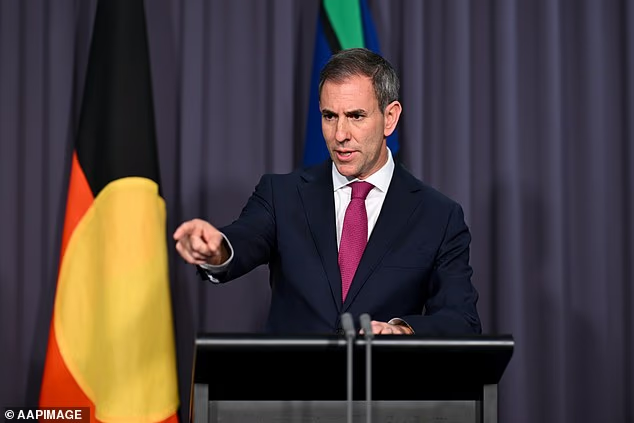
Treasurer Jim Chalmers said the projections strengthened the case for continued investment in Medicare, the Pharmaceutical Benefits Scheme and urgent care clinics. He also warned that an ageing and growing population would remain a major source of pressure on government finances.
“There are elements of the intergenerational report which are confronting, but it’s not a pessimistic report … because Australians are genuinely better placed and better prepared for all of this accelerating change that we are seeing,” Mr Chalmers told News24’s Sunday Agenda programme.
Australia’s population forecast cut
The report is expected to forecast a smaller Australian population than the previous 2023 assessment. Treasury predicts annual population growth will slow to 0.9 per cent over the next 40 years, compared with 1.4 per cent during the previous four decades.
The population is projected to reach 39.3 million by 2065/66, which is 1.8 million fewer than forecast in 2023. Much of the change is attributed to falling fertility rates, as women have fewer children and start families later.
Mr Chalmers said almost half of the decline in fertility was due to fewer people having three or more children. He pointed to Labor policies including subsidised childcare, increased paid parental leave and higher compulsory superannuation contributions.
Opposition Leader Angus Taylor said young families needed confidence that they could afford to have children, while confirming the Coalition had no plans to bring back the “baby bonus” introduced under the former Howard and Costello governments.
Future government debt is nevertheless expected to be around half a trillion dollars lower than projected in the 2023 report. Mr Chalmers said much of the improvement depended on productivity gains from emerging technologies, including artificial intelligence.
“Overwhelmingly, the fiscal story is a little bit better; but still, lots, lots more work to do to manage some of these pressures and risks,” he said.
Mr Taylor accused Labor of relying on overly optimistic productivity assumptions and said it would “cook the books” to produce better-than-expected budget forecasts.
