


The Alaska Senate race is being fought over a deeply rooted political insult: whether candidates are serving the interests of the “Lower 48” rather than standing up for the state’s own voters.
Republican Senator Dan Sullivan has made the accusation a central line of attack against Democratic challenger Mary Peltola, portraying her as aligned with “Lower 48 liberals” who oppose expanded oil and gas development. The contest is among a small number expected to help decide control of the US Senate in November.
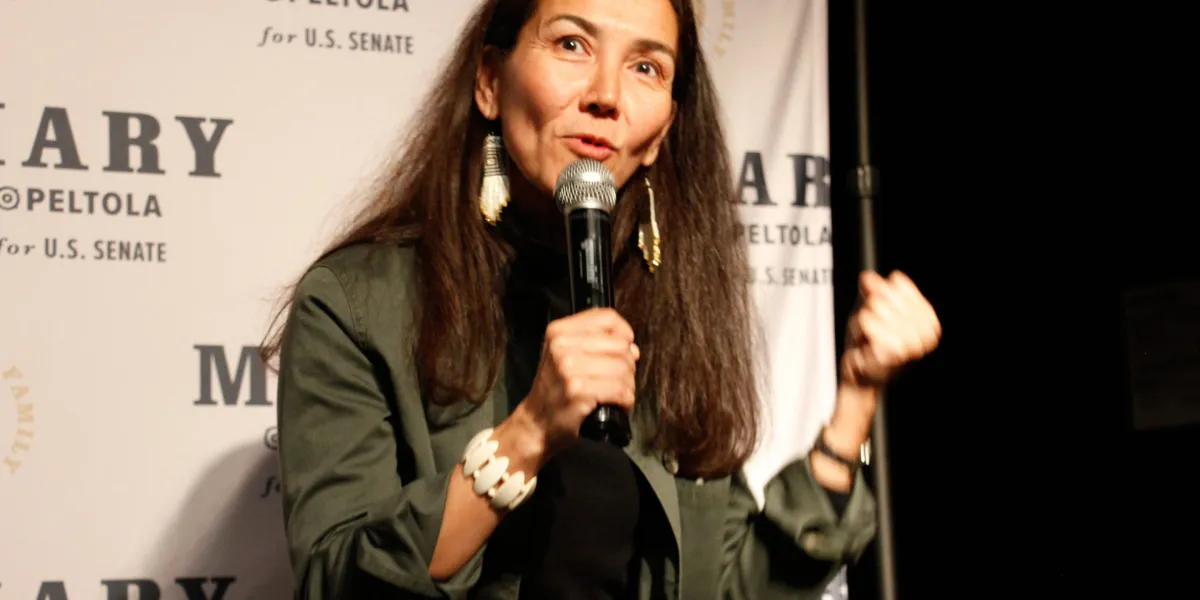
Peltola, a former congresswoman and Alaska Native, has responded by pointing to her support for the Willow oil project, which was approved in 2023 despite strong opposition from environmentalists. She says she challenged Joe Biden, then the Democratic president, to help secure the project and would confront politicians from outside Alaska when necessary.
“I took on Joe Biden to secure the largest development project in decades,” Peltola said in a social media video. “And I’ll work with Donald Trump on more.”
The dispute draws on Alaska’s long-standing sense of separation from the rest of the United States. Much of the state is remote, with communities accessible only by air or water, while hunting and fishing remain central to life for many residents.
Republican and Democratic campaigns, along with outside groups, have sought to present their candidates as authentic voices for Alaskans. Robert Sewell, an independent from the Juneau area who supports Peltola, said both sides were seeking to establish “who is the real spokesperson for the real Alaska”.
Oil development at centre of Alaska Senate race
Natural resources have repeatedly brought Alaska into conflict with the federal government, which owns about 60% of the state’s land. Democratic administrations have restricted some logging, mining and oil and gas activity over environmental concerns, while Donald Trump’s administration has reversed some of those measures and supported expanded development.
The state’s relationship with Washington has also been strained by disputes over road building and logging in the Tongass National Forest, as well as the share of royalties from oil and minerals extracted from federal land.
Oil production is well below its peak in the late 1980s, but Alaska’s political leaders have pointed to renewed interest from major companies. They include firms that acquired leases earlier this year in the National Petroleum Reserve-Alaska, where the Willow project is located.
For residents of remote communities, the debate is closely tied to household costs and public services. Fuel price rises caused by the Iran war have hit communities that rely on deliveries by air or barge, while oil revenue helps fund facilities including the health clinic, school, police and fire departments in Anaktuvuk Pass, according to resident Darryl Hugo.
“My region’s economy depends on oil,” Mr Hugo said, adding that he supports Sullivan.
Peltola has sought to reinforce her Alaska credentials by highlighting her Yup’ik heritage, childhood fishing on the Kuskokwim River and campaign slogan, “Fish, Family, Freedom”. About 43% of Alaska residents were born in the state, and she is among them.
Sullivan was born in Ohio and moved to Alaska in the late 1990s. The retired Marine has served as the state’s attorney general and natural resources commissioner, and worked as an assistant secretary of state during George W Bush’s administration.
His spokesman, Nate Adams, said that being an Alaskan meant “loving this state, fighting everyday for his fellow Alaskans and making sure Alaskans, not Lower 48 liberals, decide our future.”
An advert from the SLF PAC, which supports a Republican Senate majority, claims Peltola is made to look like an Alaskan while following a different line in Washington. Her campaign has dismissed such material as mudslinging and accused Sullivan of being linked to “Lower 48 special interest donors”.
Peltola declined to endorse Kamala Harris during her unsuccessful 2024 re-election campaign and said she would not vote for Trump. Before Alaska’s August primary, Ms Harris sent a fundraising appeal offering support for Peltola, whose campaign replied that she “isn’t seeking endorsements from anyone from the Lower 48”.
Andrew Halcro, a former state lawmaker and political podcast host, said voters had been inundated with adverts and leaflets centred on the issue. He questioned whether arguments over which candidate was less connected to the Lower 48 addressed the concerns of Alaskans.
“It’s all of this stuff just to make us angry at a time where we really genuinely, genuinely just need stability,” he said. “We just need to elect somebody who’s not going to break anything.”
