


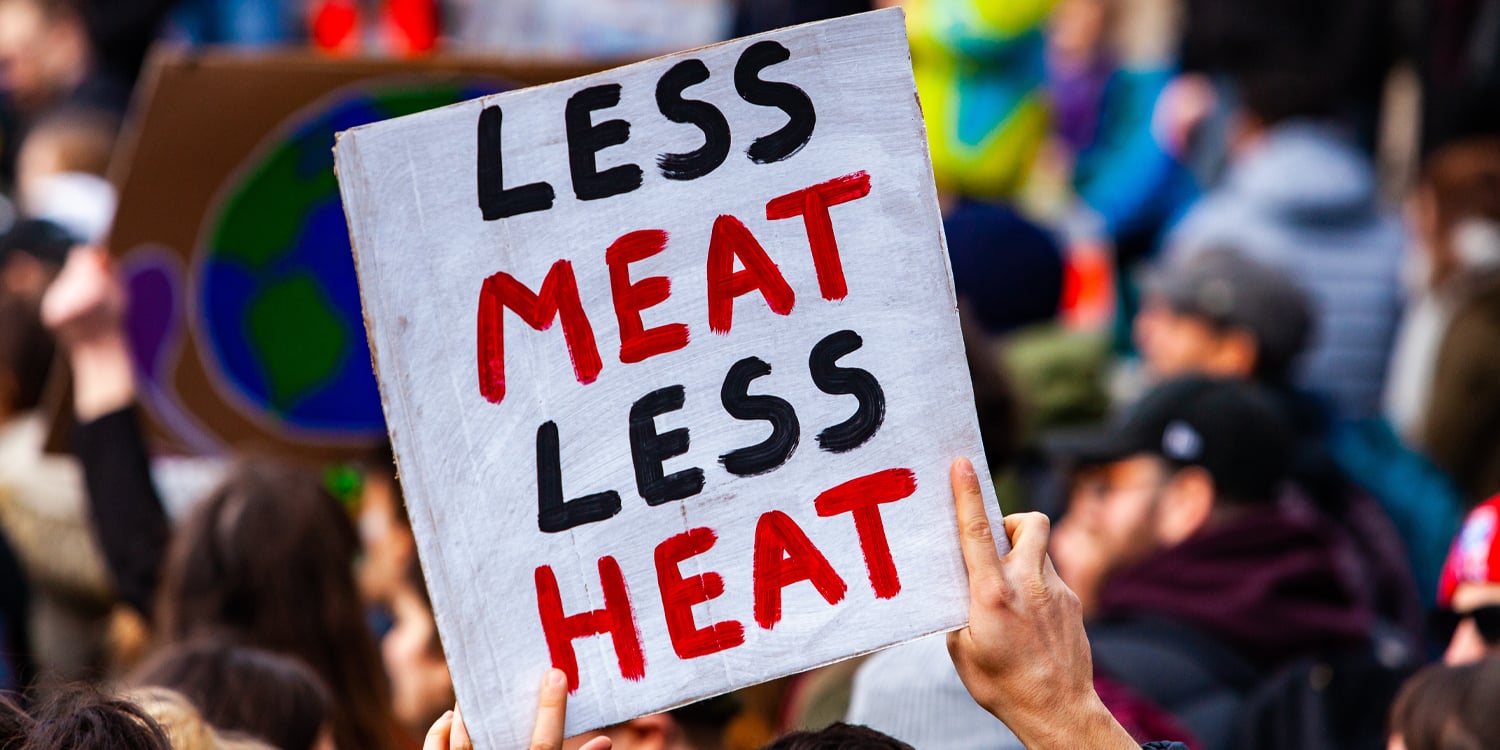
Online criticism of meat consumption that frames the issue as a moral failing tends to provoke more defensiveness than criticism framed around cooking ability, according to new UK-based experiments. The research found that private messages from strangers can trigger even stronger reactions than public comments, raising questions about how best to encourage dietary change in the digital age.
Researchers say the environmental case for cutting meat often sharpens the moral debate, with livestock farming accounting for a sizeable share of greenhouse gas emissions. Psychological defensiveness, they explain, describes the cognitive and emotional ways people protect their self-image when faced with criticism, often through dismissal or suspicion of the critic.
The studies build on prior work showing that people react more harshly when their character is perceived to be under moral scrutiny. In one earlier line of research, debates about morality were shown to shape how people assess others’ characters more than practical competence. The new experiments aimed to test whether reframing dietary critiques around cooking know-how rather than morality could soften defensive reactions among meat-eaters.
The work was led by Isaac Chung, a research fellow at the University of Surrey’s School of Health Sciences and an embedded researcher with the Health Determinants Research Collaboration at Surrey County Council. Chung explained the motivation: “This study was inspired by the increasing moralisation of meat consumption, where eating meat is no longer seen as a morally neutral choice but, at least in some people’s eyes, as something that reflects a person’s moral character.”
Two preregistered experiments recruited UK meat-eaters who use at least one social media platform. Participants, largely women in both groups, were asked to indicate how often they eat meat, select a meat-based dish they might post online, and imagine receiving critical feedback from a stranger about that post.
In the first study, 307 participants were randomly assigned to read a moral critique or a competence critique. The moral critique accused the reader of environmental indifference and moral decency, while the competence critique asserted the reader cared about the issue but lacked the cooking knowledge to make plant-based meals.
Defensive reactions were higher for the moral framing on several measures. Perceived negative motive averaged 4.82 with the moral critique versus 3.88 with the competence critique. Derogation of the critic rose to 5.22 from 4.75, with smaller gaps for personal offence (4.95 vs 4.67) and intentions to avoid the commenter (5.02 vs 4.66). The framing did not alter retaliatory intentions or directly change intentions to reduce meat consumption.
Even the competence framing was read as morally charged by many participants; the critique was sometimes interpreted as a moral judgment nonetheless, with an average of 5.29 on a 7-point scale, compared with 6.08 for the purely moral critique. Notably, 73 participants in the competence condition were excluded because they did not perceive the critique as about cooking skills.
Statistical analyses suggested that defensive reactions were partly driven by perceived moral devaluation—feeling that one’s character was being judged. While the moral framing did not directly lower intentions to eat less meat, those who felt morally judged tended to show weaker intentions to cut back.
“Our findings suggest that online criticism of meat consumption may indeed backfire, but not all criticism backfires equally,” Chung said. “People find criticism suggesting that they eat meat because they do not care about the environment (what we call moral framing) much more threatening and insulting than criticism suggesting that they lack the skills to prepare plant-based meals (what we call competence framing).”
In the second experiment, 316 meat-eaters were exposed to the same moral framing, with half told the critique would appear as a public post and the other half as a private direct message. The researchers predicted public criticism would provoke stronger defensiveness because it threatens reputation in view of peers.
Contrary to that expectation, private messages elicited greater defensiveness on several measures. Offence scoring rose to 5.05 from 4.82, and derogation of the commenter to 5.31 from 5.02. The biggest gaps appeared in retaliatory intentions (3.24 for private messages vs 2.73 for public comments) and in intentions to avoid the commenter (4.96 vs 4.40).
Further analysis suggested that private messages from a stranger were seen as expressing stronger moral condemnation, which in turn predicted weaker intentions to reduce meat consumption. The private-message scenario also felt less realistic than the public one, averaging 4.67 versus 5.37 on a 7-point scale.
“We were surprised to find that privately delivered criticism was perceived as more morally threatening and triggering greater defensiveness than public criticism,” Chung noted. “One possibility is that receiving personal criticism from a stranger online makes it harder to dismiss the message as mere moral bragging or virtue signaling, making it feel more directly targeted at oneself.”
The researchers also looked at narcissistic rivalry—a tendency to defend one’s superiority. While higher rivalry correlated with more hostile responses in general, it did not meaningfully alter how participants reacted to the different framing or delivery styles, except that lower-rivalry participants tended to view private feedback as having a worse motive than public feedback, whereas higher-rivalty respondents attributed negative motives regardless of delivery.
Overall, the authors emphasised that none of the criticisms persuaded participants to swap to plant-based diets. Across conditions, the average intention to cut back remained below the mid-point on a seven-point scale, indicating limited appetite for behaviour change in the hypothetical scenarios.
For the researchers, the take-away is nuanced. While moral appeals can motivate some people when they do not feel attacked, moral criticism risks backfiring by triggering defensiveness and reinforcing the impression that one’s character is under scrutiny. As Chung put it: “Our findings suggest that criticizing someone’s morality can backfire, but this does not mean morality should be removed from efforts to encourage behaviour change.”
Looking ahead, the team intends to explore why some individuals respond constructively to moral criticism and others do not. They are interested in whether environmentally conscious individuals may better recognise the moral message without taking it as a personal attack, and in identifying who is most receptive to moral messaging.
Based on their findings, the authors suggest that messages encouraging people to eat less meat may be better received if they avoid implying meat-eating reflects a moral failing and avoid personal, targeted messaging.
The study, entitled “Maybe I Can’t Cook, but It Doesn’t Mean I Don’t Care: Moral Framing and Private Criticism of Meat Consumption Leads to Psychological Defensiveness,” was authored by Isaac Chung, Pascale Sophie Russell, and Erica G. Hepper.
