


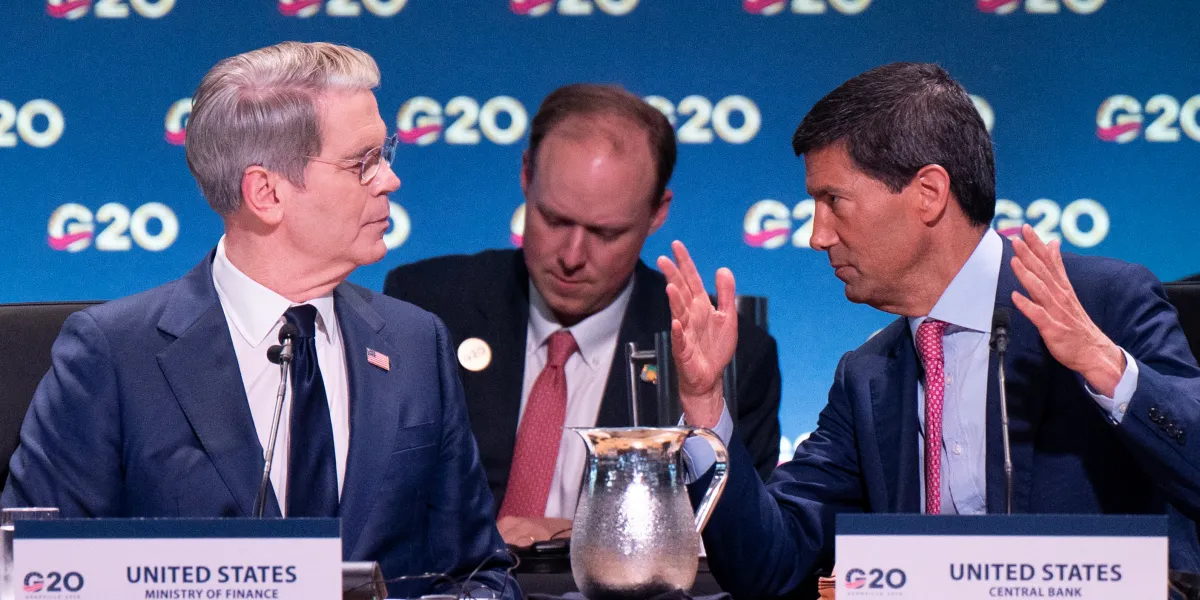
Rising US national debt interest costs are intensifying pressure on the Federal Reserve to cut interest rates, as payments to service the country’s roughly $40 trillion debt surpassed $2 trillion in the 2026 fiscal year.
President Donald Trump and his team have argued that borrowing costs are too high for consumers, particularly prospective homeowners. But lower rates would also reduce the US government’s cost of financing its debt.
The administration has pursued the issue forcefully, including personal attacks and a criminal investigation involving former Fed chairman Jerome Powell. Pressure is now being directed towards the broader Federal Open Market Committee, led by new chairman Kevin Warsh.
Bank of America analysts said the longer elevated rates persisted, the more damaging they would become for the country’s fiscal position. They warned that higher yields would increase interest payments and Treasury financing needs, while raising the risk that the effective interest rate on the debt could eventually exceed nominal economic growth.
“Debt spiral starts when interest costs exceed nominal growth,” the analysts wrote.
Higher rates add trillions to debt projections
An analysis by the Congressional Budget Office examined how debt-servicing costs could change if interest rates remained above current projections between 2026 and 2036.
If rates were 1.5 percentage points higher than forecast, deficits would be $6 trillion larger, including a $4.9 trillion increase in net interest costs. A rise of 0.5 percentage points would add $1.9 trillion to projected debt, with net interest costs increasing by a further $1.6 trillion.
Bank of America analysts estimated that every one percentage-point increase in Federal Reserve rates would raise interest costs by $95 billion a year.
“Even if primary deficits remain largely unchanged, the growing interest burden materially increases the government’s financing needs,” they wrote.
Mark Zandi, chief economist at Moody’s, said global investors appeared to be responding to US spending by demanding a higher return to compensate for the perceived risk.
He said the yield on the 10-year Treasury had risen by about one percentage point during the year, among the largest increases recorded by any major economy. Countries with the heaviest interest burdens had generally experienced the biggest rises, he added.
“A vicious cycle threatens to take hold, with higher rates adding to the interest payments and debt load, which in turn pushes rates up even more,” Mr Zandi wrote.
Bank of America said an unchanged deficit outlook was nevertheless becoming a “bigger financing problem”, as higher yields fed through to the debt stock and caused interest costs and government financing needs to compound.
