


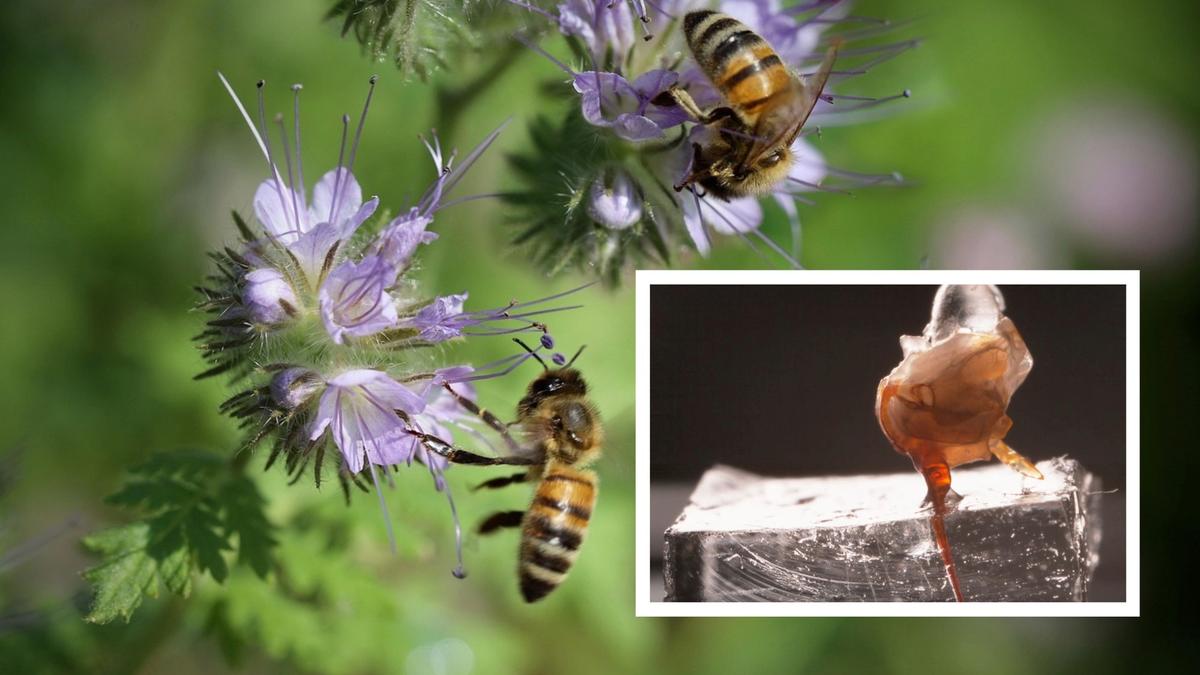
Australian researchers have shown that a honey bee’s stinger can continue pumping venom into tissue after the insect has flown away, operating as a miniature double-piston pump.
The study by scientists from Macquarie University and the University of New South Wales found that the approximately 2mm-long stinger uses two moving lancets and specially shaped valves to drive itself deeper into tissue while delivering venom.
After a honey bee stings its target, the stinger is left behind in a process known as autotomy. It then continues to penetrate the tissue and release venom under its own power.
“We’ve known since as early as 1910 that the venom sac of a honey bee stinger empties into a chamber with little pumping elements called valves, but until now we didn’t know exactly how they work,” said lead author Dr Fiorella Ramirez-Esquivel of Macquarie University.
Researchers filmed bees stinging a clear gel designed to mimic human skin. High-speed video allowed them to observe the stinger’s autonomous pumping action for the first time.
The footage showed the valves inflating like parachutes during the downward stroke, applying pressure to the venom in the chamber. They then deflated during the upward stroke, allowing the pumping cycle to continue.
The two lancets move back and forth like a miniature reciprocating saw, helping the stinger advance while venom is released. Their valves change shape with each movement, helping prevent the fluid from flowing backwards.
“Finally, and perhaps most dramatically, as the valves meet in the middle of the stroke, they change shape again to push past each other,” Dr Ramirez-Esquivel said. “This is a remarkable strategy to pump fluid since maintaining a seal is vital to effectively transmit pressure.”
Micro-CT scans were used to build a 3D-printed working model of the stinger’s pumping chamber and lancets. The model confirmed how the compact mechanism can maintain a continuous flow of venom.
“The unique geometry of the valves is the key; they act as collapsible pistons – and by pumping in opposite directions – they’re able to deliver a continuous flow of venom,” Dr Ramirez-Esquivel said.
The researchers said the design could inform the development of tiny pumps for minimally invasive medical procedures and microfluidic technologies, which control the movement of small amounts of fluid.
