


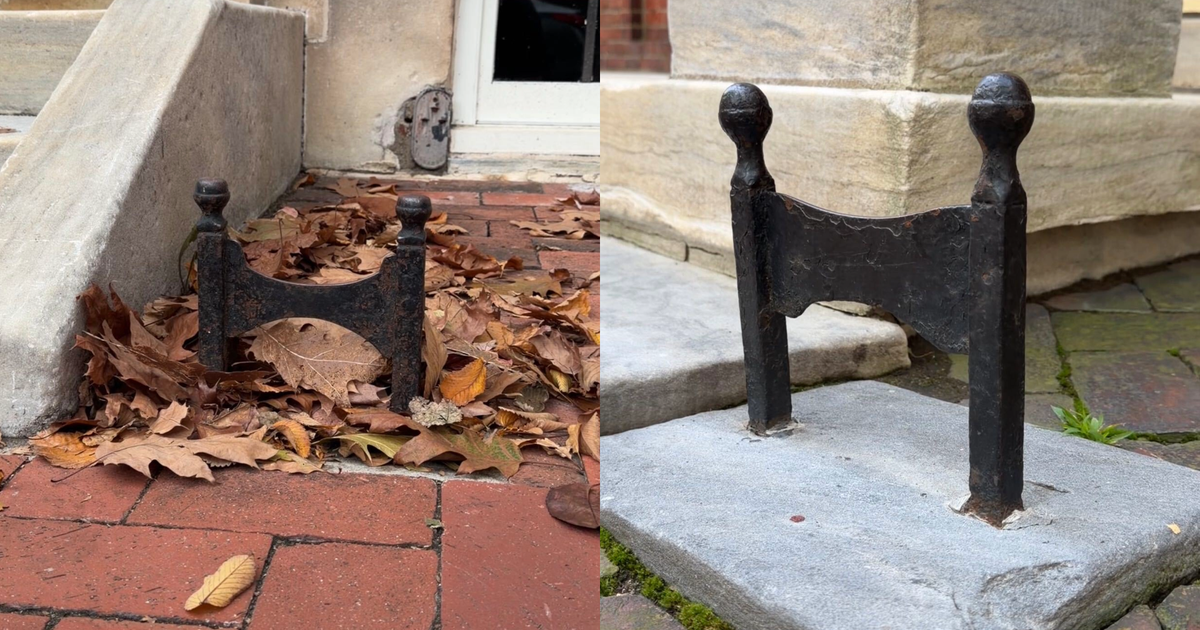
Cast-iron boot scrapers scattered across Philadelphia’s oldest neighbourhoods are offering passers-by an overlooked glimpse into the city’s grimy past, a new report by FOX 29 Philadelphia has highlighted.
The small iron fixtures, often embedded beside doorways or built into railings, were once a familiar feature outside homes, churches, banks and public buildings. Their purpose was simple: to remove mud, sewage and horse manure from footwear before visitors stepped indoors.
Philadelphia’s boot scrapers were built for a dirtier city
In the 18th and 19th centuries, walking through Philadelphia meant negotiating unpaved or poorly surfaced streets shared with horse-drawn traffic. Waste, mud and animal droppings could quickly be carried into homes and across carefully maintained floors.
Boot scrapers provided a practical final stop at the entrance. Their presence was so commonplace that cleaning one’s footwear before entering a house was regarded as basic courtesy, particularly when visiting someone for dinner or other formal occasions.
Many of the surviving examples were more elaborate than their utilitarian purpose might suggest. Local blacksmiths forged early versions by hand, while later designs were produced in cast iron. Harp-shaped patterns appear frequently, alongside scrollwork, marine details and forms inspired by winged figures.
Some were fixed into marble or slate steps by drilling holes and securing the iron with molten lead. Others formed part of the wrought-iron fences and handrails surrounding the city’s traditional rowhouses.
Documentation from the Society Hill Civic Association records that boot scrapers were originally made from wrought iron before cast designs became more common during the 19th century. One example outside the Davis-Lenox House on Spruce Street is described as original to the 1758 property.
Their survival is also reflected in Philadelphia’s official historic street inventory. Boot scrapers are specifically recorded among the features of the 200 and 300 blocks of Delancey Street in Society Hill, where historic paving and preserved buildings have helped retain much of the old streetscape.
Where to find the ironwork today
Improved sanitation, changing paving methods and the spread of street-cleaning services eventually made the fixtures unnecessary. By the late 19th and early 20th centuries, they had begun to disappear from everyday use.
Yet many remain visible in Society Hill, Queen Village and Old City. Some are set into the pavements beside marble steps, while others are easy to miss among railings, fences and other historic ironwork.
Philadelphia’s historic districts therefore contain an unusual record of urban life: small, often decorative objects that reveal how difficult it once was simply to arrive at the front door without bringing the street inside.
