


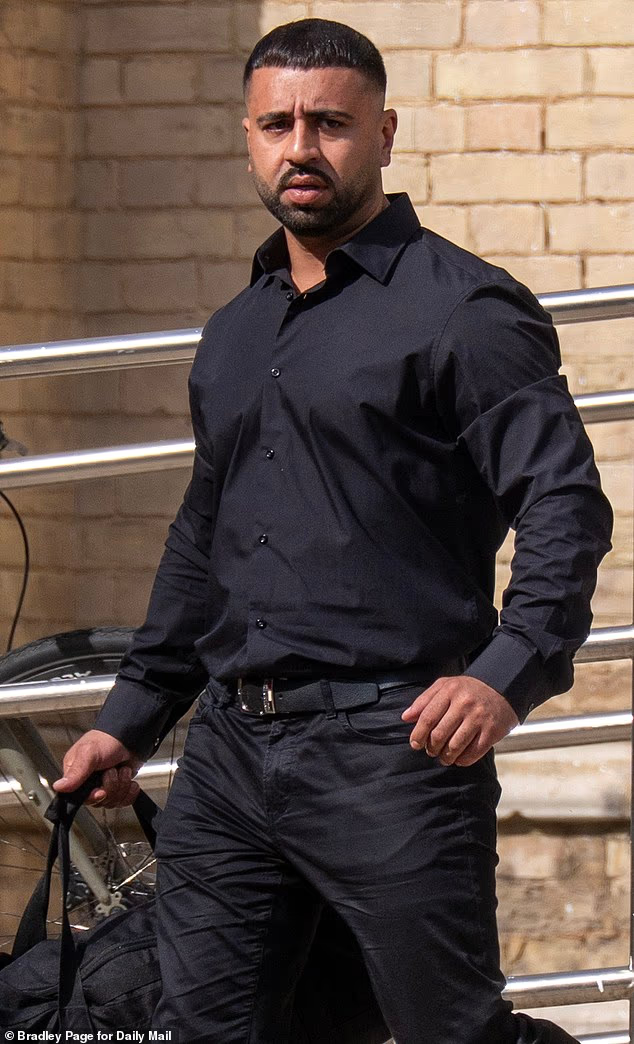
A paedophile who photographed women and children from a flat overlooking a playground was repeatedly released on bail, forcing victims’ families to leave their homes and move their children from schools. Met Commissioner Sir Mark Rowley has condemned the decisions after Zafer Dogan was sentenced to two years and four months in prison.
Dogan, 32, took as many as 5,000 photographs, including images of children as young as seven, and used software to digitally remove clothing from pictures. Police have been unable to identify all those photographed.
The mechanic, from Enfield, pleaded guilty at Wood Green Crown Court to multiple offences, including making indecent images of children. The charges also included possessing extreme pornography, possessing a prohibited image of a child, creating purported intimate images of an adult and obstructing a police officer.
Three courts refused to remand Dogan in custody after he admitted nine offences. Police and prosecutors opposed bail on three occasions, but he was allowed to return to the flat where he had been taking photographs, close to the playground.
The consequences for victims’ families were severe. Some left their homes, removed their children from school, quit jobs and relocated after Dogan continued seeking contact.
Police frustration over bail decisions
Prosecutor Sarah Gabay said investigators had found thousands of images of women and children apparently taken without their knowledge or consent as they went about their daily lives.
Among them were photographs of children on climbing frames. Police said 33 adult women and two children, aged seven and 13, had been targeted with digitally altered images.
Dogan had also collected 1,800 indecent images online, including extreme pornographic material and images of bestiality. He was arrested on 16 July for offences involving indecent images of children and later arrested again on 4 August.
Footage shown in connection with the case depicted Dogan running from officers after apparently freeing himself from handcuffs. He threw his phone into a garden, where it was recovered by police.
Detective Chief Inspector Brian Kelleher said the Metropolitan Police was frustrated that Dogan had repeatedly been bailed despite the risks outlined in court.
He said officers had highlighted that Dogan was being released to “effectively the area where he had been offending”. The detective added that the case involved an offender who had moved beyond collecting illegal material to producing it himself.
Police Constable Natalie Scagliarini, who led the investigation, said Dogan’s conduct had left people feeling unsettled and violated because they did not know when they might be watched or photographed.
The mothers of the two child victims provided statements to the court. The mother of the 13-year-old said she felt as if she had been “punched in the gut” and feared her daughter’s photographs could be online and in the possession of other offenders.
The mother of the seven-year-old said her family’s life would “never be the same again”, while another parent said: “Our lives are turned upside down for ever. Yet no one protects us.”
Rowley warns of damage to confidence in justice system
Speaking outside court, Sir Mark said: “The children should be put first, not the paedophile.”
He warned that pressure to reduce the remand population had contributed to “more dangerous and prolific offenders being granted bail routinely despite strong submissions from the police and CPS”.
“Victims are left fearful, communities are left feeling less safe and confidence in the justice system is undermined,” he said. “This case is just another example of victims being let down.”
London’s Victims’ Commissioner Andrea Simon said the victims and their families had been “grossly failed” by the decision to return Dogan to an address overlooking a playground and near those he had targeted.
A Government spokesman said the law was clear that bail should be used only where necessary and proportionate, including to protect victims, witnesses and the public while investigations and court proceedings were continuing.
In mitigation, Joseph Carr said Dogan recognised the seriousness of his offending. He told the court that his client had separated from his long-term partner in 2025 and had subsequently “spiralled into depression”, while accepting that there was no excuse for his actions.
