


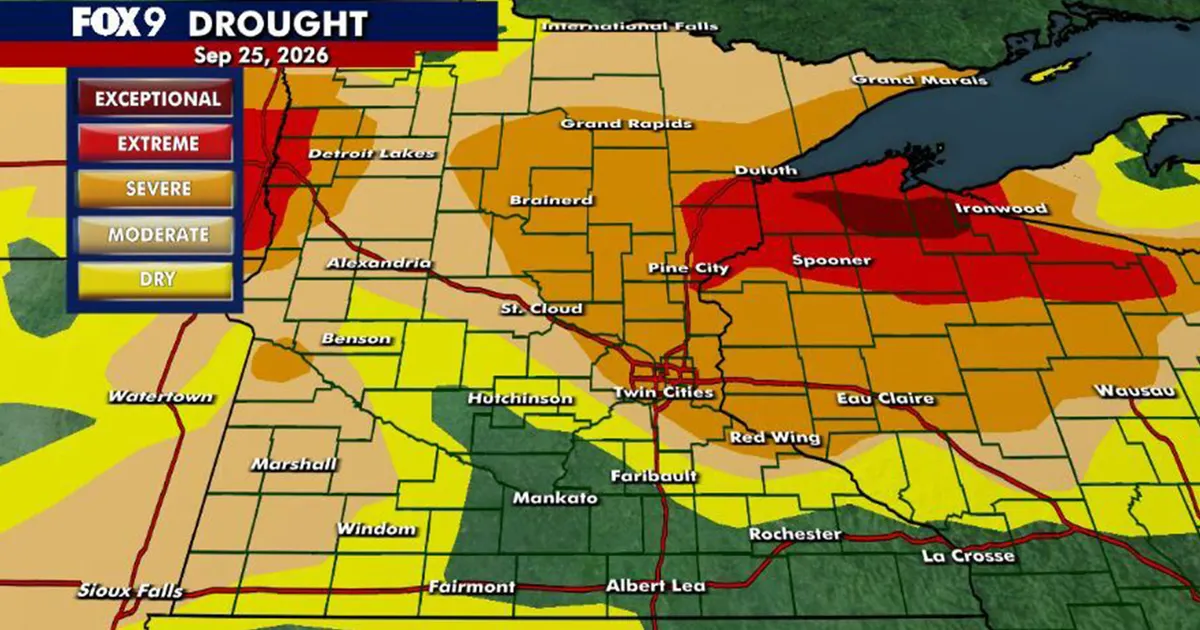
Minnesota drought conditions have eased after a week of widespread rain, with the Twin Cities moving out of the extreme drought category and southern parts of the state recording significant improvements.
The latest US Drought Monitor assessment, valid on Tuesday 22 September, showed the metropolitan area had improved from extreme to severe drought. Much of Scott and Dakota counties received more than 2in of rain during the previous seven days.
Rainfall totals of between 1in and 4in were recorded across large areas of central and southern Minnesota, while parts of the south-east received more than 8in. The downpours helped restore moisture to parched topsoil after several months of dry conditions.
The heaviest rain fell on 18 and 19 September. Minnesota’s Department of Natural Resources said storms produced totals of 5in or more across parts of Waseca, Steele, Mower, Fillmore and Houston counties, with isolated measurements above 8in. The deluge also caused flooding, mudslides and road closures.
Despite the improvement, drought remains widespread across Minnesota. The proportion of the state without a drought designation rose to about 12.5 per cent, up from just over 7 per cent the previous week, while severe drought coverage fell from roughly 33 per cent to 30 per cent.
Exceptional drought persists in northern Wisconsin
The recent rain has not been evenly distributed. Northern Wisconsin is now facing exceptional drought, the most serious category on the US drought scale, after receiving only around a quarter of its average rainfall since 1 May.
Rainfall totals in the region during the growing season have generally been between 4in and 8in, compared with a typical 18in to 24in. Officials have warned that the prolonged lack of moisture is placing trees and other vegetation under severe stress, with some unlikely to survive into next year.
A report from the University of Wisconsin’s crops and soils programme said exceptional drought had been recorded in Bayfield, Douglas, Ashland and Iron counties. The designation covers about 2.8 per cent of Wisconsin, while severe to extreme drought remains concentrated across the north.
Southern Wisconsin, by contrast, benefited from at least 2in of rain in many areas last week, with some locations receiving more than 4in. Soil moisture improved at monitoring sites at depths of 4in, 8in and 20in, although the far north remains much drier than normal for late September.
More rain is possible across Minnesota during the coming week, with several weather systems expected to bring further showers and storms. Some areas could receive more than 2in, but the best chances are forecast to remain south of northern Wisconsin, where the drought is most severe.
