


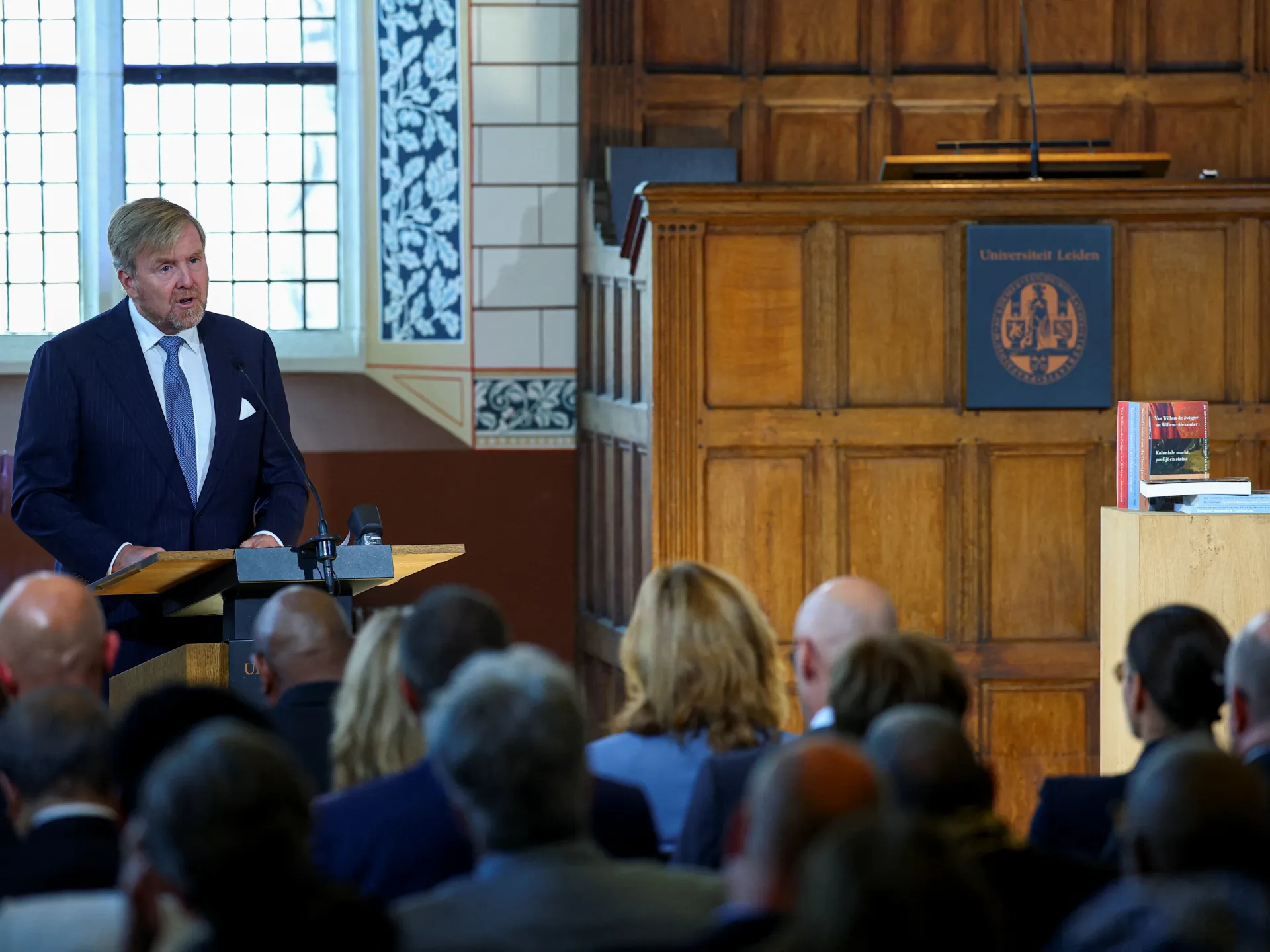
The Dutch royal house bears responsibility for helping the country’s slave trade and slavery survive over several centuries, a study commissioned by King Willem-Alexander has found.
Researchers at Leiden University said the House of Orange-Nassau had actively supported Dutch colonialism from 1600 to the present, although it only rarely determined colonial policy.
The three-year study concluded that the royal family’s involvement was “wholehearted and without any real reservations”. Most Dutch rulers, it said, raised no objections to slavery.
“The research leaves us in no doubt that the House of Orange shares responsibility for the survival over the centuries of the Dutch slave trade and slavery,” the study said.
King Willem-Alexander said the findings had affected him personally, despite being three generations removed from the events examined.
“It is a painful and confronting conclusion. A conclusion that affects me, even though I am three generations removed,” he said in a speech at the presentation of the research.
The King, who apologised in 2023 for his ancestors’ failure to act against slavery, also acknowledged a lack of “counter-current leadership” in response to colonialism.
The Dutch royal house and colonial profits
The research found that the royal family had at times profited substantially from the colonial system, particularly through trade in the Dutch East Indies, now Indonesia.
Profits accumulated by the 19th century amounted to about 650 million US dollars in modern terms, the researchers said. The study also found, however, that the family earned “almost nothing” directly from the slave trade.
The House of Orange has ruled the Netherlands since the late 16th century, initially through stadtholders who presided over the republic and later as the royal house after the country became a monarchy.
For much of that period, the Netherlands controlled colonies in south-east Asia and the Caribbean, including present-day Indonesia and Suriname. The Dutch played a major role in the global slave trade from the 17th century until slavery was abolished in the second half of the 19th century.
Study could renew reparations debate
The findings are likely to intensify debate over reparations in the Netherlands. The Dutch government apologised in 2022 after accepting state responsibility for transatlantic slavery, but ruled out reparations.
Instead, it established a 200 million euro fund for social initiatives, which anti-racism campaigners have criticised as insufficient. Willem-Alexander apologised the following year.
The National Institute for the Dutch Slavery Past and Heritage welcomed the King’s decision to commission the study and called for further action.
Its director, Bianca Groen Gallant, said research had value when it led to greater awareness, dialogue, changes to the national history taught in schools and discussion about responsibility and reparatory justice.
Willem-Alexander said the effects of colonialism and slavery continued to be felt, adding: “Discrimination and economic exploitation unfortunately happen every day.”
