


Sweden election results have left the country facing prolonged political uncertainty, with the left-wing opposition holding a narrow lead over Prime Minister Ulf Kristersson’s right-wing alliance as counting continued.
With 95% of the vote counted, the four opposition parties were three seats ahead in the 349-member parliament. However, some ballots are not expected to be counted until Wednesday, leaving the final balance uncertain.
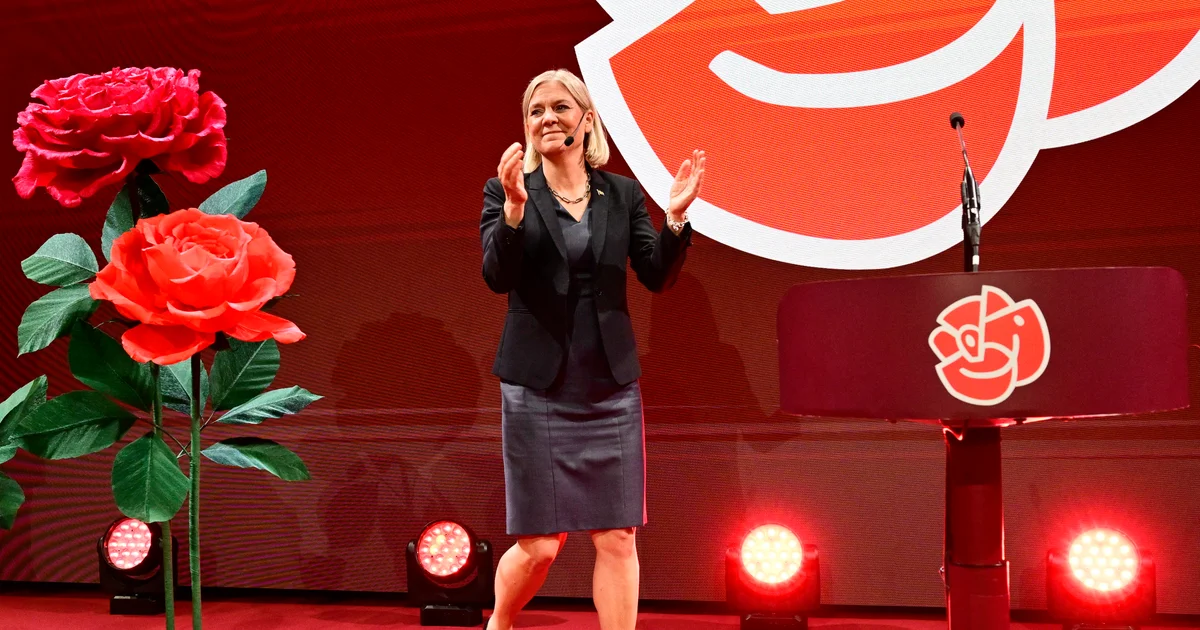
Social Democrat leader Magdalena Andersson and Mr Kristersson have both said they will explore coalition options. Neither side appears able to secure a majority without making significant concessions to other parties.
Andersson, a strong supporter of Sweden’s welfare state, is expected to seek backing from the Greens, the Left Party and the Centre Party if the opposition lead holds. But the group is divided over its conditions for co-operation.
The Centre Party has ruled out supporting a government that includes the Left Party, while the Left has said it would not back an administration in which it did not participate.
Mr Kristersson, meanwhile, is expected to try to win over the Centre Party, which was part of the right-wing bloc until 2019. “I will therefore, even if tonight’s result stands, examine whether there are any possibilities within this non-socialist parliamentary majority to find some workable government constellation,” he told supporters on election night.
Annika Freden, an associate professor of political science at Lund University, said the Centre Party was unlikely to join forces with Mr Kristersson because of its opposition to the far right.
“Kristersson reaching out to the centre is expected, but the centre is fundamentally opposed to entering into an alliance with the far-right so nothing will come of it,” she said.
The negotiations could take several weeks. Parliament cannot vote on a new prime minister before September 29 at the earliest, while political analyst Mats Knutson of public broadcaster SVT said the deadlock could ultimately lead to a snap election.
“One or several parties may have to abandon their ‘red lines’,” he said.
Sweden has previously endured lengthy negotiations to form a government. Following the 2022 election, it took 37 days, compared with 134 days after the 2018 vote.
Ms Freden said the parties were likely to make every effort to avoid another election, pointing to what she described as Sweden’s established practice of negotiation and reluctance to call a fresh vote.
Sweden Democrats lose ground
The election also brought a setback for the anti-immigration Sweden Democrats, who fell to 17.6% of the vote from more than 20% four years ago. The result left them in third place behind the Social Democrats and Mr Kristersson’s Moderates.
The party, which emerged from Sweden’s extreme-right fringe, entered parliament in 2010 and became the country’s second-largest political force in 2022. It subsequently supported Mr Kristersson’s minority government from outside the cabinet, gaining influence over immigration, crime and other policies without taking formal responsibility for government departments.
Observers said the party’s decline could be linked to its signature issues becoming more widely adopted by other parties. Ms Freden said migration policy had been particularly prominent in 2015 and 2016, while many parties now support tighter controls.
She added that the Sweden Democrats had not managed to establish the same strength on other issues.
“The situation is really tight, and it’s been more and more polarized in Sweden the last years,” Mikko Duvaldt, a 48-year-old construction worker, said. “It’s going to be a tough situation for each side to form a government.”
