


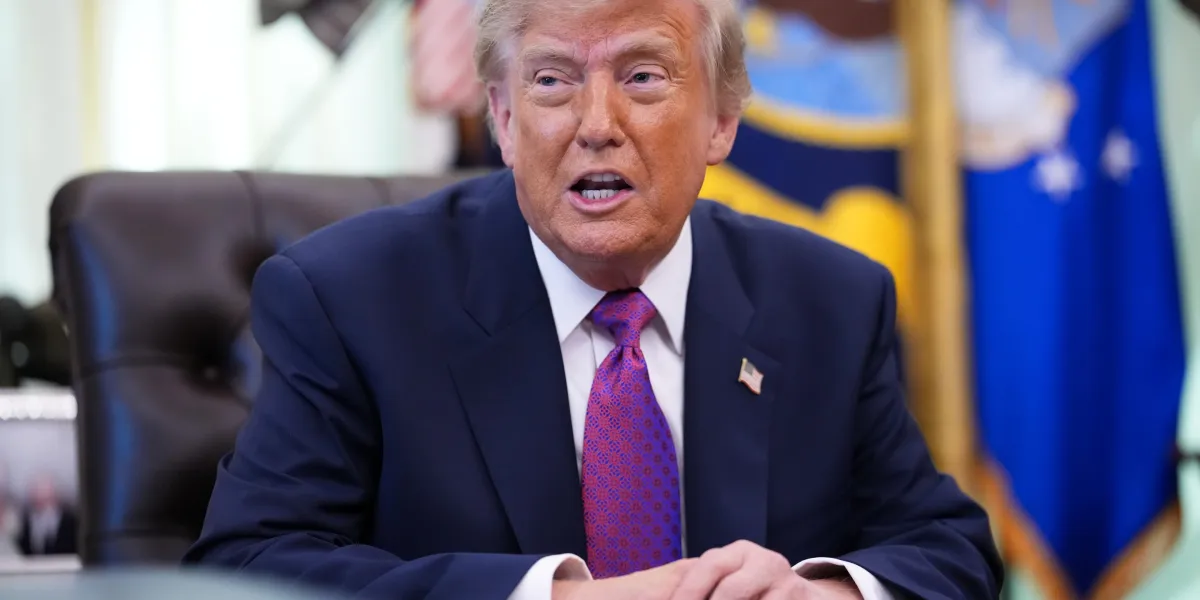
Donald Trump has proposed freezing base and locality pay for most US civilian federal employees in 2027, despite warnings from unions that the decision could deepen staff shortages and damage the government’s ability to deliver essential services.
The plan would affect workers including air traffic controllers, IRS auditors and food safety inspectors. In a letter sent to House Speaker Mike Johnson on August 26, the president said pay for civilian employees covered by the General Schedule and certain other systems would remain at 2026 levels.
Trump argued that the freeze was necessary to protect public finances. Without the alternative pay plan, he said, locality pay would rise by an average of 20.6 per cent under existing law, alongside a 3.1 per cent increase in basic General Schedule pay, costing about $26 billion in the first year.
“Such a large raise for Federal employees while most Americans still struggle with the consequences of the Biden Administration’s giant inflation spree is unacceptable and would be unfair,” he wrote.
The president said setting the increase at zero would preserve the government’s ability to recruit and retain staff. His letter also directed the Office of Personnel Management to provide a separate 3.8 per cent increase for federal law enforcement employees in 2027, citing recruitment and retention needs.
Military personnel are due to receive larger increases, ranging from 5 per cent for senior officers to 7 per cent for the lowest enlisted grades. Other uniformed service members outside the armed forces are set to receive a 3.6 per cent rise, with all the changes scheduled to take effect on January 1, 2027.
Federal pay freeze raises retention concerns
The proposed freeze comes after a major contraction in the federal workforce under Trump’s administration. Updated figures from the Office of Personnel Management show that the number of federal employees was down by 271,363 between January 20, 2025 and July 2026.
OPM data also records nearly 140,000 employees taking part in the Deferred Resignation Programme, under which staff agreed to leave government service while receiving full pay and benefits during a period of paid administrative leave.
Unions representing federal workers said the pay decision risked accelerating the loss of experienced staff, particularly after reductions in force and other workforce changes linked to the Department of Government Efficiency, or DOGE.
“This ‘more work for less pay’ policy will only drive the most valuable employees out of federal service, costing Americans in degraded services,” William Shackelford, national president of the National Active and Retired Federal Employees Association, said.
He said a lack of meaningful pay growth would make it harder and more expensive to recruit and train replacements, adding that inadequate staffing would affect government operations and services.
The Professional Aviation Safety Specialists, which represents 11,000 Federal Aviation Administration employees, warned that the freeze could undermine efforts to recruit controllers and modernise the country’s ageing air traffic control infrastructure.
“As workers fall behind in compensation, fewer will accept positions with the FAA, and experienced employees will have less of an incentive to remain at the agency,” Dave Spero, the union’s national president, said.
The FAA has faced a long-running shortage of air traffic controllers and relies on ageing equipment, while the Department of Transportation has launched recruitment efforts aimed at bringing more young applicants into the profession.
Research by RAND found that pay freezes between 2011 and 2013 reduced retention among Department of Defense civilian employees with bachelor’s degrees or higher by 7.3 per cent. Critics say the risk is greater now because agencies are already dealing with lost expertise and heavier workloads.
The final outcome is not yet certain. Congress could override the proposal through appropriations legislation, as lawmakers did in 2019 when they approved a 1.9 per cent increase for federal workers despite Trump’s earlier attempt to impose a freeze.
Democratic Representative James Walkinshaw of Virginia and Senator Brian Schatz of Hawaii have introduced the Federal Adjustment of Income Rates Act, which would provide a 4.1 per cent pay rise for civilian federal employees next year.
