


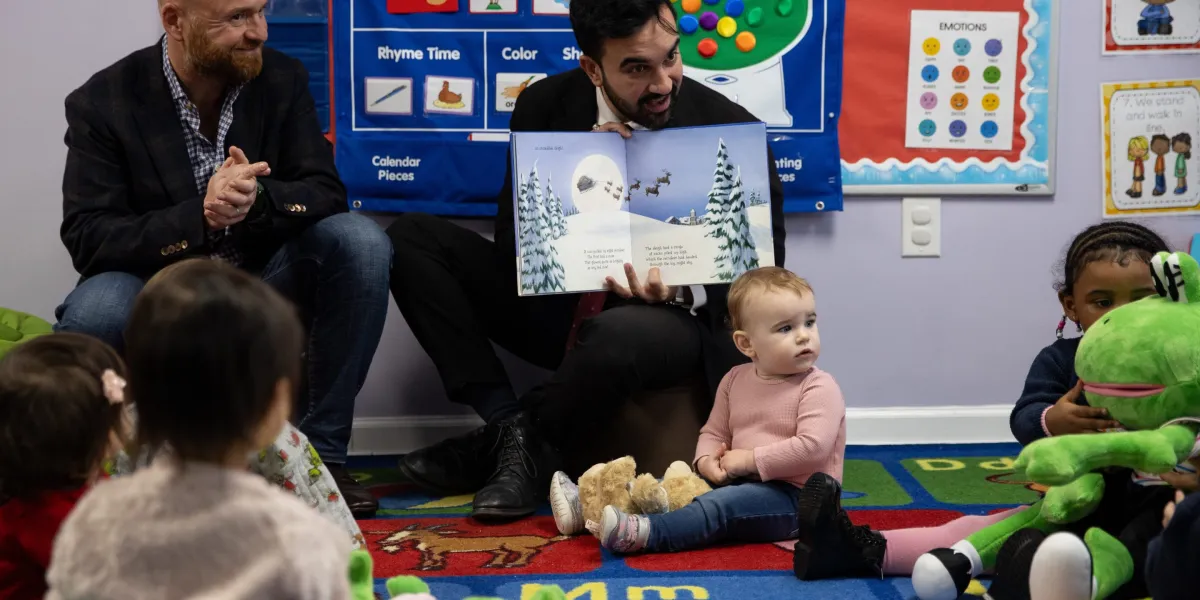
New York City is to impose a one-year moratorium on student-facing generative AI in public schools from 2-K through eighth grade, affecting almost 600,000 pupils in the largest school system in the United States.
Mayor Zohran Mamdani and Schools Chancellor Kamar Samuels announced the policy on Wednesday, September 2, ahead of the start of the 2026-27 school year. Companion chatbots will be prohibited across all year groups, while high school students will receive limited and supervised access to selected AI tools.
The city described the measure as the broadest student-facing AI restriction in the country. It will cover software including AI tutors and other systems that generate responses for pupils, although exceptions will be made for assistive technology used by disabled students and multilingual learners, as well as some career-readiness programmes.
“The tech industry wants us to believe that A.I.-powered early education is not only inevitable, but necessary. We do not see it that way,” Mr Mamdani said at a news conference.
He said the city would spend the coming year assessing the effect of the technology, arguing that children needed to develop independence, curiosity and the ability to work through difficult problems without relying on automated answers.
“Children need teachers and human connection in order to learn and grow,” Mr Mamdani said in the announcement. “They need to develop skills alongside their peers, build relationships with educators and wrestle with tough problems on their own.”
New York City AI moratorium comes after months of pressure
The decision follows months of pressure from parents, teachers, doctors, child-development specialists and education campaigners, many of whom had called for a longer pause.
More than 250 experts urged the administration in April to introduce a five-year moratorium on generative AI in schools. In June, more than half of the City Council signed a letter seeking an immediate two-year suspension, citing concerns over privacy, critical thinking and children’s mental health.
Fairplay, a child advocacy organisation involved in the campaign, welcomed the announcement as a move in the right direction but said a single year was insufficient. David Monahan, its campaign director, said the AI Moratorium for NYC Schools coalition had consistently called for a two-year pause to allow the city to develop a durable policy.
The new rules replace guidance introduced in March under a “traffic light” system, which categorised different uses as prohibited, cautioned or permitted. Critics said the framework provided too much scope for student use and did not adequately address the risks posed by generative AI.
Mr Samuels later acknowledged that the earlier policy had “missed the mark”. Schools were subsequently told to pause purchases of new technology while the administration prepared its revised approach.
The city’s public schools are due to reopen on September 10, leaving a short period for principals and teachers to implement the rules.
High school pupils will be taught about AI
The moratorium will not amount to a complete rejection of the technology. All public high school pupils will receive two 45-minute AI literacy lessons each year, covering how the systems work, their biases, ethical questions and their potential effect on future careers.
Five tightly controlled pilot programmes will also operate in a limited number of high school classrooms. They will involve no more than 50,000 pupils, with each participating class using approved tools under the direct supervision of a trained teacher.
The pilots include systems intended to support English and maths lessons, guide students through teacher-designed activities and help pupils examine AI-generated answers for errors, bias and the quality of their reasoning.
“Whether we like it or not, our teenagers are growing up in an AI-saturated world,” Mr Mamdani said. “It would be irresponsible not to prepare our children for the fast-evolving technological future that lies ahead.”
Teachers will still be permitted to use approved AI systems for lesson planning and other administrative work, provided the tools meet New York City safety requirements. The technology will not replace teacher-pupil interaction, city officials said.
Screen time limits introduced
Alongside the AI policy, the administration announced recommendations for daily screen use. Pupils in third to fifth grade will be advised to spend no more than 30 minutes a day on individual devices, rising to 45 minutes for those in sixth to eighth grade.
Children in second grade and below will face more stringent restrictions on one-to-one screen use. The education department will also review every technology product used in schools and remove tools judged not to be essential to learning.
A Technology in Schools Coalition, bringing together pupils, teachers, parents, elected representatives and education specialists, will assess the moratorium during the school year and publish recommendations for future policy.
The approach has drawn criticism from technology advocates who believe children need earlier exposure to AI to prepare for employment. Bill Ackman, the hedge fund manager who promotes a private school network using AI tutoring, has argued that conventional classrooms have changed little while technology has transformed the wider economy.
Julie Samuels, president and chief executive of the technology industry group Tech:NYC, supported the city’s emphasis on safeguards but said access for high school pupils should eventually be expanded beyond the limited pilots.
Mr Mamdani has said he does not use AI himself. His administration has framed the new policy as a temporary pause rather than a permanent rejection, leaving open the possibility that the restrictions could be revised once the city has gathered evidence on how the technology affects learning.
