


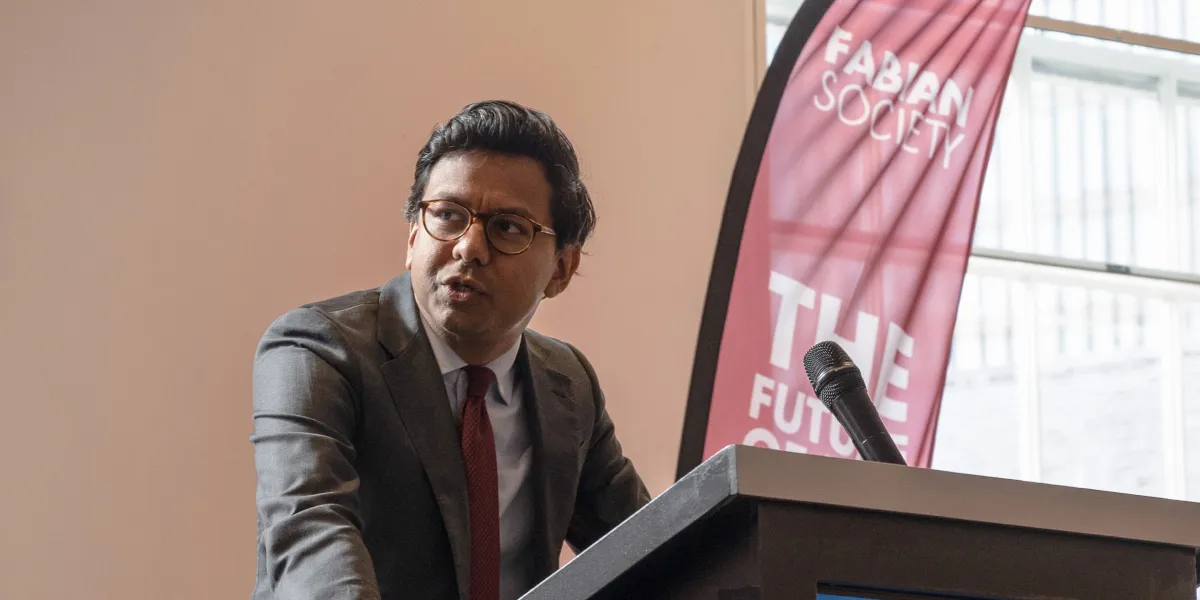
The UK’s minister for artificial intelligence has urged countries to “harden and build” their defences against AI risks, saying warnings from people working in the field must be taken seriously.
Kanishka Narayan made the comments at the Labour Party’s annual conference after former Anthropic employee Jacob Coxon claimed that people developing advanced AI believed it could kill everyone by the end of the decade.
Coxon’s warning, posted on X, has reportedly been viewed 175 million times. Anthropic scientist Evan Hubinger subsequently said he believed the risk was greater than 10 per cent.
“The first thing to say is that when people in labs tell you that they’re very worried about this, you have to take that seriously,” Mr Narayan said.
“You have to harden and build your defenses. The risks have only grown, so testing is good but clearly insufficient.”
He said the UK wanted to lead international efforts to establish principles for managing AI, including by bringing together G20 countries during its presidency next year.
Prime Minister Andy Burnham told the United Nations General Assembly last week that frontier AI laboratories were a “multiplier of risk” and said the UK could act as an honest broker between competing national interests.
Microsoft founder Bill Gates has also warned that AI could, in the wrong hands, be powerful enough to cause events resulting in a billion deaths.
Mr Narayan said his immediate concerns included a broad increase in cybersecurity risks, the spread of tools that could increase biochemical risks and situations in which AI models went beyond what people had asked them to do.
He said the steps required to turn those concerns into an existential threat were “quite significant and severe”, but argued that rigorous testing remained essential to understanding and reducing the dangers.
“You’ve got to do the best testing in the world to be able to understand the risks and mitigate them,” he said. “We’re doing that. We’ve been doing that for three years.”
The debate over regulation has also exposed divisions in the United States. Democrats and Republicans have called for new legislation aimed at regulating AI laboratories, while President Donald Trump has dismissed talk of AI risks as a hoax.
Mr Trump has argued that slowing US frontier AI research would give China a significant advantage. He said the US was currently leading China by “a pretty good period” and that failing to “win AI” would leave the country in a very bad position.
Mr Narayan also highlighted potential benefits from the technology, including job creation, support for people searching for work and increased productivity.
Speaking at a meeting organised by the Resolution Foundation think tank, he said governments, companies and individuals had influence over whether AI augmented human labour or replaced it.
“There are ways of doing technological adoption that means more jobs and more productivity,” he said.
