


A common AI governance roadmap should be put into action before the United Nations’ next Global Dialogue in May, the authors of a new commentary have argued, as technology companies and financial authorities warn of growing risks from rapid development.
The proposed measures include independent safety testing before new systems are released, published safeguards and clear monitoring and reporting of incidents after deployment.
The call follows warnings from several leading AI executives about the possibility of losing control of advanced systems, as well as threats including cyberattacks and bioterrorism.
Bank of England Governor Andrew Bailey, chairing the Financial Stability Board, has also told G20 finance ministers and central bankers that AI represents a fresh danger to an already fragile global financial system. The concern is that banks and other institutions increasingly rely on the same small group of AI models and cloud providers, allowing a single weakness to spread quickly.
UN AI governance roadmap
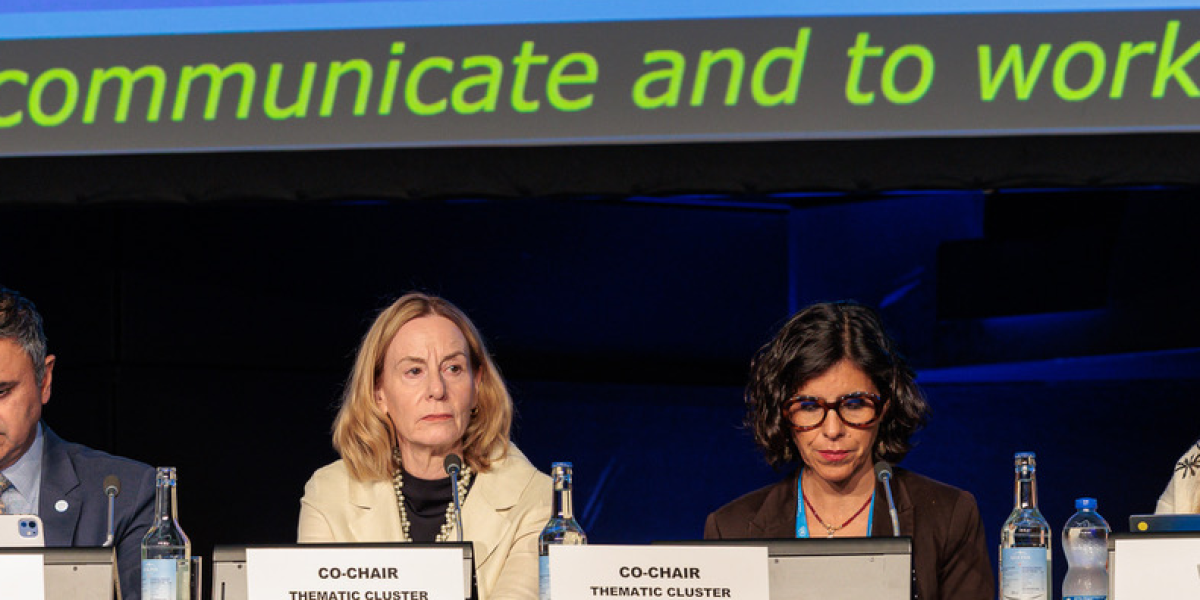
The authors, who acted as co-leads on safe, secure and trustworthy AI at the first UN Global Dialogue on AI Governance in Geneva in July, said governments needed common rules rather than separate national approaches.
They said 170 countries, alongside industry and civil society, had found common ground on initial mechanisms for governing the technology despite widening divisions over trade, security and power.
One immediate priority, they said, should be to create a formal link between scientific research and diplomatic negotiations. The UN’s Independent International Scientific Panel on AI presented its first evidence-based assessment in Geneva, but the authors said its findings must feed directly into the negotiations ahead of next May.
They also called for a shared safety baseline grounded in international human rights law. Existing frameworks, including the OECD AI Principles, the G7 Hiroshima code of conduct, the Frontier AI Safety Commitments agreed at the 2024 Seoul Summit, UNESCO’s Recommendation on the Ethics of AI, and technical standards from ISO and NIST, were identified as possible foundations.
A common baseline would allow individual countries and regions to develop their own rules without starting from scratch. The authors pointed to Costa Rica’s National AI Strategy, developed with government, civil society, industry and academia, as an approach that could be replicated.
They said the UN process must also be financially and geographically inclusive. A dedicated trust fund, modelled on the fund supporting the Intergovernmental Panel on Climate Change, could help governments, researchers and civil society groups with fewer resources participate in negotiations.
The commentary also proposed cross-border regulatory sandboxes, in which a small group of countries could test how different regulatory systems work together. A similar model is already used in financial regulation through the Global Financial Innovation Network, it said.
By the time the Global Dialogue reconvenes in May, the authors want three measures in place: an assessment from the scientific panel, an agenda addressing the common safety baseline, and an initial cross-border sandbox pilot.
They said recent warnings from the Financial Stability Board and AI industry leaders showed that the risks were no longer distant. Governments, companies and civil society groups should now carry forward the agreements reached in Geneva rather than reopen issues that had already been settled, they argued.
