


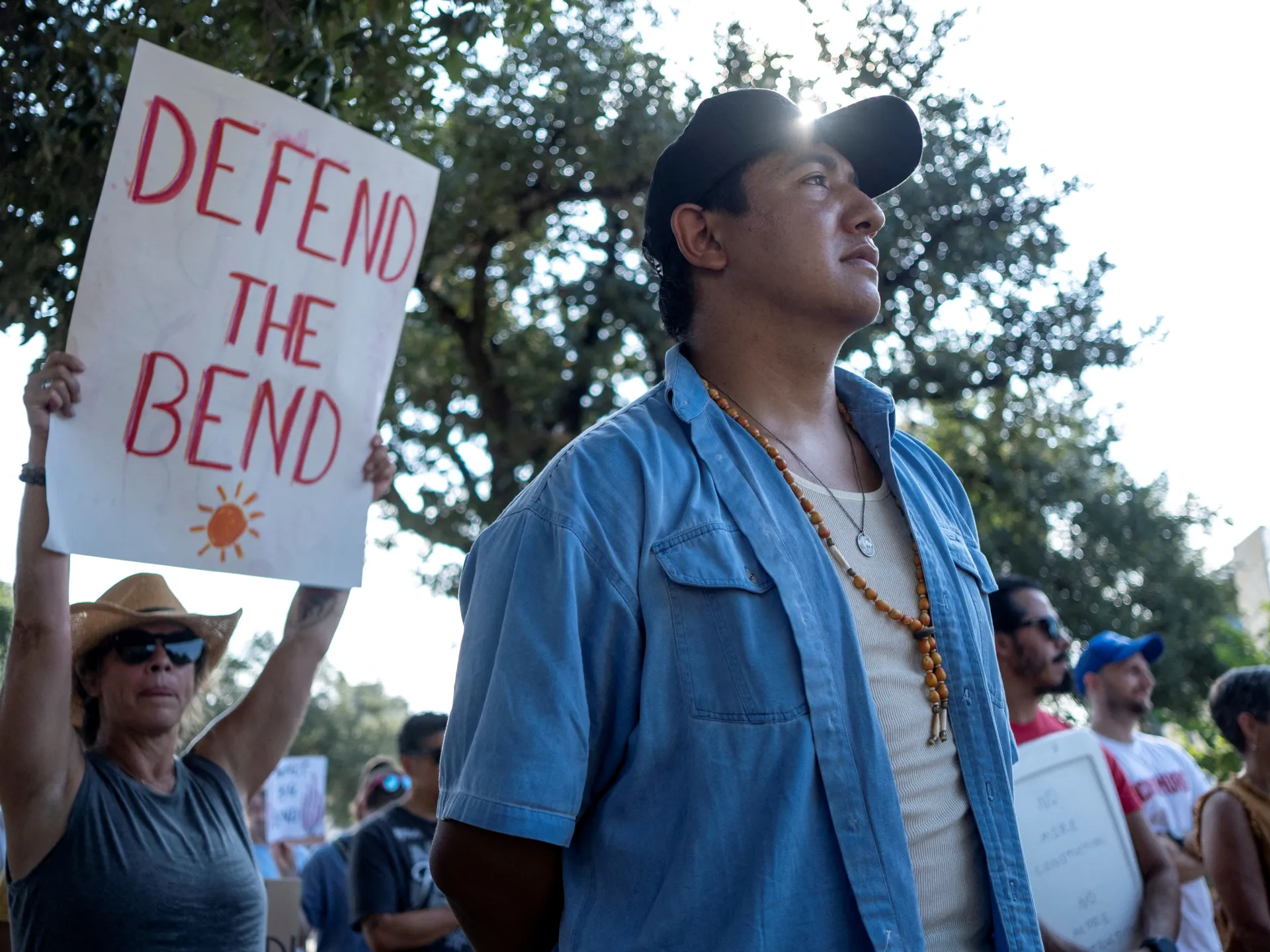
The US Supreme Court has cleared the way for the Trump administration to build a border wall through a remote section of Big Bend National Park in west Texas.
The justices granted an emergency request to lift a lower-court injunction that had halted construction while a legal challenge was being considered. The court said the injunction “impedes the Government from advancing its ‘compelling interests’ in border security and integrity”.
The decision allows work to proceed as the wider dispute continues. Justice Ketanji Brown Jackson was the only member of the court to indicate that she would have rejected the government’s request, without giving a reason.
Big Bend border wall challenge
The case was brought by the Center for Biological Diversity, Friends of the Ruidosa Church, a local river guide and a landowner. They challenged waivers issued by the Department of Homeland Security to accelerate border construction and bypass environmental and conservation laws.
The plaintiffs argued that, without the waivers, the project would have to comply with the Endangered Species Act, the National Environmental Policy Act and the National Historic Preservation Act.
They said the proposed barrier would alter “one of the most remote and ecologically and culturally significant landscapes in the United States”. Big Bend National Park contains mountain ranges and desert habitat for endangered species including the Mexican long-nosed bat.
Conservationists, local officials and some Republicans have opposed extending the border wall through the park, saying it could damage the area’s ecological and cultural importance.
The administration has presented the construction as an urgent national security and immigration priority, describing the Big Bend area as a route for irregular migration and drug trafficking.
US District Judge Kathleen Cardone blocked construction in October. She noted that the Big Bend sector accounts for more than a quarter of the US-Mexico border but between 0.3 and 2.2 per cent of migrant apprehensions.
“Therefore, if the Big Bend Sector is an area of high illegal entry, so is every other sector, and the waiver authority would apply to the entire US-Mexico border,” Judge Cardone wrote.
The Supreme Court said the government was “exceedingly likely to prevail” in arguing that Judge Cardone did not have jurisdiction under the 1996 Illegal Immigration Reform and Immigrant Responsibility Act.
The law restricts lower courts’ ability to rule on border barriers and allows district courts to hear only claims alleging a breach of the US Constitution. The Supreme Court said the challengers’ case did not meet that requirement, stating that “there is no such thing as a ‘constitutional’ major-questions claim”.
The border wall has been a central part of Donald Trump’s immigration platform since his first successful presidential campaign in 2016, when he rallied supporters with calls to “Build the wall!”.
