


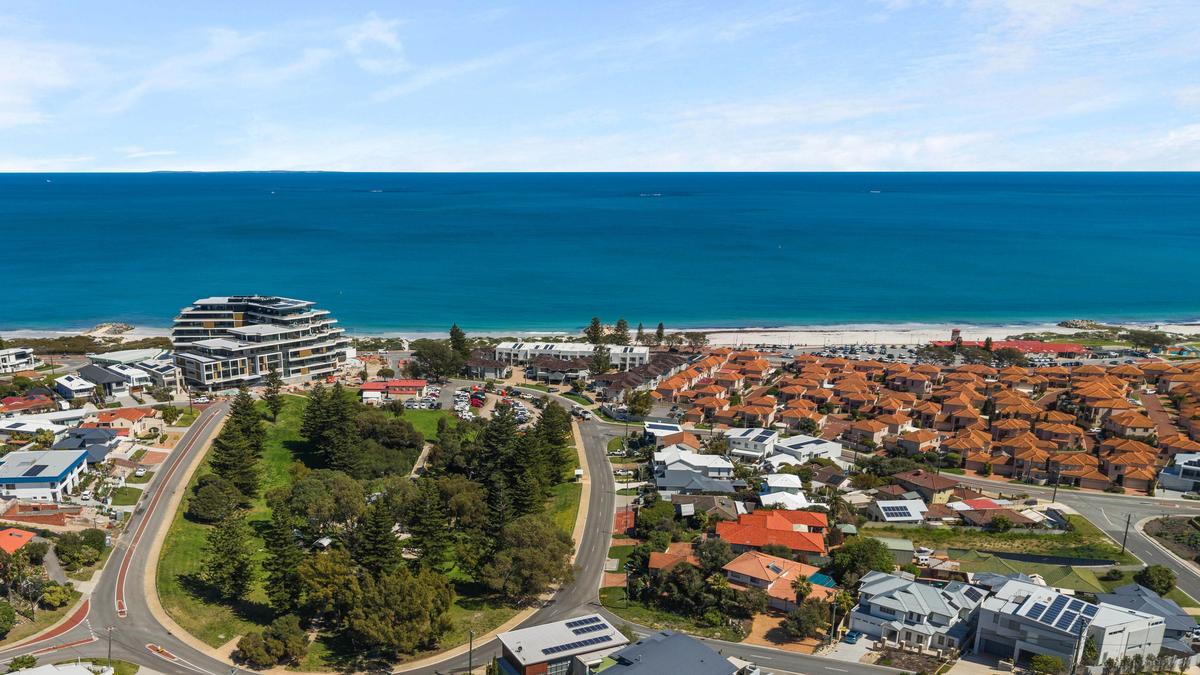
Tightly held properties in Perth’s most sought-after suburbs are coming to market as older homeowners sell up, downsize or release equity built over decades, creating rare opportunities for buyers in the western and northern coastal areas.
Real estate agents say homes that have remained in the same family for 30, 40, 50 or even 80 years are increasingly being listed, while some are changing hands privately without a public campaign.
The shift comes as Australia enters a period of substantial intergenerational wealth transfer. An estimated $5.4 trillion in assets is expected to pass to younger generations by 2050, with the peak forecast around 2041 as large numbers of baby boomers die and their wealth is distributed.
For some families, however, that transfer appears to be taking place earlier, as older property owners sell homes worth millions of dollars and use the proceeds to support their children or strengthen their retirement finances.
Raine & Horne executive chairman Angus Raine said an ageing population, changing family circumstances and the movement of property wealth between generations were driving increased activity across the housing market.
“Properties are being sold to unlock equity, simplify estates or to help the next generation establish their own financial future,” he said.
The Bankwest Curtin Economics Centre estimates that about 17.5 per cent of Australians are aged 65 or over. Housing is their largest asset, with older Australians holding an estimated $2.8 trillion in net property wealth – just over 30 per cent of the country’s total housing assets.
Mr Raine said a growing number of homes held by one family for several decades were now being offered for sale, particularly coastal properties and homes with distinctive or historical features.
“In my 35 years in real estate, I can’t recall seeing so many property advertisements highlighting that a property is being offered for sale for the first time in 30, 40, 50 or even 80 years,” he said.
Perth homes held for generations come to market
Deborah Brady, a senior sales executive at Ray White Cottesloe/Mosman Park, said she had recently sold a number of homes that had remained with the same families for many years in prized western suburbs locations.
Some had been positioned near the coast or around the golf course areas of Cottesloe, including parts of Broome, Pearse and Forrest Streets.
“If you looked behind each individual sale, generally speaking, you’ll see that someone, or a family, have been there for a very, very long time and has held that property,” Ms Brady said.
She sold 161 Broome Street, Cottesloe, off-market in June for $5.05 million. Maureen and Geoffrey Robinson bought the property in February 1969 for $28,000, after selling their Balga home for $19,000.
The couple’s son said the $9,000 difference between the two purchases had seemed significant at the time. The family later renovated the Cottesloe property, adding an upper level with two bedrooms and a bathroom in about 1995.
Another property, 11 Queen Street in Claremont, had been held by the same family for more than 26 years before being sold by Ms Brady this month.
Ms Brady said the reasons for selling varied. Some older homeowners wanted to downsize but struggled to find a suitable property in the same community, while others were moving directly into care.
She said a number of western suburbs residents had sold large homes after independent living retirement accommodation became available at Waterfront in Cottesloe. Others had moved into residential aged care at Marine Views or bought larger luxury apartments at The Grove Residences in Claremont.
“People don’t need to tell their agent the whole story about why they have decided to sell, and as an agent I am always going to be very discreet anyway,” Ms Brady said.
But she added that conversations about helping younger family members were common, with some owners seeking to place a substantial portion of the proceeds into their superannuation while downsizing.
Coastal properties offer rare opportunities
Oliver Hess, a residential sales executive with Haiven Property, said more long-held homes were also appearing in Perth’s northern coastal suburbs.
He pointed to 6 Karrinyup Road in Trigg and 19 Padbury Circle in Sorrento as recent examples of properties that had been held by the same families for decades.
“These are special positions that rarely change hands,” Mr Hess said. “We’ve always said that the length of time a family holds a property is often the greatest testament to just how good the location or property really is.”
He said downsizing, lifestyle changes and the transfer of wealth between generations were contributing to the sales. A lack of suitable downsizing options had previously discouraged many owners from leaving the homes and communities where they had spent much of their lives.
New apartment developments, including 331 West Coast Drive in Trigg and Ora in Sorrento, along with other options in Scarborough, Karrinyup and City Beach, were beginning to provide alternatives, Mr Hess said.
“This should help unlock more tightly held family homes as owners can transition into low-maintenance living without sacrificing the coastal lifestyle they’ve enjoyed for decades,” he said.
Long-term owners in these areas may have accumulated substantial equity with little or no debt, allowing them to help their children enter an increasingly expensive property market while remaining close to family, Mr Hess said.
For buyers, the sales offer a chance to secure homes in tightly held parts of Trigg, North Beach and Watermans Bay, where beaches, swimming spots, cafes, schools and established communities have helped maintain demand.
“There is only a select number of homes along this iconic coastal stretch and that supply will never change,” Mr Hess said of West Coast Drive.
“You simply cannot replicate these positions, which is why they’re so tightly held and why buyers are prepared to wait years for the right opportunity.”
He said generational turnover was now giving younger families the chance to establish themselves in coastal locations for the next three or four decades.
