


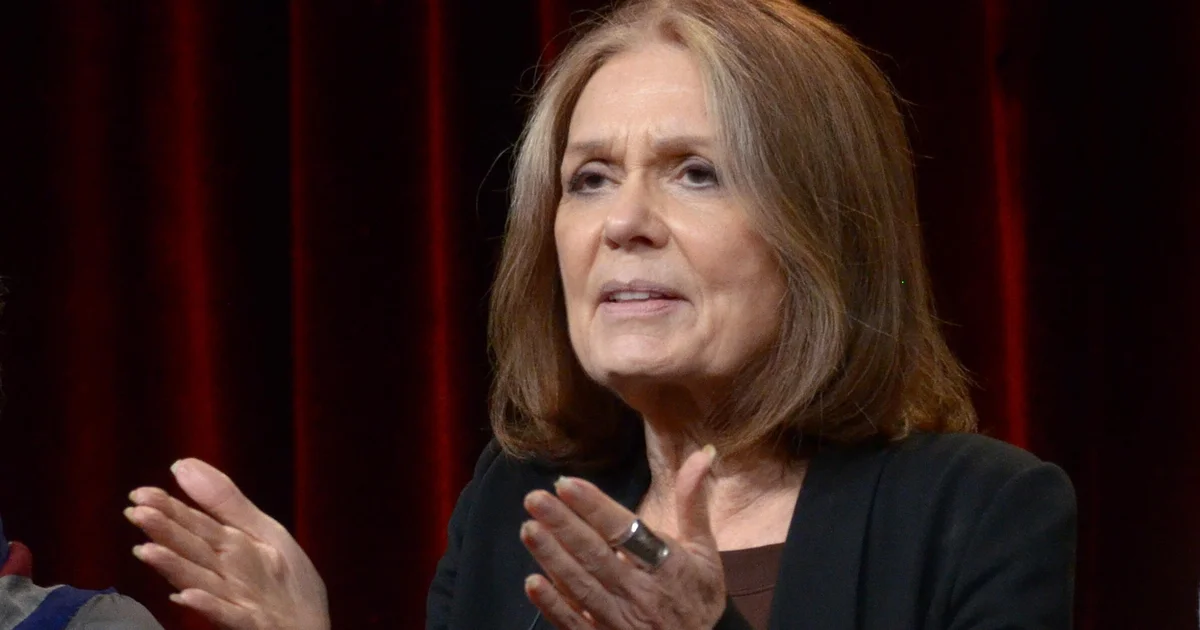
Gloria Steinem, the pioneering journalist, author and co-founder of Ms. magazine, has died aged 92.
Steinem died at her home in New York City on Wednesday, 2 September 2026, surrounded by people close to her, according to a statement from the Gloria Steinem Foundation. No cause of death was given.
For more than five decades, she was one of the most recognisable figures in the American women’s liberation movement, campaigning for equal rights, reproductive freedom, protection from domestic violence and greater representation for women in public life.
Her influence extended well beyond journalism. Steinem helped bring feminist arguments into mainstream political debate, challenging the idea that issues affecting women were marginal or belonged outside discussions of power, war and government.
Gloria Steinem and the birth of Ms. magazine
Steinem co-founded Ms. with activist Dorothy Pittman Hughes. The magazine’s first full issue appeared on newsstands on 1 July 1972, following a successful preview edition published inside New York magazine the previous year.
It was the first major publication to be owned, run and written by women. Its launch issue featured Wonder Woman on the cover and carried a petition signed by women who said they had undergone abortions and demanded that the procedure be made safe and legal.
The publication became a platform for reporting on subjects including childcare, marriage, workplace discrimination, political representation, sexual violence and domestic abuse. Its contributors included writers such as Angela Davis, Alice Walker, Barbara Ehrenreich and Susan Faludi.
Ms. faced criticism from both the political right and parts of the left, but it endured through changes in ownership and periods without advertising. It later became a quarterly publication and continued to address many of the issues that had shaped the women’s movement.
Steinem’s own journalism had already attracted national attention. In 1963, she worked undercover as a Playboy Bunny at Hugh Hefner’s Playboy Club in New York, documenting sexual harassment and the demanding conditions faced by female employees.
The assignment made her name, although Steinem later said it initially led to more requests for sensational undercover work rather than serious political journalism. She came to regard the experience as a vivid example of the way women were judged by their appearance and confined to poorly paid service roles.
A lifetime of campaigning for women’s rights
Steinem’s activism grew from her reporting and from her own experiences. In her early twenties, she obtained an illegal abortion in London, an experience she later said helped shape her understanding of the restrictions imposed on women.
In 1973, she helped establish the Ms. Foundation for Women with Marlo Thomas, Patricia Carbine and Letty Cottin Pogrebin. The organisation supported grassroots projects and campaigned on economic justice, safety and reproductive rights.
The foundation also created Take Our Daughters to Work Day, an initiative intended to challenge gender stereotypes and encourage girls to imagine wider opportunities in employment. It was later expanded to include boys.
Steinem was involved in founding the Women’s Action Alliance and the National Women’s Political Caucus, and she helped establish the Women’s Media Center in 2004 with Jane Fonda and Robin Morgan.
She continued to write, speak and campaign into her nineties. Issues she had highlighted decades earlier, including sexual harassment and violence against women, gained renewed public attention during the #MeToo movement.
Steinem received the Presidential Medal of Freedom from Barack Obama in 2013 and the Freedom Award from the National Civil Rights Museum in 2019.
Born in Toledo, Ohio, on 25 March 1934, Steinem graduated from Smith College in 1956 before travelling to India on a scholarship. She later built a career as a writer in New York, covering politics, social change and women’s lives at a time when female journalists were often confined to lifestyle or fashion pages.
She married human rights activist David Bale in 2000, aged 66, after previously regarding marriage as incompatible with independence. Bale, the father of actor Christian Bale, died from lymphoma of the brain three years later.
Steinem’s books included My Life on the Road, Outrageous Acts and Everyday Rebellions and Revolution from Within. She also worked in television and documentary film, including productions examining violence against women.
Reflecting on the progress made during her lifetime, Steinem said the barriers facing women had shifted but not disappeared. “The barrier has moved, thank goodness,” she said. “But the barrier is still there to be pushed.”
