


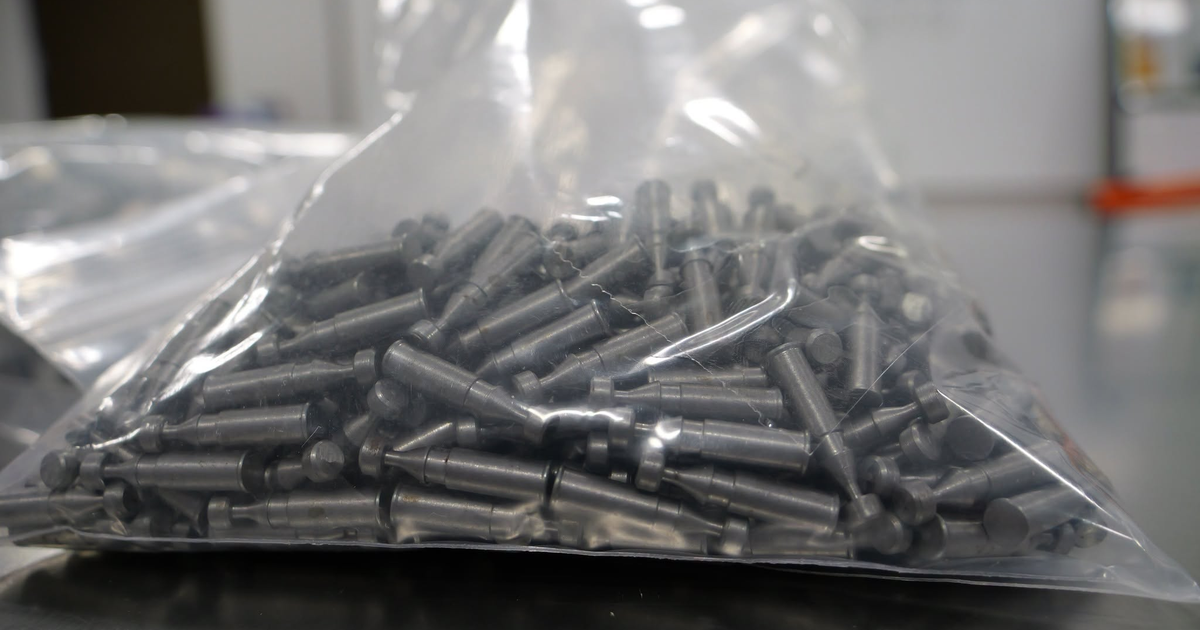
Nearly 1,000 machine-gun conversion devices have been seized during an ongoing narcotics and firearms investigation in Hennepin County, Minnesota, authorities said.
The devices, commonly known as “Glock switches”, are estimated to have a street value of about $400,000, according to the Hennepin County Sheriff’s Office.
When fitted to certain semi-automatic handguns, the privately manufactured devices can convert them into fully automatic firearms. Some are made using 3D printers.
Possessing a conversion device is illegal under federal law and can carry a prison sentence of up to 10 years.
The sheriff’s office said the seizure had removed “dangerous, illegal items” from Minnesota streets and reduced the threat they posed to residents and first responders. No details of arrests linked to the investigation had been released.
Glock switch concerns in Minnesota
The seizure comes amid wider scrutiny of firearms modified with switches. Minnesota Attorney General Keith Ellison filed a civil lawsuit against Glock in 2024, claiming its handguns could be easily altered to fire like machine guns.
Speaking at a press conference in December 2024, Mr Ellison said a cheap conversion device could turn the weapons into fully automatic firearms and alleged that Glock had failed to address the issue.
Glock has denied the allegations. In court filings, the company said it had made extensive efforts to redesign its pistols to prevent the use of machine-gun conversion devices, while Mr Ellison has argued that the updated designs remain easy to modify.
A judge previously refused to dismiss the lawsuit after the state presented allegations of misleading and deceptive marketing, including social media posts said to glorify fully automatic use of a Glock. A deadline for completing discovery has been set for 2027, with a jury trial tentatively scheduled for 2028.
Gunshot detection technology in Minneapolis recorded a rise in shootings involving fully automatic gunfire, from 154 shots in 2020 to more than 3,000 in 2022.
Former Minneapolis police chief Brian O’Hara said the recoil and rapid succession of shots could make the weapons difficult to control, increasing the risk of multiple people being hit.
