


Abu Dhabi is investing 13 billion dirhams (£3.5 billion) to become the world’s first “AI-native” government, with officials promising digital services that can complete routine paperwork on residents’ behalf by 2027.
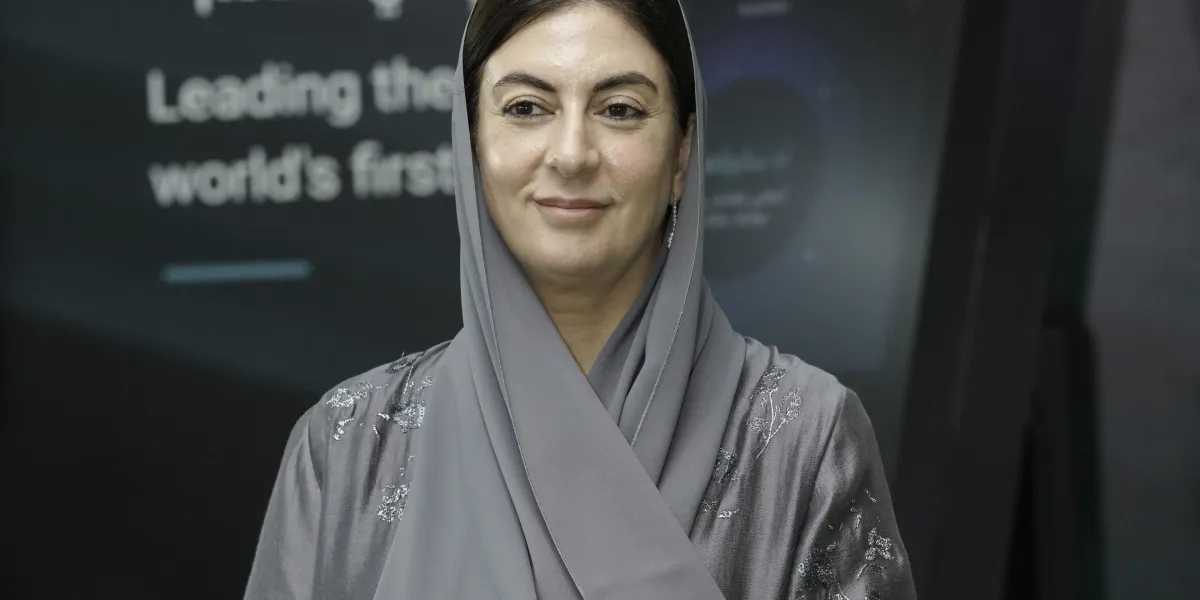
Ruba Al Hassan, director general of strategic affairs and future foresight at Abu Dhabi’s Department of Government Enablement, said the emirate wanted people to spend less time applying for services that the government already has enough information to provide.
The programme is centred on AutoGov, launched through the TAMM app in October 2025. The platform brings together more than 1,000 government services for citizens, residents, businesses and visitors.
It can handle tasks including licence renewals, bill payments and bookings for routine health appointments. Abu Dhabi’s ambition is for more of these services to happen automatically, without repeated visits to government offices or applications from residents whose circumstances have not changed.
“I enter my preferences, give my consent, and then I forget about it,” Ms Al Hassan said, describing a system in which car registration could be renewed automatically. “I don’t ever have to think about my car registration ever again. It just happens.”
Trust and data at the heart of Abu Dhabi’s AI-native government
The approach depends on residents allowing the government to act for them. Ms Al Hassan said confidence had been built by the authorities’ record of delivering projects and responding to emergencies, including the pandemic.
“That comes from when we say something, we do it. We get it done,” she said. “It comes because we’ve proven time and time again that we can deliver on our promises.”
In the 2026 Edelman Trust Barometer, 86 per cent of people in the UAE said they trusted their government to “do the right thing”, compared with 53 per cent across the 28 other countries surveyed.
Abu Dhabi’s centralised public services also give it access to large amounts of information. Licensed health facilities are required to join Malaffi, the emirate’s health information exchange, unless exempt. By August 2025, the system held 3.5 billion clinical records from more than 3,000 facilities.
Predictive technology can identify risks linked to conditions including diabetes, heart failure and kidney disease. Ms Al Hassan said doctors could review a patient’s history and risk information before an appointment, reducing time spent searching for records and completing paperwork.
Doctors would remain responsible for diagnosis and treatment because they could add context to the information provided by the system. The financial and medical benefits of earlier diagnosis, including any reduction in complications or hospital visits, have yet to be established.
AutoGov is optional, but questions remain over how patients can control the use of their medical data. Abu Dhabi rules allow medical information to be shared through Malaffi without written consent, while it is unclear what permission is required for later analysis by AI. Patients can ask providers to limit the sharing of records, although it is not clear whether they can reject AI analysis while allowing the information to be used for treatment.
Government departments and workers face the next test
Another challenge is making different government departments work as a single system. Ms Al Hassan said visiting officials often asked how Abu Dhabi had persuaded its agencies to co-operate.
She said meetings involving eight government groups began by agreeing on a shared objective. “There is no more fighting. There is a discussion,” she said.
Years of integrating services, backed by funding and the authority to require departments to participate, have helped the emirate make progress. But digital systems can also expose problems that governments may struggle to solve.
Ms Al Hassan recalled demonstrating a TAMM function that allows people to photograph and report potholes. One visitor immediately identified a potential difficulty: “We can’t do this. There are too many potholes. The city will be overwhelmed.”
Abu Dhabi will have to assess whether its investment produces genuine savings in time and money. A 2025 UK trial involving 20,000 civil servants found that staff saved about 26 minutes a day using Copilot, although turning that time into financial savings depends on how it is used and the cost of software, training and checking its output.
Earlier this month, the emirate launched AiNative with OpenAI, Microsoft and Mohamed bin Zayed University of Artificial Intelligence. The scheme aims to train 20,000 government employees in practical and responsible use of AI by the end of the year.
Ms Al Hassan said the workforce would have to develop alongside the technology and that being labelled “AI-native” was not an end point. “It’s not the final goal. It will keep changing,” she said.
Her longer-term vision is for passport renewals to be triggered automatically when the government knows a document is about to expire. “Why would I even have to request it?” she said.
