


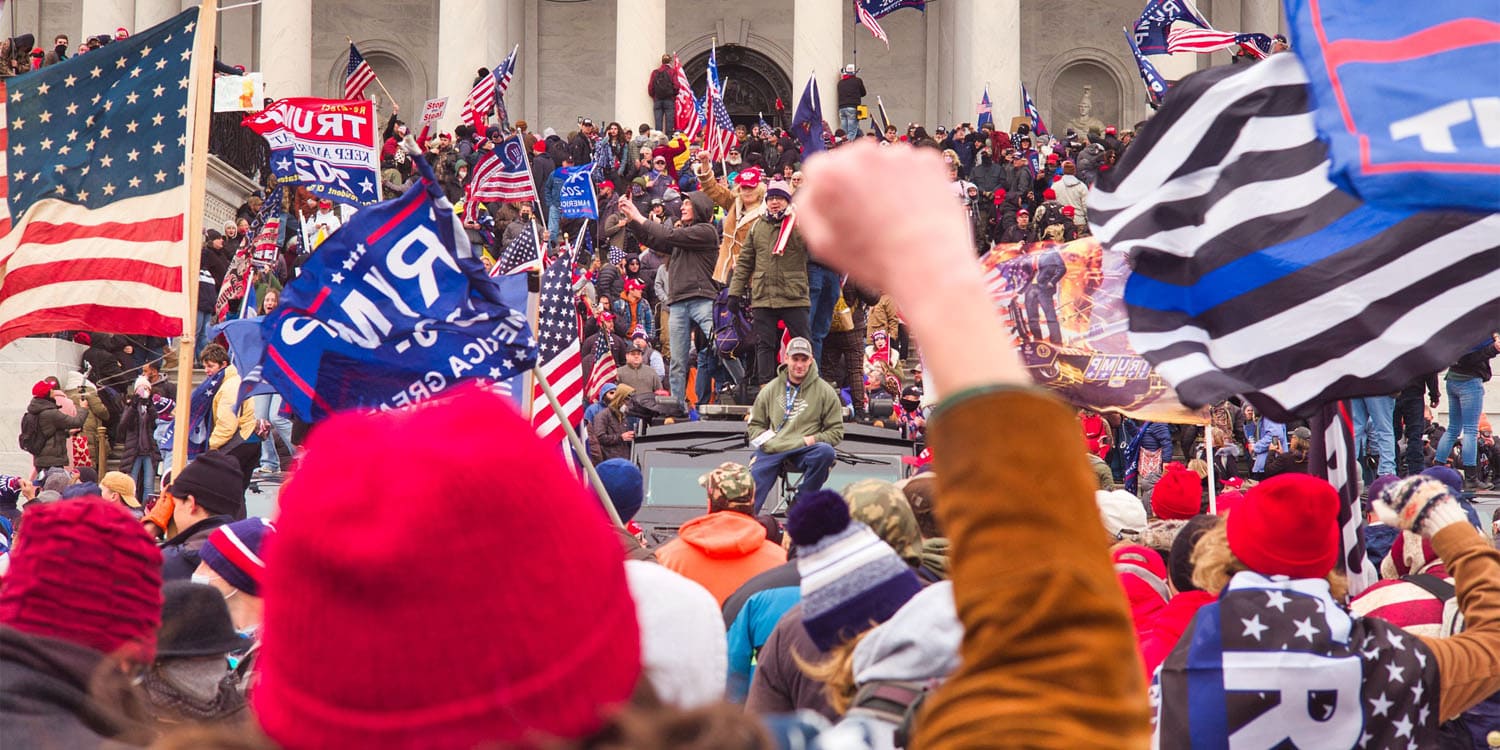
A new study published in Political Research Quarterly finds that Americans interpret major political events through a deeply polarised lens, with hostility toward the opposing party shaping whether protests are seen as legitimate or dangerous. The research is by Rongbo Jin of The Chinese University of Hong Kong, Shenzhen, and Spencer Lindsay of the University of Arizona, examining how preexisting political attitudes structure views of two highly contentious moments: the 2020 Black Lives Matter protests and the January 6 attack on the United States Capitol.
The authors stress that the two events are not morally equivalent. The Black Lives Matter protests represented a decentralised movement seeking racial equality, while the January 6 riot was a violent bid to disrupt the certification of the presidential election. The comparison, they say, serves to reveal how the American public cognitively processes moments of intense political conflict.
In contemporary American politics, party identity functions as a highly salient social identity. This dynamic has helped give rise to affective polarization, a phenomenon in which Democrats and Republicans not only disagree on policy but actively distrust and dislike each other.
People do not analyse political information as objective scientists would. Instead, they rely on mental shortcuts, or heuristics, to rapidly judge new information. This reliance feeds motivated reasoning, whereby individuals accept information that flatters their political group while finding reasons to reject facts that cast their side in a poor light.
These cognitive shortcuts are shaped by core values. The researchers point out that Republicans often prioritise social order and conformity, which can render protests that disrupt the social order as inherently threatening. Democrats, by contrast, tend to place greater value on individual rights and inclusion, making them more likely to see protests by marginalised groups as a necessary democratic function.
To explore how these psychological forces influenced views of the recent protests and riots, the team conducted an original survey of 1,000 adults in late 2023. Respondents evaluated the Black Lives Matter protests and the January 6 event on dimensions such as legality, empowerment and danger.
Affective polarization was measured by asking participants to rate their feelings toward both major political parties on a scale from zero to one hundred, with zero representing the coldest sentiment. Participants also identified themselves within party factions, such as a MAGA Republican or a progressive Democrat.
Results showed severe partisan splits: Democrats tended to view the Black Lives Matter protests positively and January 6 negatively, while Republicans showed the opposite pattern. The degree of affective polarization amplified these views, with those expressing the coldest feelings toward the opposing party holding the most extreme assessments of both events.
Even among independents, those who expressed warmer feelings toward the Democratic Party were more likely to view the Black Lives Matter protests more favourably, suggesting that emotional attachments influence political judgments even without formal party allegiance.
There were notable within‑party differences as well. Progressive Democrats evaluated the Black Lives Matter protests far more positively than establishment Democrats, while MAGA Republicans viewed January 6 much more positively and the Black Lives Matter protests much more negatively than establishment Republicans.
The survey also asked whether participants believed American democracy was under threat. Those who perceived a high threat to democracy tended to polarise their views on these events in opposite directions depending on party affiliation: Democrats who felt democracy was at risk supported the Black Lives Matter protests and condemned January 6, while Republicans who felt similarly tended to condemn the Black Lives Matter protests and view January 6 more favourably. The researchers describe this as a “saving democracy” frame, whereby belief that the system is in danger can be used to justify particular interpretations of controversial actions, contingent on preexisting loyalties.
To broaden the analysis, the researchers examined data from the American National Election Studies, encompassing surveys from 2016, 2020 and 2024. This included panel data tracking the same individuals over time and focused on evaluations of the Black Lives Matter movement, as the data did not include questions about January 6. The panel data suggested that when Republicans warmed toward the Democratic Party between 2016 and 2020, they also grew warmer toward Black Lives Matter; conversely, when Democrats warmed toward Republicans, they tended to view the movement less favourably.
The authors caution that the study is observational and cannot establish causality. It remains possible that evaluating these historical events shapes attitudes toward the opposing party, rather than the reverse. Memory effects and years of political messaging may also colour responses given in 2023 about events from 2020 and 2021.
Looking ahead, the researchers propose experimental designs to more precisely map the sequence by which political identity shapes the immediate processing of breaking news. They also advocate real-time tracking of public reactions to better capture how competing narratives take hold before partisan loyalties fully solidify.
The study, “Inhabiting Different Worlds: How Partisan Attitudes Shape Americans’ Evaluation of the Black Lives Matter Protests and the January 6th Insurrection,” was authored by Rongbo Jin and Spencer Lindsay.
