


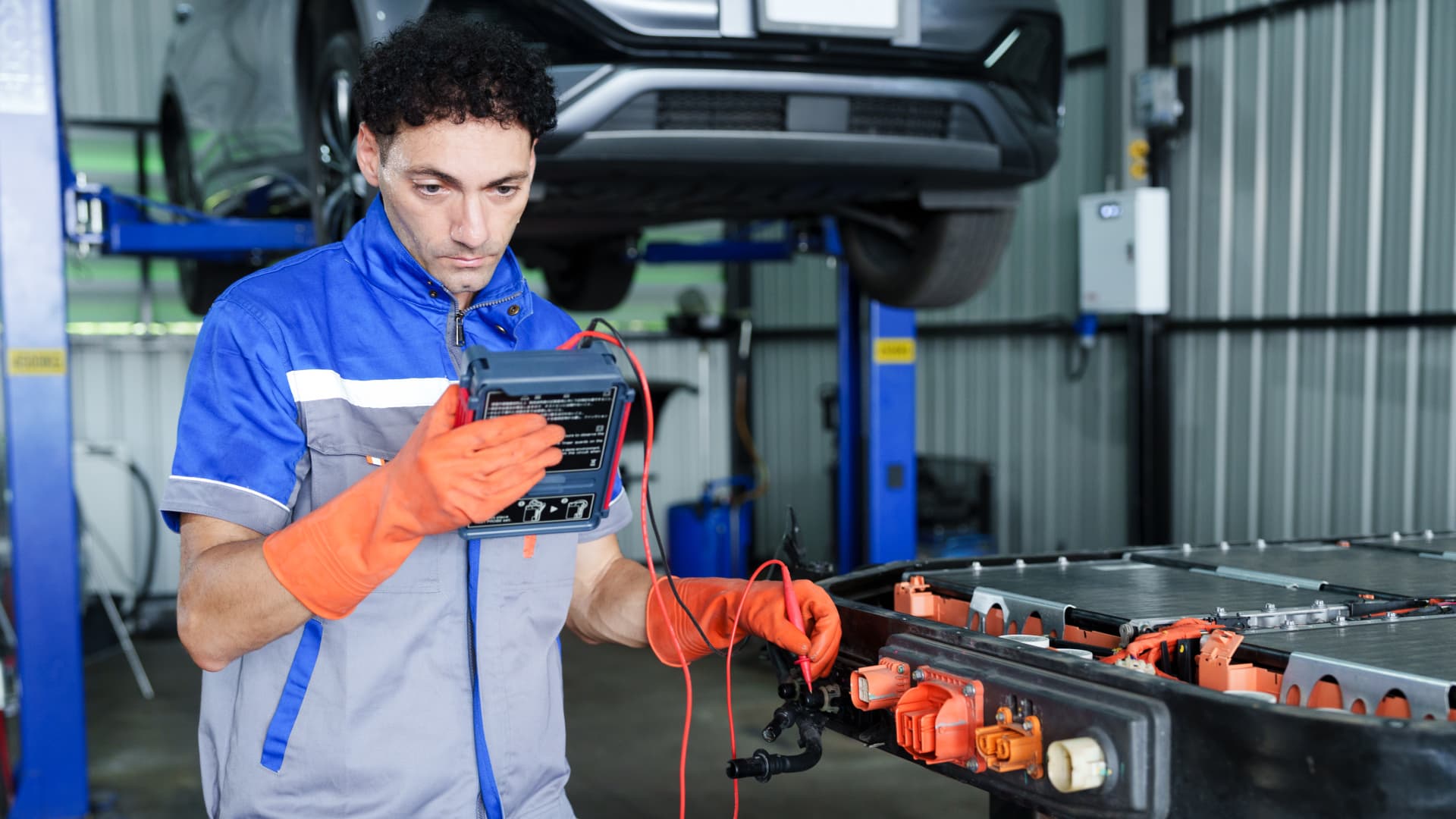
Vehicle repair costs are rising as increasingly sophisticated cars force garages to invest in computers, software and calibration equipment, according to mechanics in the US. Ralph Czeisler, who runs Emil’s All-Tire in Brooklyn, New York, said the extra expense was being passed on to customers.
“Every year, I update all my computers,” Mr Czeisler said. “I have multiple computers for domestic, Asian, European cars, and it’s very costly. Every year they make changes, and it costs more money and more money. And it’s getting very challenging.”
Greg Brannon, director of automotive engineering at AAA, said many repair businesses were facing similar pressures. Modern repairs, he said, were “so sophisticated now and almost always require a laptop”.
Some garages need computers dedicated to particular vehicle brands, as well as subscriptions to software and technical data services. Those subscriptions can be bought for periods ranging from a few hours to a year, making it harder for smaller independent businesses to cover every make and model.
“It has become increasingly financially difficult for independent shops to be able to service all makes and models,” Mr Brannon said.
Technology adds to vehicle repair costs
Overall repair prices rose by about 60% between January 2019 and August 2026, according to data from the St Louis Federal Reserve. That compared with a 32% increase in overall inflation during the same period.
The figures do not identify the precise causes of the increase, but research indicates that technological advances are contributing to higher bills in some areas. A 2023 AAA study found that calibrating advanced driver-assistance systems, known as ADAS, could increase the cost of a collision repair by 37.6%.
Replacing a windscreen illustrates the change. In addition to fitting the glass, mechanics may now have to calibrate a camera mounted behind it. The camera is one of several sensors that can support a vehicle’s active safety and driver-assistance features.
A calibration machine at Mr Czeisler’s garage cost about $28,000, while the computer supplied with it cost a further $12,000. A complete array can cost as much as $90,000, with target boards for particular cameras costing hundreds or thousands of dollars for more expensive brands.
Ariella Czeisler, who works at the garage, said the equipment was necessary to avoid safety risks and potential liability. “God forbid we don’t calibrate the windshield and that camera is malfunctioning,” she said. “The car can brake unexpectedly and cause an incident from the rear. We don’t want to be liable for that.”
Repair access and the ‘right to repair’
The growing complexity of vehicles has strengthened the “right to repair” movement, which argues that consumers and smaller businesses should have access to the parts, tools and information needed to fix cars and other technology.
Trade groups representing carmakers and mechanics have reached agreements since 2014 intended to give independent repairers access to the same data, parts and tools as larger dealerships.
Mr Brannon said the necessary information was generally available to both dealer and independent garages, although exceptions remained. A task force allows repairers to raise problems with manufacturers, and he said most complaints concerned the cost and complexity of accessing data.
Mr Czeisler said the main difficulty was often paying for information or updating computers. Even routine work can now involve a software charge: resetting the oil-change warning on a luxury vehicle can add $75 to a service that would otherwise cost about $400.
“You can’t just go and reset it,” he said. “You have to pay for information to download to your computer, to upload to the customer’s computer to reset the light. Otherwise it’s never going to reset and that costs more money. And the result? I pay more money. The consumer pays more money. It’s not fair. But this is how the industry practice has gone.”
