


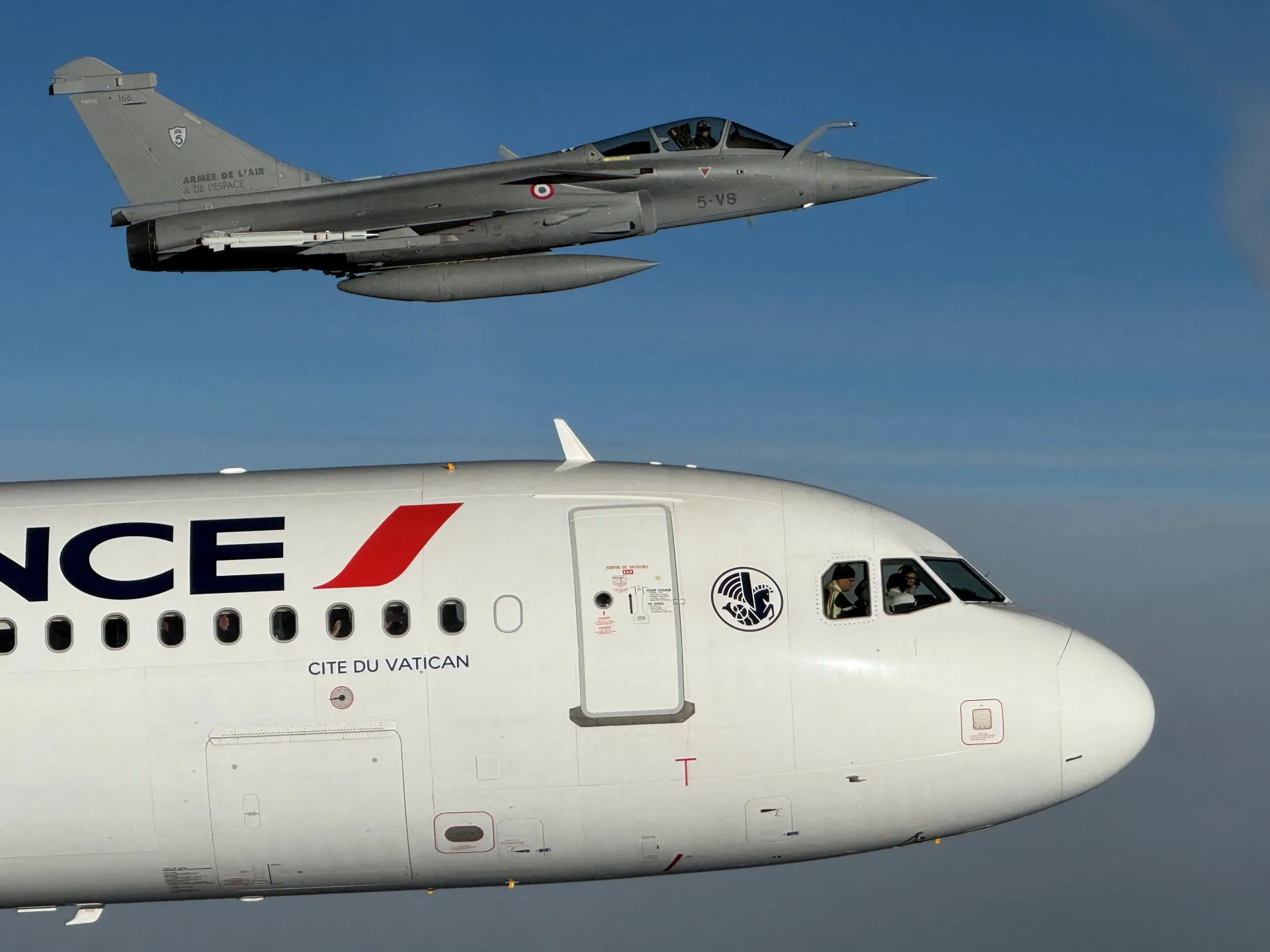
Air France is complying with Israeli nationality restrictions on pilots and cabin crew flying into or over Israel, despite warnings that the policy could breach French anti-discrimination law and expose the airline to legal action.
The restrictions reportedly apply to nationals of 31 mainly Muslim-majority countries, including Algeria, Tunisia, Iran, Oman, Saudi Arabia, Pakistan and Niger. Their inclusion means some crew members may be prevented from operating flights to Israel, even where they hold dual nationality.
“Like all airlines, Air France is required to comply with the entry regulations established by the authorities of the countries it serves, both for its customers and employees,” the airline said.
It added that staff affected by the new rules had been informed. An internal memo seen by French investigative publication Mediapart reportedly warned that failing to follow the directive could expose both Air France and individual employees to sanctions. The memo has not been independently verified.
Rules issued after alleged cockpit attack
Israel’s Ministry of Transport and Road Safety reportedly told foreign airlines on October 1 that pilots and cabin crew flying into Israeli airspace must not hold the nationality, or dual nationality, of countries that do not have diplomatic relations with Israel.
The directive came a day after an Omani co-pilot allegedly attempted to hijack a Flydubai flight travelling from Dubai to Tel Aviv and crash it into Ben Gurion airport on September 30, according to Emirati and Israeli authorities.
The co-pilot is accused of attacking the aircraft’s Indian pilot, who has been recovering in hospital.
The new policy could affect dozens of airlines operating flights to, from or over Israel. Smartwings, the Czech airline, said it had received the directive but that it had not affected its operations, crew management or deployment procedures so far.
“We have carefully reviewed the directive and continue to monitor and comply with all applicable requirements issued by the relevant authorities,” a Smartwings spokeswoman said.
United Airlines said it had “nothing to share” when asked whether it had received the directive or changed its crew arrangements.
French law concerns
Clara Gandin, a Paris-based lawyer specialising in discrimination, said Air France could be placing itself in conflict with French employment law by adopting the Israeli requirements.
“The measure rests on a collective presumption which amounts to a discriminatory bias: Every national of these 31 countries, most of them Arab or Muslim-majority, is treated as a potential security threat,” she said.
French Labour Code article L1132-1 prohibits discriminatory measures based on a person’s actual or perceived nationality, including in relation to work assignments, pay and discipline, Ms Gandin said.
She argued that removing crew from particular flights because they hold one of the listed nationalities would amount to direct discrimination, even if their pay remained unchanged. The policy could also amount to indirect discrimination based on origin and, potentially, perceived religion, she said.
French law allows differences in treatment where they are linked to a genuine occupational requirement, pursue a legitimate aim and are proportionate to the nature of the job. But Ms Gandin said nationality was not a requirement for flying an aircraft, pointing out that Air France allowed the same pilots and crew to work on other routes.
“Air France’s aim is commercial: keeping access to the Israeli market. But economic considerations cannot justify discrimination in the eyes of the law,” she said.
She added that a security objective set by Israel could not automatically become an occupational requirement for a French employer. A proportionate response, she said, would involve individual security assessments rather than nationality alone.
Air France’s flight-deck union, Alter, reportedly opposed any plan to ask crew members to identify themselves voluntarily if they were affected by the directive. In a leaflet to members, the union described such a step as discrimination based on nationality.
Airspace powers and possible legal action
The dispute highlights a conflict between Israel’s authority to regulate access to its airspace and territory and the obligations imposed on airlines by French and European employment law.
Vincent Correia, a professor of air law at McGill University in Canada, said international aviation rules recognised a state’s sovereignty over its territorial airspace. He also pointed to provisions allowing states to enforce regulations governing the admission of passengers and crew.
“Hence, a state can impose immigration restrictions on crews from other countries, on the basis of nationality, given that crew members must go through immigration and customs when flying on international routes,” he said.
Mr Correia said crew from countries without diplomatic relations with Israel were already barred from flying there, meaning the new measure was principally relevant to dual nationals.
Ms Gandin maintained that Israel’s power to impose entry restrictions did not remove Air France’s responsibilities under French anti-discrimination and employment law. The airline could choose not to operate the route under those conditions, or challenge the directive through the French state, the French Civil Aviation Authority or the European Union, she said.
Employees affected by the policy could seek damages, while trade unions could bring proceedings. Ms Gandin also said the measure could potentially engage criminal law, with penalties of up to three years in prison and a fine of 45,000 euros.
She warned that compiling a register of employees holding one of the listed nationalities could also raise data protection concerns if the information did not have a direct and necessary connection with their work. Such records could reveal ethnic origin, she said.
Mr Correia cautioned that the policy could encourage other countries to introduce similar nationality checks on international flight crews, adding to the difficulties airlines already face when scheduling pilots and cabin staff.
