


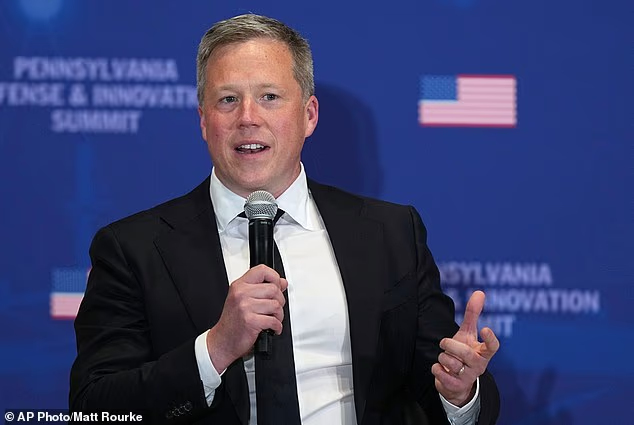
Dan Driscoll has resigned as US Secretary of the Army after months of reported friction with Defence Secretary Pete Hegseth, deepening uncertainty over the Pentagon’s senior leadership.
The White House announced his departure on Monday, saying he would leave the post in the coming days. Driscoll had previously been expected to remain until the end of the year.
White House spokeswoman Anna Kelly praised his record, saying he had advanced Donald Trump’s agenda at the Department of the Army, strengthened military readiness and supported negotiations between Russia and Ukraine.
“The United States Army is more powerful than ever thanks to his work alongside the Commander-in-Chief and Secretary of War,” she added.
Disputes with Pete Hegseth
Driscoll and Hegseth had reportedly disagreed over a series of senior personnel decisions, including moves to block the promotion of several Army officers and the removal of one of Driscoll’s allies.
The departure follows the dismissal earlier this year of General Randy George, the Army’s chief of staff. Christopher LaNeve, a former Hegseth aide, has been serving as his interim successor.
Both the Secretary of the Army and the chief of staff normally require Senate confirmation. With no permanent replacement yet nominated for General George, Driscoll’s resignation leaves the service facing a prolonged leadership gap at the top.
Driscoll was considered close to Vice-President JD Vance, and reports have suggested that Hegseth was concerned he could emerge as a potential successor to him as Defence Secretary.
A source cited by the New York Post previously claimed the tensions were driven by suspicion within Hegseth’s circle following the 2025 Signal messaging controversy. The allegation has not been independently established.
The White House had publicly backed Driscoll during an earlier dispute, while reports at the time suggested Hegseth was unable to remove him immediately.
Driscoll and General George had worked together on plans to reshape the Army, including efforts to streamline the force, reduce spending on outdated programmes and accelerate the adoption of new battlefield technology.
His resignation comes amid wider reports of strain between President Trump and Mr Hegseth, with the Defence Secretary’s influence inside the administration said to have come under question.
